
| Product Showcase | Content | ||||||||||||||||||||||||||||||||
| Product Name | Vision-Navigation Smart Feed Pusher Robot | ||||||||||||||||||||||||||||||||
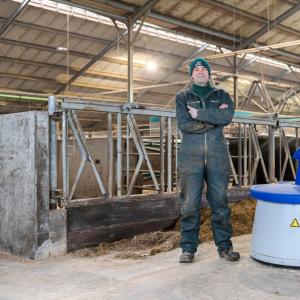
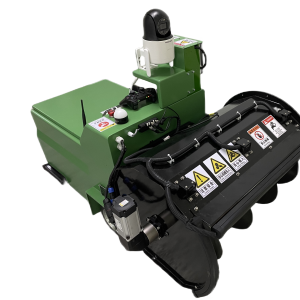
| Product Image | 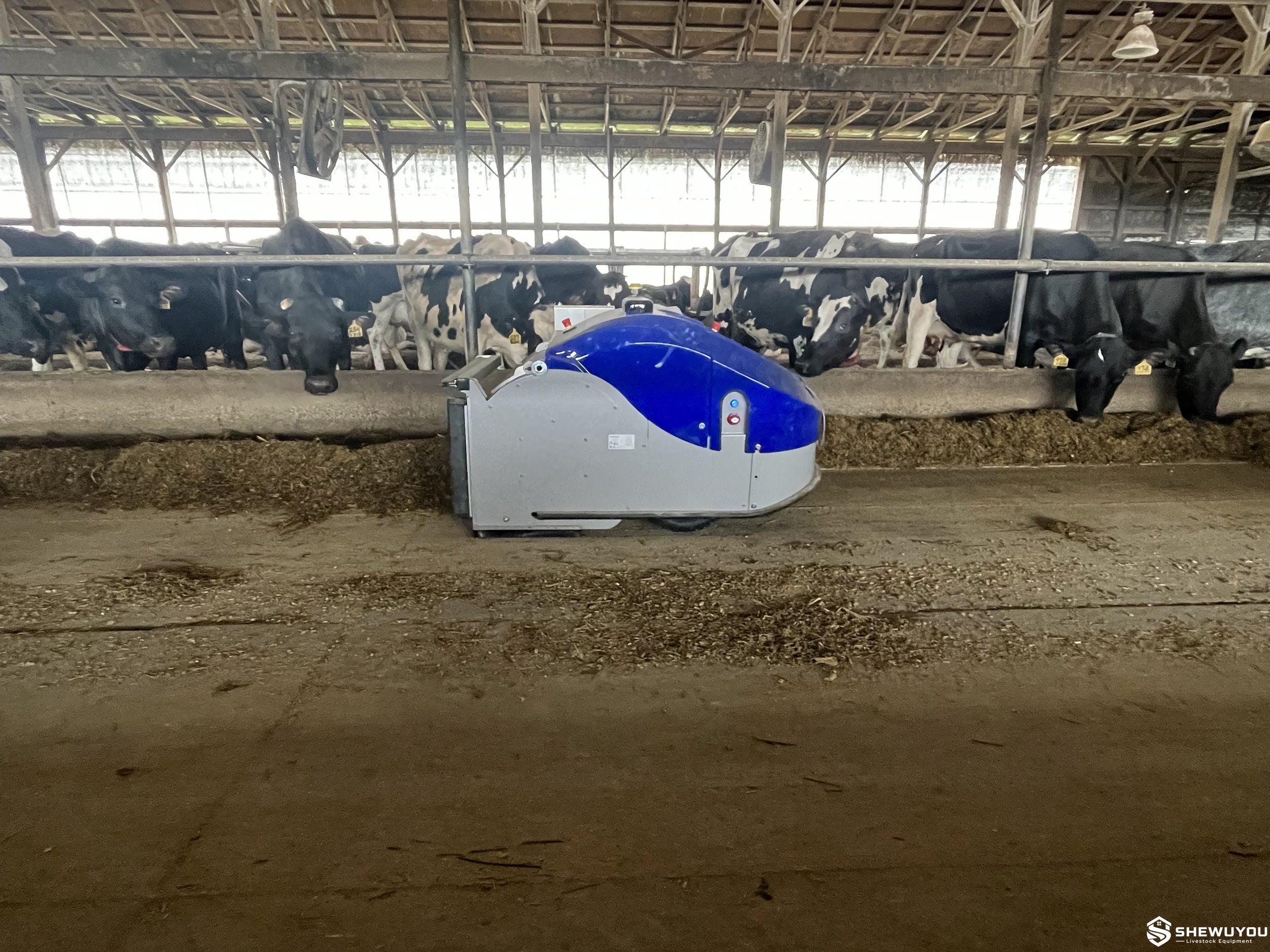 |
||||||||||||||||||||||||||||||||
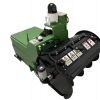
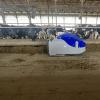
| Product Overview | The Vision-Navigation Smart Feed Pusher Robot is an autonomous livestock feeding solution designed to repeatedly move TMR, silage and forage back within easy reach of cattle throughout the day. A camera-based navigation system combines image recognition and intelligent algorithms to identify the feeding environment, follow programmed routes and respond to obstacles. Indoor deployment can be completed without installing magnetic guide pins in compatible barn layouts, reducing infrastructure modification requirements. Battery-powered operation, automatic return charging, remote monitoring and programmable feed-pushing schedules make the robot suitable for commercial dairy farms, beef cattle facilities and modern steel-structure livestock barns. |
||||||||||||||||||||||||||||||||
| Key Features |
|
||||||||||||||||||||||||||||||||
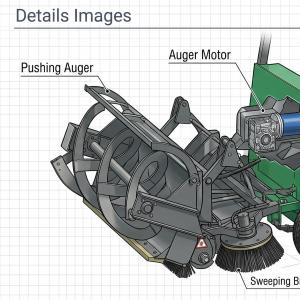
| Structural Components |
|
||||||||||||||||||||||||||||||||
| Working Principle | Route Programming: Feed-pushing schedules and working routes are configured according to the cattle-barn layout and feeding management plan. Visual Navigation: The camera continuously captures environmental information while the control system recognizes the feed alley and navigational references. Autonomous Travel: Dual drive motors independently control movement and steering while the robot follows the programmed route. Feed Pushing: The feed-pushing drum moves scattered TMR and forage back toward the feeding fence, keeping ration accessible to cattle. Obstacle Response: When an obstacle is detected, the control system can adjust the robot's route or stop movement according to safety logic. Automatic Recharging: When battery capacity reaches the programmed threshold, the robot automatically returns to the charging station and resumes scheduled work after charging. |
||||||||||||||||||||||||||||||||
| Technical Specifications |
|
||||||||||||||||||||||||||||||||
| Applications |
|
||||||||||||||||||||||||||||||||
| Customization Options |
|
||||||||||||||||||||||||||||||||
| Installation & Maintenance | Before installation, confirm that the feed alley has a reasonably smooth surface, suitable operating width and sufficient clearance for the robot to travel and turn safely. Vision-navigation deployment can reduce the need for floor modification in compatible indoor barns. The initial routes, feed-pushing distances, operating schedules and charging position should be configured during commissioning. Routine maintenance includes cleaning the camera and sensors, inspecting drive wheels, checking the pushing drum, testing emergency-stop functions and examining the battery and charging contacts. Feed residue should be removed from moving components to maintain reliable operation. |
||||||||||||||||||||||||||||||||
| Product FAQ | Q: Does the robot require magnetic guide pins in the barn floor? A: Compatible indoor vision-navigation installations can operate without embedded magnetic guide pins. Q: Can the feed pusher operate automatically at night? A: Yes. Programmable routes and operating schedules support automatic feed pushing during both daytime and night-time periods. Q: What happens when the battery becomes low? A: The robot can automatically return to its charging station according to the configured battery-management logic. Q: Can the robot detect obstacles? A: Yes. The visual-navigation system uses image recognition and intelligent algorithms to identify obstacles and support route adjustment. Q: Can operators monitor the robot remotely? A: Yes. Compatible remote-management platforms support monitoring through computers, tablets and mobile devices. Q: Is the robot suitable for an existing cattle barn? A: Yes. Vision-based deployment can simplify retrofit projects where major floor reconstruction is undesirable, subject to the actual barn layout and floor conditions. |
||||||||||||||||||||||||||||||||
| Product Gallery | 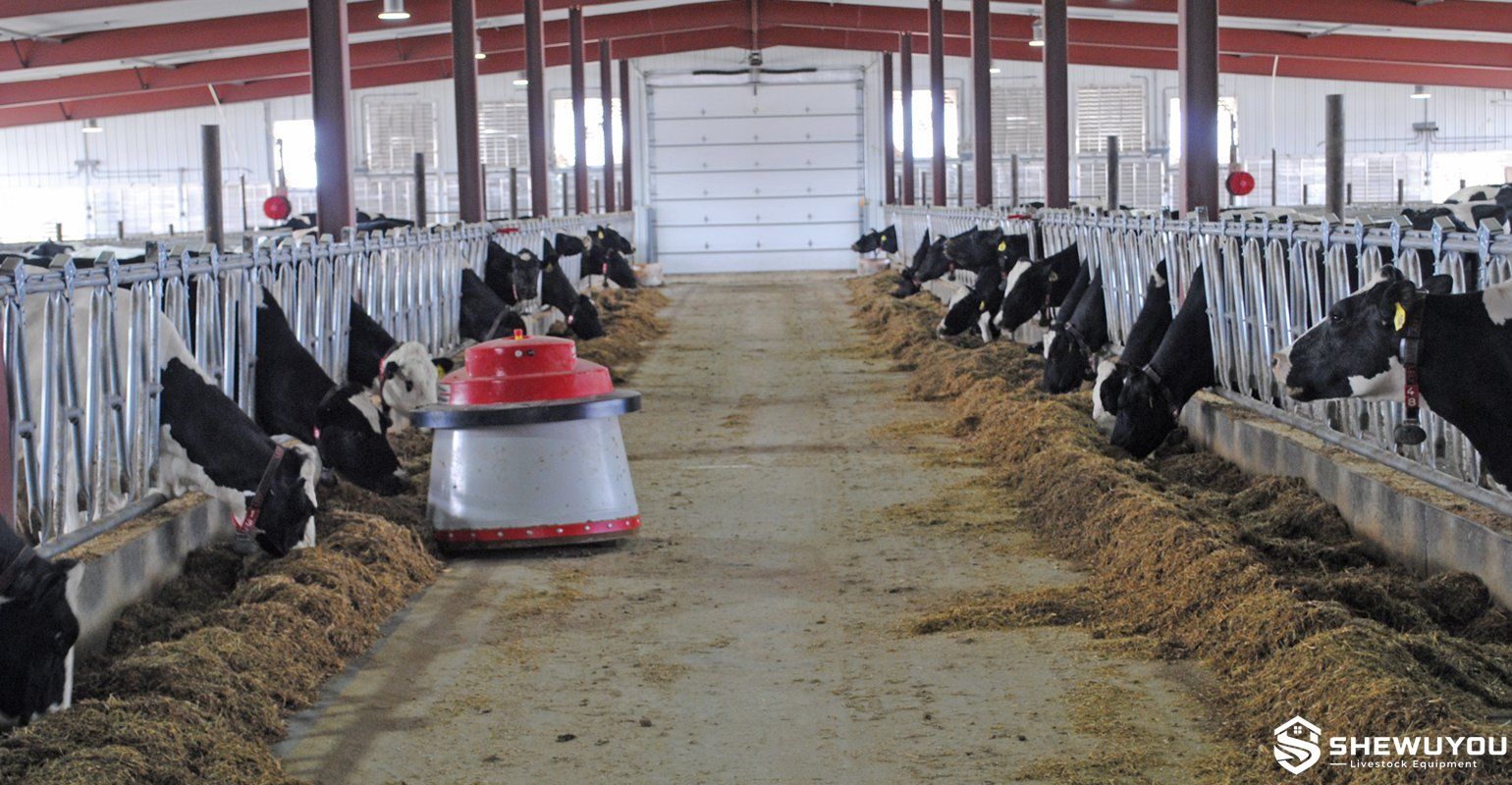 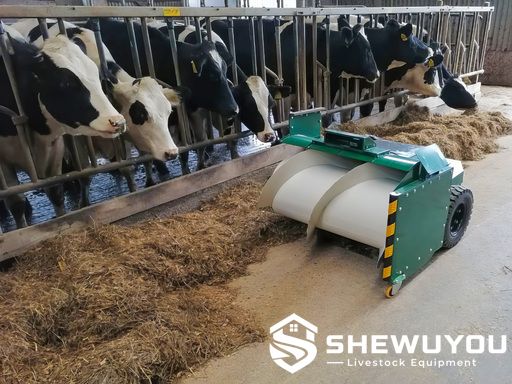 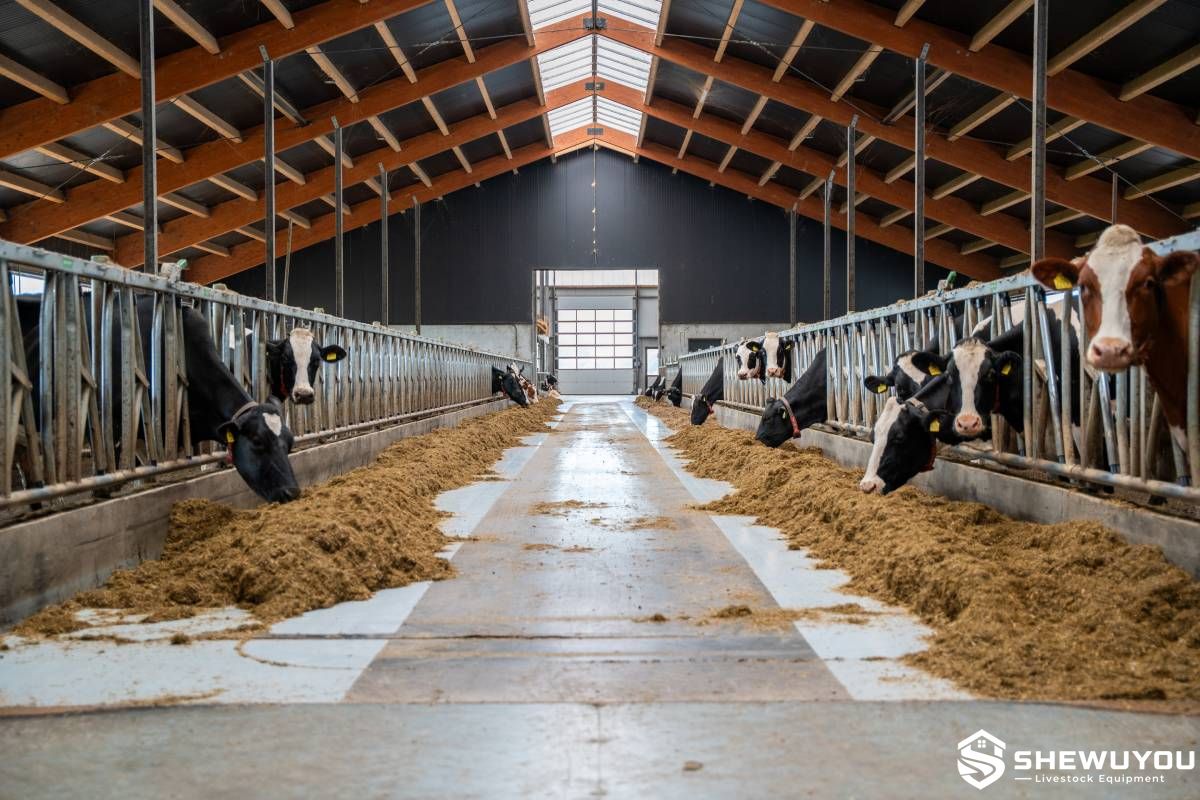 |
- Home
-
Products
- Pig Farming Equipment
- Cattle Farming Equipment
- Sheep & Goat Farming Equipment
- Poultry Farming Equipment
- Feeding & Drinking Systems
- Veterinary & Breeding Equipment
- Testing & Diagnostic Equipment
- Cleaning & Biosecurity Equipment
- Climate Control Equipment
- Livestock Weighing Equipment
- Manure & Waste Management
- Farm Transport & Handling
-
Solutions
- Pig Farm Solutions
- Dairy Farm Solutions
- Beef Cattle Farm Solutions
- Sheep & Goat Farm Solutions
- Layer Farm Solutions
- Broiler Farm Solutions
- Feeding & Drinking System Solutions
- Climate Control Solutions
- Biosecurity & Disinfection Solutions
- Manure & Waste Management
- Smart Farming Solutions
- Farm Renovation and Upgrade Solutions
- Partners
- Projects
- Resources
- News
- About Us
- Contact

Comments & Inquiries
Leave your questions or requirements below. We will reply as soon as possible.