| Product Showcase |
Content |
| Product Name |
Sliding Gate for Cattle Handling Race |
| Product Image |
 |
| Product Overview |
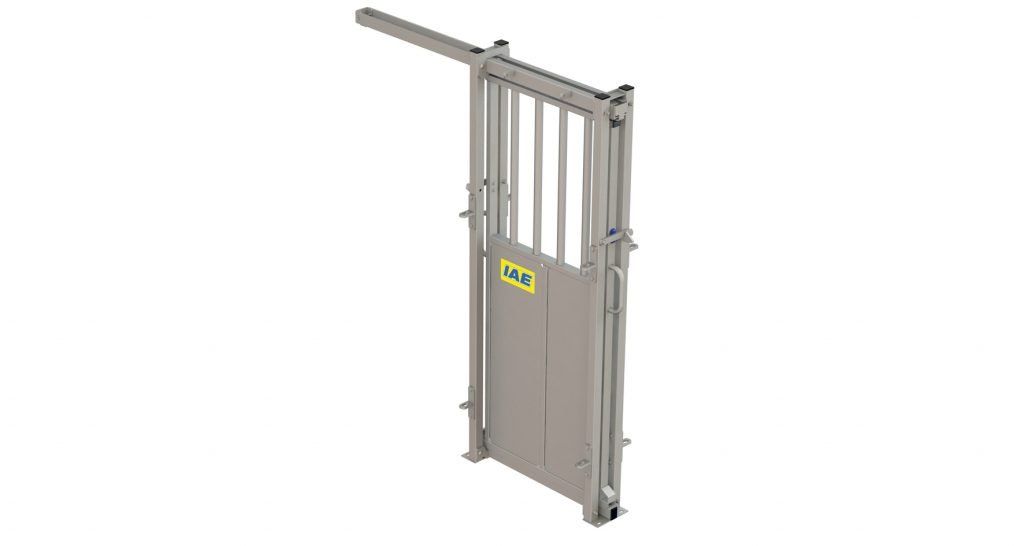
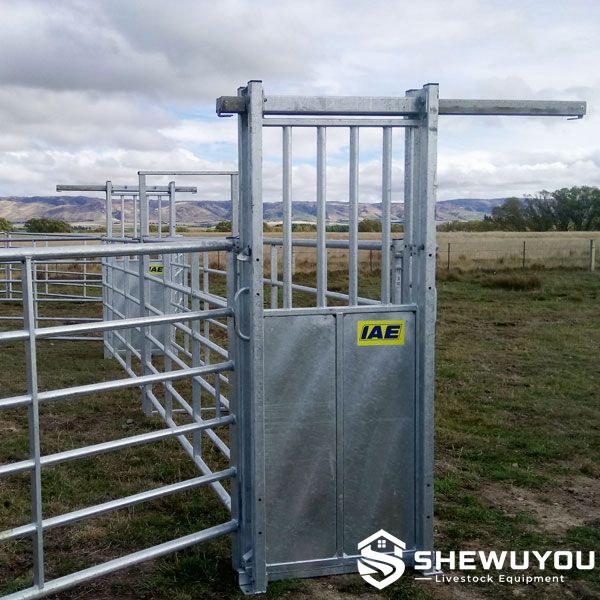
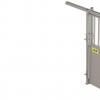
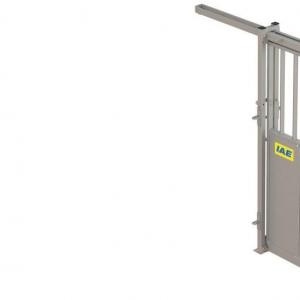
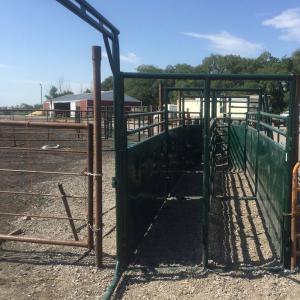
The Sliding Gate for Cattle Handling Race is a compact livestock-flow control component designed for installation within portable or fixed cattle alleys. It combines a structural race joining arch with a laterally sliding gate, allowing operators to separate individual animals and control forward or backward movement through the handling system.
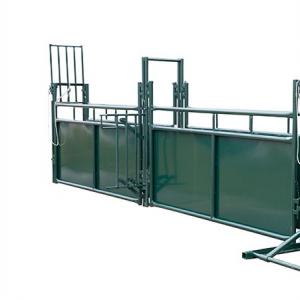
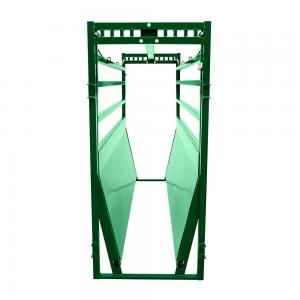
The partially sheeted gate reduces visual distraction around the lower body while vertical rails in the upper section maintain visibility along the race. Its retractable sliding mechanism allows convenient operation within cattle crush entrances, weighing stations, veterinary areas and modular livestock handling systems.
|
| Key Features |
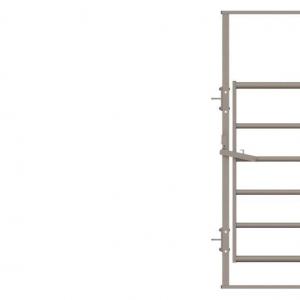
- Sliding gate integrated into a structural cattle-race joining arch.
- Functions as a non-return gate to help prevent cattle backing through the race.
- Allows the next animal in line to be held before entering a crush or treatment area.
- Retractable sliding mechanism supports convenient cattle-flow control.
- Part-sheeted lower section reduces outside visual distraction.
- Vertical upper rails allow cattle to maintain visibility along the race.
- Locking mechanism secures the gate in the selected operating position.
- Operating handles provide convenient access for livestock handlers.
- Gate stops control travel at the ends of the sliding movement.
- Integrated fixing points simplify connection to compatible cattle hurdles and race sections.
|
| Structural Components |
- Race Joining Arch: Maintains the required alley width and provides structural support for the sliding mechanism.
- Sliding Gate Leaf: Moves laterally across the cattle race to open or close animal passage.
- Sheeted Lower Panel: Creates a physical and visual barrier at the lower portion of the gate.
- Vertical Upper Rails: Maintain forward visibility through the upper gate section.
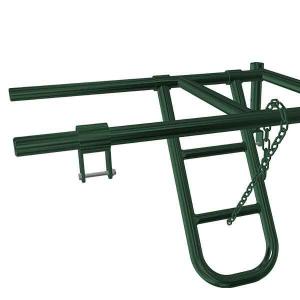
- Sliding Gear: Guides the gate smoothly during opening and closing.
- Locking Plate: Secures the gate in the required operating position.
- Operating Handles: Allow convenient manual gate movement.
- Gate Stops: Limit gate travel and protect the sliding system.
- Fixing Lugs: Provide connection points to compatible race hurdles and structural components.
|
| Working Principle |
The gate is installed across a single-file cattle race. When open, the gate leaf retracts laterally so cattle can move through the joining arch toward the next handling station.
After one animal passes, the operator slides the gate across the race to stop the following animal. This allows individual cattle to be separated for restraint, weighing, treatment or drafting while also helping prevent the animal ahead from backing into the race.
The compact sliding action requires less swing clearance than a conventional hinged gate, making it suitable for narrow cattle handling alleys and space-efficient farm layouts.
|
| Technical Specifications |
| Product Type |
Sliding cattle gate integrated into race joining arch |
| Reference Overall Height |
Approx. 2166 mm |
| Reference Race Width |
Approx. 840 mm |
| Gate Movement |
Horizontal sliding |
| Gate Construction |
Part sheeted / part vertical rail |
| Locking System |
Mechanical locking plate |
| Gate Stops |
Integrated |
| Connection |
Fixing lugs for compatible cattle race sections |
| Installation Options |
Standalone race connection or bolt-to-crush configuration |
| Coupling Bars |
Available separately |
| Material |
Heavy-duty steel |
| Surface Treatment |
Galvanized or according to project requirements |
| Other Specifications |
Customizable / Available upon request |
|
| Applications |
- Portable cattle handling races.
- Fixed cattle working alleys.
- Cattle crush entrance control.
- Livestock weighing and EID stations.
- Veterinary examination and treatment areas.
- Vaccination and herd-health handling systems.
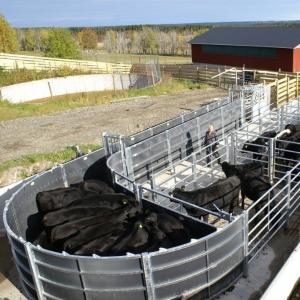
- Cattle drafting and sorting facilities.
- Commercial beef farms and feedlots.
- Dairy cattle handling facilities.
- Temporary field and mobile cattle handling systems.
|
| Customization Options |
- Race Width: Customizable according to cattle size and handling-system dimensions.
- Overall Height: Available according to project requirements.
- Gate Position: Installation configuration can be adapted to the cattle-yard layout.
- Gate Cladding: Part-sheeted, more fully sheeted or alternative livestock-safe configurations available upon request.
- Connection Type: Standalone race connection or bolt-to-crush configuration available.
- Coupling System: Compatible bars, pins and hurdle connections available.
- Surface Treatment: Designed according to local climate and farm conditions.
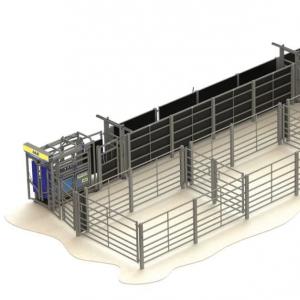
- Complete Handling Layout: Can be integrated with cattle hurdles, races, crushes, scales and sorting gates.
|
| Installation & Maintenance |
- Position the gate at a cattle-flow control point within the single-file race.
- Maintain correct race width and vertical alignment during installation.
- Connect fixing lugs securely to compatible race hurdles or structural components.
- Use the specified coupling bars or fasteners for the selected installation configuration.
- Check that the gate slides through its full travel without contacting adjacent panels.
- Verify the locking mechanism, handles and gate stops before cattle enter the race.
- Keep the sliding gear free from mud, manure, bedding and other debris.
- Inspect guide components, locking plates, handles, stops and fixing points regularly.
- Replace bent or damaged components before further livestock handling.
- Repair damaged corrosion-protection coatings as required.
|
| Product FAQ |
Q: What is the main purpose of this sliding cattle gate?
A: It controls cattle movement within a single-file race, separates individual animals and can help prevent animals from moving backward.
Q: What is the reference race width?
A: The reference race joining arch provides an opening approximately 840 mm wide.
Q: Why use a sliding gate instead of a swing gate?
A: A sliding gate requires less lateral opening space and is therefore useful in narrow cattle races and compact livestock handling layouts.
Q: Why is the gate partly sheeted?
A: The sheeted lower portion provides a physical and visual barrier, while the upper rails maintain forward visibility along the handling race.
Q: Can it be installed directly beside a cattle crush?
A: Yes. Bolt-to-crush and conventional race-connection configurations are available according to project requirements.
Q: Are coupling bars available?
A: Yes. Compatible coupling bars and connection components can be supplied according to the selected race configuration.
Q: Can SHEWUYOU customize this gate for a complete handling system?
A: Yes. Gate dimensions, cladding, race connections, cattle crushes and related handling equipment can be configured according to project requirements.
|
| Product Gallery |
|


Comments & Inquiries
Leave your questions or requirements below. We will reply as soon as possible.