Global Livestock Equipment Manufacturer & Supplier
SHEWUYOU · Livestock Equipment
Integrated Equipment Solutions for Pig, Cattle & Poultry Farms

260–400L Towable Calf Milk Taxi

Product Showcase Content
Product Name 260–400L Towable Calf Milk Taxi
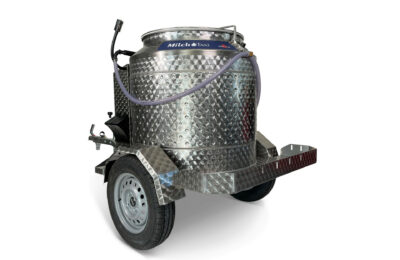
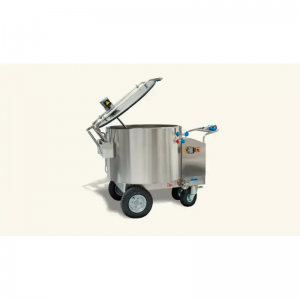
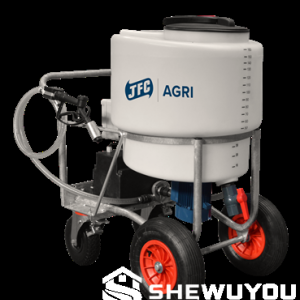
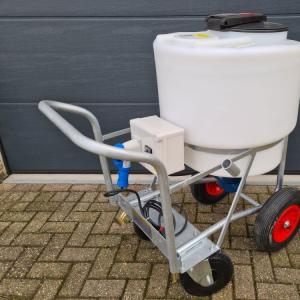
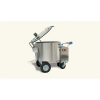
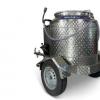
Product Image 400L towable calf milk taxi trailer
Product Overview The 260–400L Towable Calf Milk Taxi is a high-capacity mobile feeding solution designed for dairy farms with larger calf populations, long feeding routes or widely separated calf-housing areas.

Available in 260-liter and 400-liter working-capacity trailer configurations, the system combines a polished stainless steel milk tank with powered mixing, optional heating, pumping, programmable dosing and pasteurization functions according to the selected equipment package.

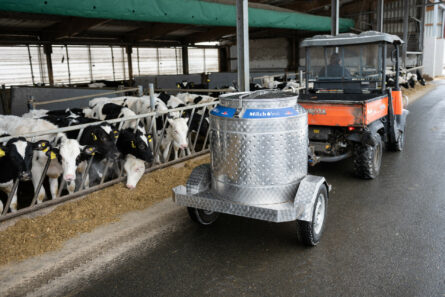
The single-axle towable design allows the milk taxi to be connected to a suitable farm vehicle for efficient transport between the milk-preparation area, calf barns, outdoor hutches and group pens. The larger 400-liter configuration uses a heavy-duty trailer structure designed for higher operating loads and smooth transport on typical farm routes.
Key Features
  • 260 L and 400 L working-capacity trailer configurations for larger calf-feeding operations.
  • Towable single-axle chassis reduces manual transport requirements on large dairy farms.
  • Polished stainless steel tank provides durable, hygienic milk-contact surfaces.
  • 250 W bottom-mounted agitator mixes milk replacer efficiently and supports gentle interval stirring during heating.
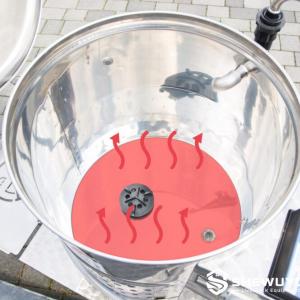
  • Full-base surface heating is available for controlled warming of whole milk and liquid milk replacer.
  • Optional pasteurization function supports whole-milk feeding programs.
  • Approx. 40 L/min pump capacity provides fast dispensing on equipped configurations.
  • Up to nine programmable dosing levels can support repeatable feeding quantities when the dosing system is installed.
  • Battery-supported dispensing allows operation away from a fixed electrical outlet during feeding.
  • Semi-automatic cleaning program supports efficient sanitation of the tank and milk circuit.
  • Lockable lid with sealing ring helps protect milk during transport.
  • 400 L model incorporates a heavy-duty trailer chassis with a spring-loaded axle for smoother transport.
Structural Components
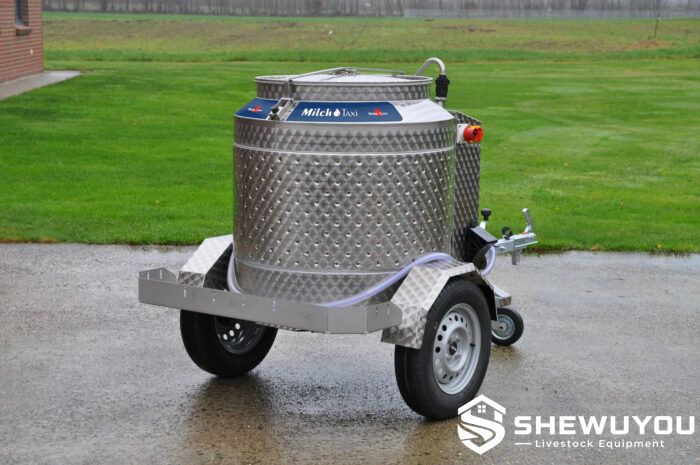
  • Stainless Steel Milk Tank: Easy-to-clean vessel for whole milk or prepared milk replacer.
  • Bottom Agitator: Compact 250 W mixing system positioned beneath the tank to keep the interior unobstructed.
  • Surface Heating System: Optional full-base heating distributes heat across a large contact area.
  • Milk Pump: Transfers prepared milk through the dispensing circuit on pump-equipped configurations.
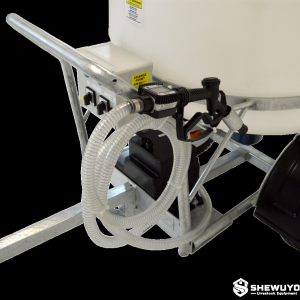
  • Dispensing Arm: Provides convenient hose positioning and controlled delivery at calf feeding points.
  • Electronic Controller: Monitors liquid level, temperature and operating functions.
  • Drain Valve: Large lower outlet enables complete tank drainage after feeding and cleaning.
  • Sealed Lid: Lockable cover opens fully for filling, inspection and sanitation.
  • Trailer Chassis: Single-axle structure designed for towing by compatible farm vehicles.
  • Road Wheels: Large tires support operation over typical dairy-farm surfaces.
Working Principle Whole milk, water and milk-replacer ingredients are added to the stainless steel tank according to the required calf-feeding program. The bottom agitator mixes the contents, while the optional surface-heating system raises the liquid to the selected feeding temperature.

When pasteurization equipment is specified, whole milk can be thermally treated according to the programmed process before cooling or feeding.

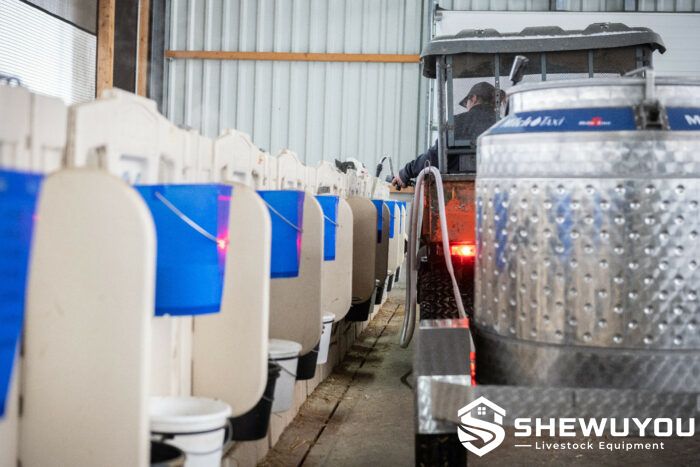
The trailer is then connected to a compatible farm vehicle and transported to the calf-housing area. On pump-equipped versions, milk is delivered through the dispensing arm, and programmed dosing quantities allow the operator to distribute repeatable portions to individual buckets or calf feeders.

After feeding, residual milk can be drained and the semi-automatic cleaning cycle used to rinse milk-contact components.
Technical Specifications
Product Type Towable calf milk preparation and dispensing trailer
Available Working Capacities 260 L / 400 L
Total Tank Capacity – 260 L Model 290 L
Total Tank Capacity – 400 L Model 480 L
260 L Trailer Dimensions Approx. 120 × 172 × 135 cm
400 L Trailer Dimensions Approx. 130 × 220 × 140 cm
Reference Power Supply 400 V / 16 A
Reference Pump Capacity Approx. 40 L/min
Heating Power – 260 L 6 kW
Heating Power – 400 L 9.7 kW
Agitator Power 250 W
Reference Tire Size – 260 L 400 mm
Reference Tire Size – 400 L 570 mm
Tank Material Polished stainless steel
Drain Outlet 1 1/4-inch drain tap on referenced configuration
Dosing Levels Up to 9 freely programmable quantities with applicable dispensing system
Pasteurization Available upon request
Applications
  • Large commercial dairy calf-rearing operations.
  • Outdoor calf-hutch rows located away from the milk room.
  • Individual, pair and group calf housing.
  • Replacement-heifer nursery facilities.
  • Whole-milk and milk-replacer feeding programs.
  • Farms requiring long-distance milk transport between buildings.
  • Calf facilities with uneven outdoor feeding routes.
  • High-volume feeding operations requiring larger batch sizes.
  • Dairy farm expansion and calf-rearing modernization projects.
Customization Options
  • Tank Capacity: 260 L or 400 L towable configurations.
  • Heating: Surface heating available according to feeding requirements.
  • Pasteurization: Available upon request.
  • Pump and Dispensing Arm: Configurable according to feeding workflow.
  • Wireless Dispensing Control: Available upon request.
  • Tire Configuration: Selected according to farm surface and traction requirements.
  • Thermal Insulation: Insulating jacket options available for cold-weather feeding.
  • Bucket Cleaning: Compatible bucket-cleaning equipment available for pump-equipped versions.
  • Electrical Specification: Configurable according to destination-country requirements.
  • Project Configuration: Designed according to calf numbers, feeding routes and local farm conditions.
Installation & Maintenance
  • Confirm that the towing vehicle and hitch arrangement are suitable for the selected trailer and fully loaded operating weight.
  • Provide a compatible electrical supply in the milk-preparation and cleaning area.
  • Check trailer tires, wheel fasteners, hitch components and safety devices before operation.
  • Inspect pump, hose and dispensing components before each feeding round.
  • Clean milk-contact surfaces after every feeding cycle according to the farm hygiene program.
  • Use the semi-automatic cleaning program to rinse the tank, pump and hose circuit.
  • Fully open the tank cover when additional manual brushing is required.
  • Drain residual milk and cleaning water completely through the lower outlet.
  • Inspect agitator, heating components and seals periodically.
  • Keep electronic controls and electrical connections protected during washing.
  • Service the trailer axle and running gear according to the required maintenance schedule.
Product FAQ

Q: Which towable capacities are available?
A: The reference range includes 260-liter and 400-liter working-capacity trailer models.

Q: What is the difference between working capacity and total tank capacity?
A: The 260 L trailer has approximately 290 L total tank volume, while the 400 L trailer has approximately 480 L total tank volume. The additional volume provides operating headspace.

Q: Can the unit mix milk replacer?
A: Yes. A 250 W bottom-mounted agitator is used to mix milk replacer and provide gentle interval agitation during heating.

Q: Can it heat whole milk?
A: Yes. Surface-heating configurations are available for gentle and controlled milk warming.

Q: Is milk pasteurization available?
A: Yes. Both towable capacities can be configured with a pasteurization function.

Q: How fast can milk be pumped?
A: The referenced pump system provides approximately 40 liters per minute.

Q: Can different calf portions be programmed?
A: Yes. With the applicable dispensing system, up to nine dosing quantities can be programmed.

Q: Why choose a towable milk taxi instead of a push cart?
A: A trailer configuration is particularly useful for larger milk volumes, longer feeding routes and farms where calf housing is spread over a wide area.

Q: Can the system be configured for an overseas dairy project?
A: Yes. Capacity, heating, pasteurization, dispensing equipment, electrical specification and trailer configuration can be selected according to project requirements.

Product Gallery

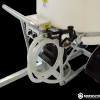
400L calf milk taxi trailer in dairy barn

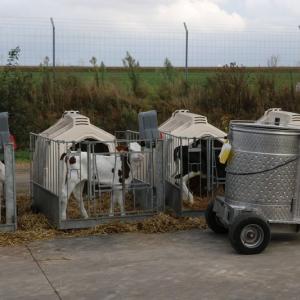
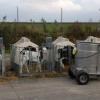
towable calf milk taxi feeding outdoor calf hutches

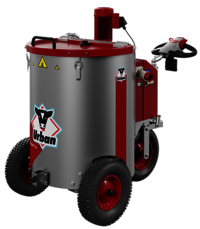
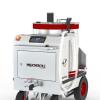
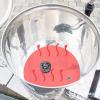
400L towable stainless steel calf milk taxi product view

Comments & Inquiries

Leave your questions or requirements below. We will reply as soon as possible.