


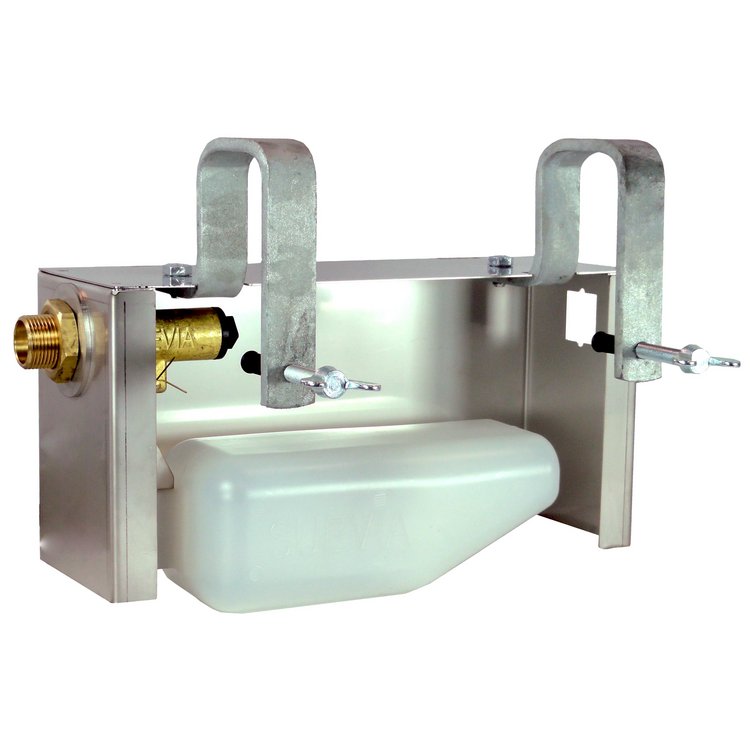

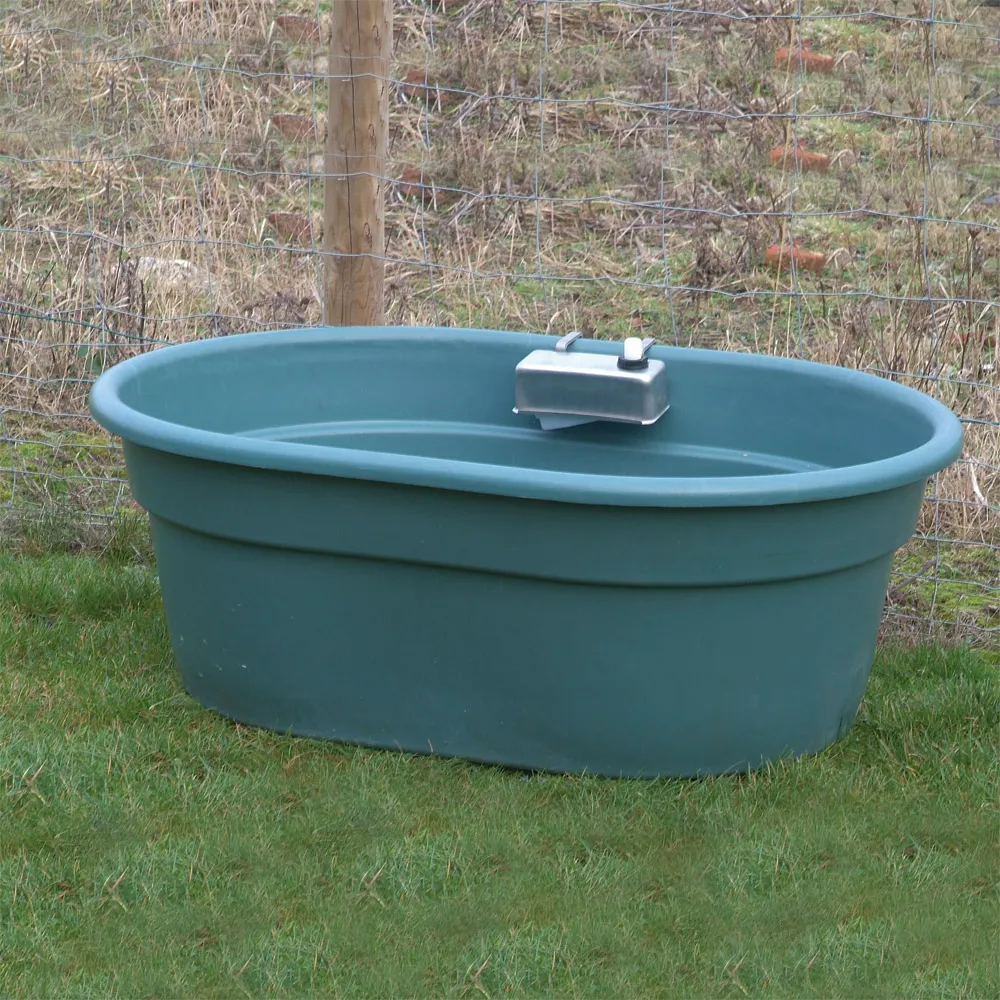

| Product Name | High-Capacity Trough Water Level Control Assembly | ||||||||||||||||||||
| Product Image |  |
||||||||||||||||||||
| Product Overview | The High-Capacity Trough Water Level Control Assembly is designed for automatic filling and water-level regulation in cattle troughs, pasture drinkers, livestock water tanks and large-capacity watering systems. The assembly uses a mechanical float valve to respond automatically to changes in trough water level. When animals drink and the level drops, the valve opens to replenish the trough. When the preset water level is restored, the float closes the inlet valve automatically. High-flow valve configurations are suitable for commercial livestock farms where groups of animals may consume large amounts of water within a short period. The assembly can be integrated into new livestock equipment installations, pasture watering systems, cattle farm construction and steel structure building projects. |
||||||||||||||||||||
| Key Features |
|
||||||||||||||||||||
| Structural Components | A typical water level control assembly may include:
|
||||||||||||||||||||
| Working Principle | The float rests on the water surface and moves according to the water level inside the trough. As livestock consume water, the float moves downward and mechanically opens the inlet valve. Fresh water then flows into the trough. As the water level rises, the float moves upward until the selected level is reached, at which point the valve closes automatically. This continuous mechanical regulation keeps drinking water available without requiring workers to refill the trough manually. Properly selected high-flow valves can also provide rapid recovery after periods of heavy drinking. |
||||||||||||||||||||
| Technical Specifications |
The reference Kerbl trough supports both a 220P float valve rated at 41 L/min at 3 bar and an XtraFlo valve rated at up to 250 L/min at 3 bar. A separate Kerbl immersion float assembly is specified for automatic water-level regulation and provides 24 L/min at 1 bar, 41 L/min at 3 bar and 54 L/min at 5 bar. :contentReference[oaicite:1]{index=1} |
||||||||||||||||||||
| Applications |
|
||||||||||||||||||||
| Customization Options |
|
||||||||||||||||||||
| Installation & Maintenance | Before installation, confirm the available inlet pressure, required refill rate, trough dimensions and expected livestock water demand. Select a float valve with sufficient flow capacity for the herd and available water supply. Install the assembly where the float can move freely without interference from the trough wall or other components. The valve and water connection should be protected from direct contact with livestock wherever possible. After connecting the water supply, adjust the float position until the required trough water level is achieved. Check that the valve opens fully as the level falls and closes completely at the target level. Routine maintenance should include inspecting the float, valve seat, seals, inlet connection and mounting components. Sediment and mineral deposits should be removed as necessary, and the trough should be cleaned regularly. The reference trough uses smooth surfaces, rounded edges and a large drain outlet to simplify cleaning and rapid emptying. :contentReference[oaicite:2]{index=2} |
||||||||||||||||||||
| Project Cases | High-capacity water level control assemblies are suitable for centralized livestock watering projects where large troughs must recover quickly after periods of heavy animal water consumption. For large commercial cattle farms, several automatic troughs can be distributed throughout feeding areas, holding yards and pasture sections. Valve flow capacity, pipe diameter and trough location can be selected according to herd size and available water pressure. For new livestock farm construction and steel structure building projects, water level controllers can be planned together with supply pipes, filters, pressure regulators, troughs and drainage systems. |
||||||||||||||||||||
| Product FAQ | Q: How does the water level controller work? A: The float follows the water surface. When the level falls, the float opens the valve. When the selected water level is restored, it closes the valve automatically. Q: Why use a high-capacity valve? A: Large cattle groups can consume significant quantities of water in a short period. A properly sized high-flow valve helps the trough refill quickly and maintain adequate drinking availability. Q: Can it be used with both low-pressure and high-pressure water supplies? A: Yes. Different valve configurations can be selected according to the available farm water pressure. The Kerbl 220P reference valve is offered for high- and low-pressure applications. :contentReference[oaicite:3]{index=3} Q: Can the water level be adjusted? A: Yes. The float position can be adjusted on suitable configurations to change the target water level. Q: Is the assembly suitable for cattle pasture troughs? A: Yes. High-flow float valves are particularly suitable for large open troughs used by cattle and other herd animals. Q: Can the assembly be supplied for an existing trough? A: Yes. Mounting, water connection and valve configuration can be selected according to the trough dimensions and project requirements. |
||||||||||||||||||||
| Product Gallery |  |
- Home
-
Products
- Pig Farming Equipment
- Cattle Farming Equipment
- Sheep & Goat Farming Equipment
- Poultry Farming Equipment
- Feeding & Drinking Systems
- Veterinary & Breeding Equipment
- Testing & Diagnostic Equipment
- Cleaning & Biosecurity Equipment
- Climate Control Equipment
- Livestock Weighing Equipment
- Manure & Waste Management
- Farm Transport & Handling
-
Solutions
- Pig Farm Solutions
- Dairy Farm Solutions
- Beef Cattle Farm Solutions
- Sheep & Goat Farm Solutions
- Layer Farm Solutions
- Broiler Farm Solutions
- Feeding & Drinking System Solutions
- Climate Control Solutions
- Biosecurity & Disinfection Solutions
- Manure & Waste Management
- Smart Farming Solutions
- Farm Renovation and Upgrade Solutions
- Partners
- Projects
- Resources
- News
- About Us
- Contact




Comments & Inquiries
Leave your questions or requirements below. We will reply as soon as possible.