


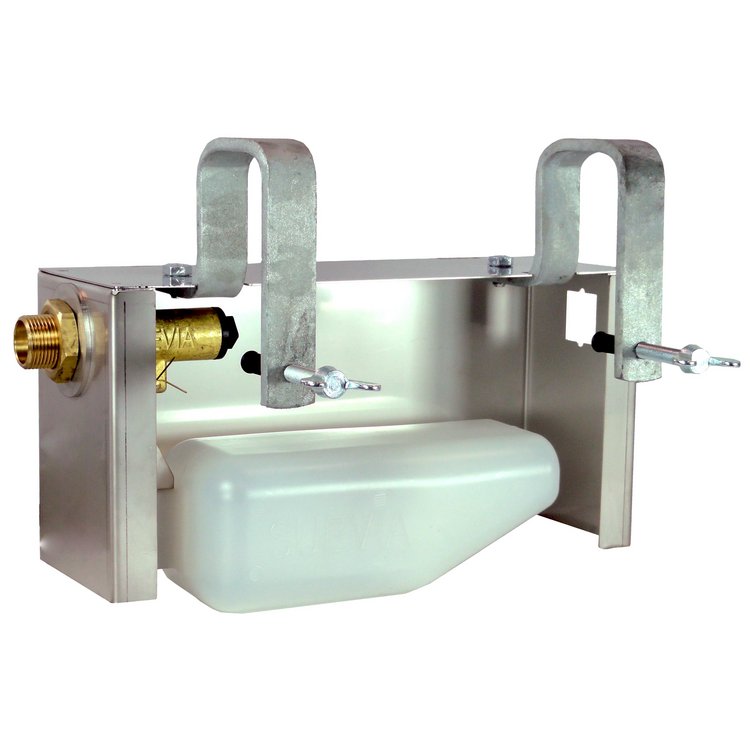

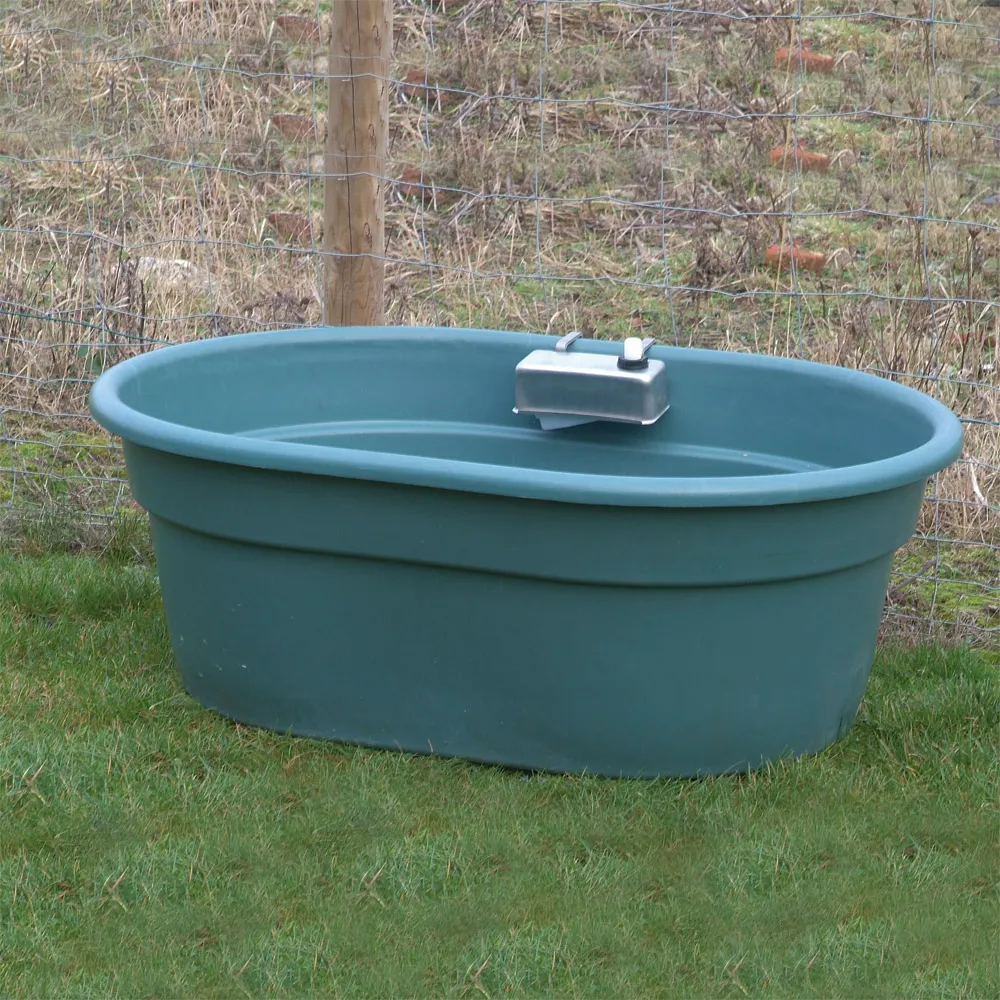

| Product Name | Immersion Livestock Water Level Valve | ||||||||||||||||||
| Product Image | 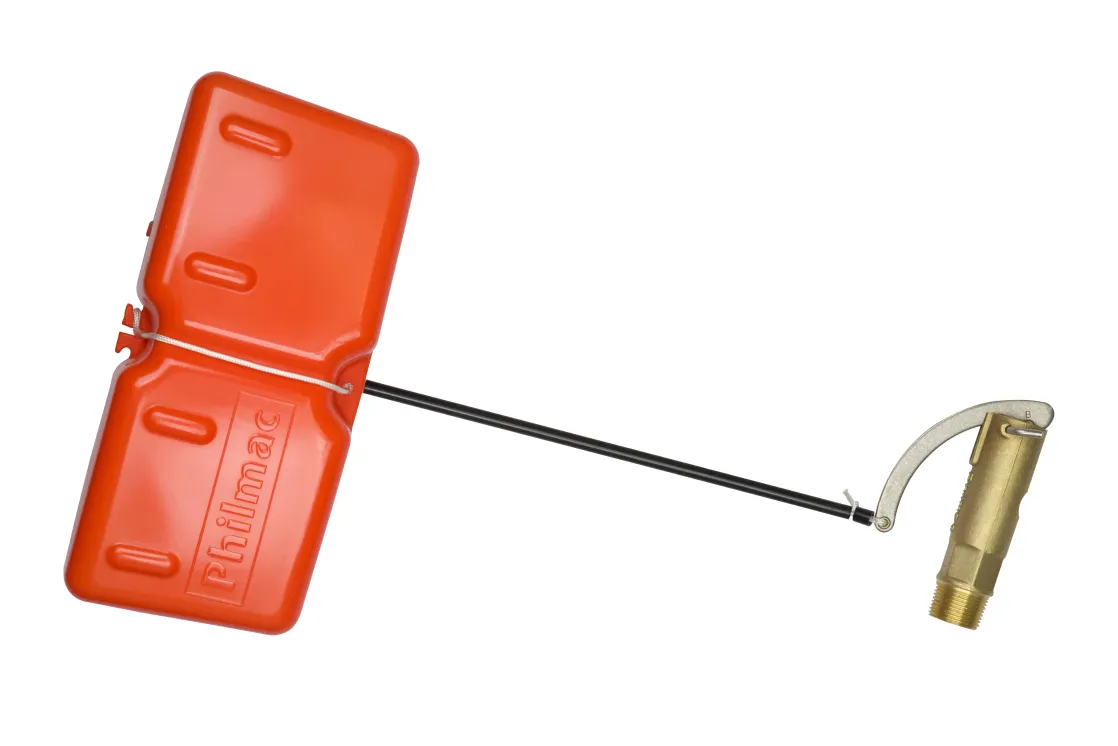 |
||||||||||||||||||
| Product Overview | The Immersion Livestock Water Level Valve is designed for automatic water-level control in livestock troughs, stock tanks and agricultural water systems. The compact float-operated structure sits close to the trough wall, reducing exposed components and helping protect the valve from livestock interference. When the water level falls, the float mechanism opens the valve and allows fresh water to enter the trough. As the level rises, the float closes the valve automatically. This provides reliable water replenishment without continuous manual filling. Plastic and brass body configurations are available, with corrosion-resistant components suitable for outdoor agricultural environments. The valve can be used in cattle, goat-farming-equipment/" target="_blank" class="keylink">sheep, horse and mixed-livestock watering installations. |
||||||||||||||||||
| Key Features |
|
||||||||||||||||||
| Structural Components | A typical immersion livestock water level valve includes:
|
||||||||||||||||||
| Working Principle | The valve is installed inside or adjacent to the livestock trough and connected to the water supply line. The float moves according to the water level inside the trough. When animals drink and the water level drops, the float moves downward. This action operates the internal lever and plunger, opening the valve and allowing water to enter the trough. As the trough refills, the float rises. When the preset water level is reached, the mechanism pushes the plunger against the valve seat and shuts off the incoming flow. The compact float arrangement keeps the operating mechanism close to the trough wall, helping protect the valve in demanding livestock environments. |
||||||||||||||||||
| Technical Specifications |
|
||||||||||||||||||
| Applications |
|
||||||||||||||||||
| Customization Options |
|
||||||||||||||||||
| Installation & Maintenance | Install the valve at the required trough inlet and ensure that the float can move freely without obstruction. The compact valve structure allows installation close to the trough wall, which helps protect the operating mechanism from livestock. Depending on the trough design, the valve can be arranged with side, bottom or overhead water supply. Horizontal and vertical installation configurations are also possible with suitable plumbing arrangements. After connecting the water line, adjust the float position to establish the required water level. Pressurize the system and confirm that the valve opens as the water level falls and closes completely when the trough reaches the desired level. Routine maintenance should include checking the float, valve seat, plunger, seals and inlet connection. Remove dirt, sediment or mineral deposits that may interfere with valve movement or sealing performance. Protect the water system from freezing where required by local climate conditions. |
||||||||||||||||||
| Project Cases | Immersion water level valves can be incorporated into complete livestock watering projects for grazing areas, commercial cattle farms, sheep farms and mixed-livestock facilities. In larger installations, multiple trough valves can be connected to a central farm water network. Valve size, pipeline diameter and trough location can be selected according to herd distribution, water demand and available water pressure. For new livestock farm construction and steel structure building projects, the valve can be supplied together with troughs, pipes, pressure-control equipment and other livestock equipment according to project drawings. |
||||||||||||||||||
| Product FAQ | Q: What is the main purpose of an immersion livestock water level valve? A: It automatically controls the water level in livestock troughs and tanks by opening when the water level falls and closing when the preset level is reached. Q: Why is the compact float design useful? A: The float and operating mechanism remain close to the trough wall, helping reduce accidental damage and tampering by livestock. Q: What connection sizes are available? A: Common reference configurations include 3/4 in., 1 in. and 1-1/4 in. sizes, depending on the selected plastic or brass model. Q: Can the valve be installed vertically? A: Yes. Suitable models can be installed horizontally or vertically, and overhead water inlet arrangements can also be used according to the trough design. Q: Is the valve suitable for outdoor livestock farms? A: Yes. Plastic configurations use UV- and corrosion-resistant materials, while brass versions provide strong durability for demanding agricultural environments. Q: Can the water level be adjusted? A: Yes. The float position can be adjusted during installation to establish the required trough water level. |
||||||||||||||||||
| Product Gallery |  |
- Home
-
Products
- Pig Farming Equipment
- Cattle Farming Equipment
- Sheep & Goat Farming Equipment
- Poultry Farming Equipment
- Feeding & Drinking Systems
- Veterinary & Breeding Equipment
- Testing & Diagnostic Equipment
- Cleaning & Biosecurity Equipment
- Climate Control Equipment
- Livestock Weighing Equipment
- Manure & Waste Management
- Farm Transport & Handling
-
Solutions
- Pig Farm Solutions
- Dairy Farm Solutions
- Beef Cattle Farm Solutions
- Sheep & Goat Farm Solutions
- Layer Farm Solutions
- Broiler Farm Solutions
- Feeding & Drinking System Solutions
- Climate Control Solutions
- Biosecurity & Disinfection Solutions
- Manure & Waste Management
- Smart Farming Solutions
- Farm Renovation and Upgrade Solutions
- Partners
- Projects
- Resources
- News
- About Us
- Contact




Comments & Inquiries
Leave your questions or requirements below. We will reply as soon as possible.