
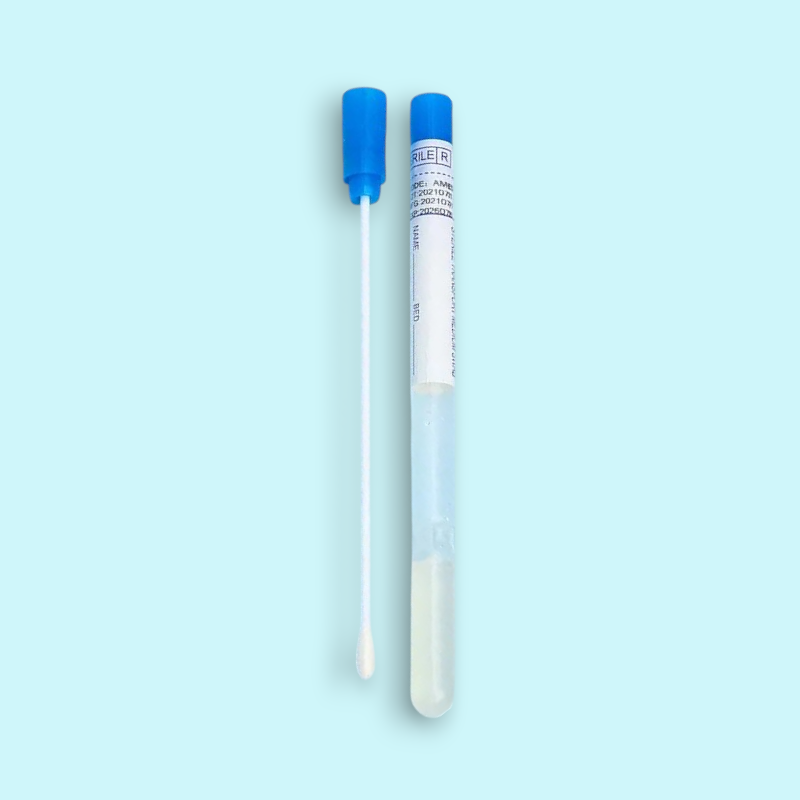


| Product Name | Veterinary Nasal Sampling Swab | ||||||||||||||||||||||
| Product Image |  |
||||||||||||||||||||||
| Product Overview | The Veterinary Nasal Sampling Swab is designed for collecting nasal and nasopharyngeal specimens from cattle, pigs and other livestock for veterinary diagnostic testing, disease surveillance and herd health programs. The flocked tip consists of short synthetic fibers arranged on the applicator surface. This open fiber structure provides efficient specimen uptake and release compared with conventional tightly wound fiber swabs, making the swab suitable for molecular assays, microbiological testing and other laboratory workflows. The slim applicator shaft and soft sampling tip facilitate controlled access to the nasal cavity while helping reduce unnecessary irritation when appropriate sampling procedures are followed. Individually packaged sterile configurations are suitable for commercial farms, veterinary clinics, diagnostic laboratories, breeding companies and livestock health programs. |
||||||||||||||||||||||
| Key Features |
|
||||||||||||||||||||||
| Structural Components |
|
||||||||||||||||||||||
| Working Principle | The flocked tip uses a thin layer of synthetic fibers attached approximately perpendicular to the applicator surface. The resulting open structure allows biological material to be absorbed between the fibers rather than becoming deeply trapped inside a conventional fiber core. During sampling, the swab is inserted carefully into the appropriate region of the nasal cavity and gently rotated or moved against the nasal mucosa according to the veterinary sampling protocol. Mucosal secretions and surface epithelial material are collected on the flocked tip. After collection, the swab is placed into the required transport medium or specimen container. Where a breakpoint is provided, the shaft can be broken at the designated point so that the specimen-containing tip remains inside the transport tube. |
||||||||||||||||||||||
| Technical Specifications |
|
||||||||||||||||||||||
| Applications |
|
||||||||||||||||||||||
| Customization Options |
|
||||||||||||||||||||||
| Use & Handling | Select the appropriate swab length, tip configuration and transport medium according to the animal species, sampling location and diagnostic test. Properly restrain the animal before sampling. Open the sterile package without touching the flocked tip. Insert the swab carefully into the nasal cavity while avoiding unnecessary contact with the external skin or other surfaces that may contaminate the specimen. Gently rotate and move the swab against the nasal mucosa to collect secretions and surface epithelial material. Excessive force should be avoided because traumatic sampling can introduce blood into the specimen and may reduce sample quality. Immediately place the collected swab into the transport tube or medium specified by the diagnostic laboratory. Break the shaft at the designated breakpoint when required, securely close the tube, and label the specimen with the appropriate animal and sampling information. Maintain the required storage temperature and transport conditions specified by the diagnostic laboratory. Used swabs and contaminated materials should be discarded according to local veterinary biohazard procedures. |
||||||||||||||||||||||
| Product FAQ | What is a veterinary nasal sampling swab used for? It is used to collect nasal or nasopharyngeal specimens from animals for laboratory testing, including molecular, virological and microbiological diagnostic procedures. What is the advantage of a flocked swab? The open structure of short flocked fibers supports efficient specimen collection and release because the sample is held between surface fibers rather than becoming deeply trapped inside a dense fiber core. Can this swab be used for cattle? Yes. Nasal and nasopharyngeal swabs are commonly used in cattle diagnostic programs when appropriate veterinary sampling and laboratory protocols are followed. Can it be used for pigs? Yes. Suitable nasal swabs may be used for swine respiratory disease surveillance and other diagnostic sampling according to the test protocol. What is the purpose of the breakpoint? A molded breakpoint allows the applicator shaft to be separated after collection so the specimen-containing swab tip can remain inside a compatible transport tube. Does the swab include transport medium? Dry swab and transport-medium kit configurations can be supplied according to project and laboratory requirements. Can the same swab be reused? No. Veterinary sampling swabs are intended for single-animal, single-use specimen collection to reduce contamination and cross-transmission risks. |
||||||||||||||||||||||
| Product Gallery |   |
- Home
-
Products
- Pig Farming Equipment
- Cattle Farming Equipment
- Sheep & Goat Farming Equipment
- Poultry Farming Equipment
- Feeding & Drinking Systems
- Veterinary & Breeding Equipment
- Testing & Diagnostic Equipment
- Cleaning & Biosecurity Equipment
- Climate Control Equipment
- Livestock Weighing Equipment
- Manure & Waste Management
- Farm Transport & Handling
-
Solutions
- Pig Farm Solutions
- Dairy Farm Solutions
- Beef Cattle Farm Solutions
- Sheep & Goat Farm Solutions
- Layer Farm Solutions
- Broiler Farm Solutions
- Feeding & Drinking System Solutions
- Climate Control Solutions
- Biosecurity & Disinfection Solutions
- Manure & Waste Management
- Smart Farming Solutions
- Farm Renovation and Upgrade Solutions
- Partners
- Projects
- Resources
- News
- About Us
- Contact


Comments & Inquiries
Leave your questions or requirements below. We will reply as soon as possible.