
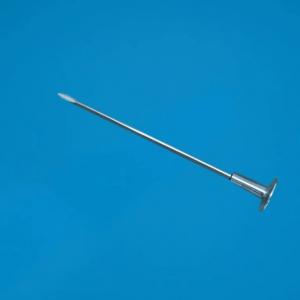
| Product Name | Veterinary Diagnostic Flocked Sampling Swab | ||||||||||||||||||||||||
| Product Image |  |
||||||||||||||||||||||||
| Product Overview | The Veterinary Diagnostic Flocked Sampling Swab is designed for efficient collection and transfer of cellular and liquid specimens from livestock and companion animals. The flocked tip uses vertically arranged nylon microfibers to provide a soft, brush-like sampling surface with strong specimen uptake and rapid release into compatible transport media or diagnostic test systems. Compared with conventional wound-fiber swabs, flocked technology provides an open fiber structure that allows biological material to be collected on the surface rather than trapped deep inside the swab matrix. This helps improve specimen recovery during downstream testing. The swab is suitable for veterinary diagnostic laboratories, commercial pig farms, poultry farms, cattle operations, breeding farms and animal disease surveillance programs. It can be used for nasal, oral, throat, buccal, skin and other specimen collection according to the required veterinary diagnostic procedure. |
||||||||||||||||||||||||
| Key Features |
|
||||||||||||||||||||||||
| Structural Components |
|
||||||||||||||||||||||||
| Working Principle | During specimen collection, the flocked tip is gently contacted with and rotated against the required anatomical sampling area according to the veterinary diagnostic protocol. The vertically arranged nylon fibers create a brush-like surface that helps detach and capture cells, mucus and other biological material. Liquid specimens are drawn into the spaces between the fibers through capillary action. After collection, the swab is placed into a compatible transport medium, extraction buffer or sealing tube. Because the specimen remains primarily on the exposed flocked fiber surface, agitation or mixing can rapidly release the collected material for laboratory analysis or rapid diagnostic testing. |
||||||||||||||||||||||||
| Technical Specifications |
|
||||||||||||||||||||||||
| Applications |
|
||||||||||||||||||||||||
| Customization Options |
|
||||||||||||||||||||||||
| Use & Handling | Select the swab configuration according to the animal species, anatomical sampling site and diagnostic method. Open the individual package immediately before use and avoid touching the flocked tip or contaminating the shaft area that will enter the sample tube. Gently insert or position the flocked tip at the designated sampling site and rotate it according to the veterinary sampling protocol to collect sufficient cellular or liquid material. Immediately place the swab into the specified transport medium, extraction solution or diagnostic tube. If a breakpoint is provided, bend the shaft at the designated position so that the flocked tip remains securely inside the tube. Close and identify the sample container before transport. Specimen storage temperature, transport time and laboratory handling should follow the requirements of the diagnostic assay being performed. The swab is intended for single use. Used swabs and contaminated materials should be disposed of according to local veterinary biosecurity and biological waste regulations. |
||||||||||||||||||||||||
| Product FAQ | What is a flocked sampling swab? A flocked swab uses short fibers arranged vertically on the swab tip instead of traditional wound fibers. This creates a brush-like surface for efficient specimen collection and release. Why are nylon flocked swabs suitable for veterinary diagnostics? The open nylon fiber structure can efficiently collect cells and liquid specimens while allowing rapid release into transport medium or extraction solution. What animals can be sampled? Depending on swab size and veterinary protocol, flocked swabs can be used for pigs, cattle, poultry, horses, sheep, goats and other animals. What sampling sites are suitable? Common applications include nasal, oral, throat, buccal, skin and other anatomical sites specified by the diagnostic procedure. What is the purpose of the breakpoint? The molded breakpoint allows the swab shaft to be separated after sampling so the flocked tip can remain inside a compatible transport or extraction tube. Can the tip size and softness be customized? Yes. Tip dimensions, shape, softness, shaft length and breakpoint position can be selected according to sampling and diagnostic system requirements. Can this swab be reused? No. Veterinary diagnostic sampling swabs should be treated as single-use products to reduce cross-contamination between animals and samples. |
||||||||||||||||||||||||
| Product Gallery |   |
- Home
-
Products
- Pig Farming Equipment
- Cattle Farming Equipment
- Sheep & Goat Farming Equipment
- Poultry Farming Equipment
- Feeding & Drinking Systems
- Veterinary & Breeding Equipment
- Testing & Diagnostic Equipment
- Cleaning & Biosecurity Equipment
- Climate Control Equipment
- Livestock Weighing Equipment
- Manure & Waste Management
- Farm Transport & Handling
-
Solutions
- Pig Farm Solutions
- Dairy Farm Solutions
- Beef Cattle Farm Solutions
- Sheep & Goat Farm Solutions
- Layer Farm Solutions
- Broiler Farm Solutions
- Feeding & Drinking System Solutions
- Climate Control Solutions
- Biosecurity & Disinfection Solutions
- Manure & Waste Management
- Smart Farming Solutions
- Farm Renovation and Upgrade Solutions
- Partners
- Projects
- Resources
- News
- About Us
- Contact


Comments & Inquiries
Leave your questions or requirements below. We will reply as soon as possible.