
| Product Name | Veterinary Sample Cryogenic Storage Box | ||||||||||||||||||||||||
| Product Image |  |
||||||||||||||||||||||||
| Product Overview | The Veterinary Sample Cryogenic Storage Box is designed for organized storage of cryogenic vials containing animal blood, serum, plasma, tissue, DNA, semen and other veterinary laboratory specimens. The reference configuration uses a durable cardboard box with an internal 10 × 10 divider grid capable of holding up to 100 larger cryogenic vials. Individual compartments help keep tubes upright and separated while simplifying sample identification and retrieval. It is suitable for veterinary diagnostic laboratories, livestock breeding centers, research facilities, commercial farms and biobanking workflows requiring economical short-term frozen sample organization. |
||||||||||||||||||||||||
| Key Features |
|
||||||||||||||||||||||||
| Structural Components |
|
||||||||||||||||||||||||
| Structural Principle | The storage box uses a rigid outer container combined with an internal cellular divider system. Each vial occupies an independent compartment, helping maintain a defined sample position within the box. The 10 × 10 array allows samples to be indexed by row and column, simplifying inventory management and specimen retrieval. The compact square format is designed to fit compatible laboratory freezer racks and sample storage systems. For veterinary laboratory use, each position can be linked to an animal identification number, specimen type, collection date or laboratory accession number within a manual or digital inventory system. |
||||||||||||||||||||||||
| Technical Specifications |
|
||||||||||||||||||||||||
| Applications |
|
||||||||||||||||||||||||
| Customization Options |
|
||||||||||||||||||||||||
| Installation & Maintenance | No permanent installation is required. Assemble the divider grid when necessary and position it securely inside the box before loading sample vials. Assign a defined row-and-column position to each specimen and maintain corresponding inventory records. Labels should remain readable under the intended storage conditions. Ensure all cryogenic vials are securely closed before placement in the box. Avoid overfilling compartments or forcing oversized tubes into the divider grid. Cardboard boxes should be kept dry during handling and should be replaced if they become structurally damaged, heavily contaminated or unable to retain the divider system securely. Storage temperature and cryogenic handling procedures must follow the requirements of the sample container, specimen type and laboratory protocol. Appropriate cryogenic personal protective equipment should be used when handling materials from ultra-low-temperature storage. |
||||||||||||||||||||||||
| Product FAQ | How many samples can the reference box hold? The reference configuration contains a 10 × 10 divider and holds up to 100 compatible cryogenic vials. What vial size is the reference configuration designed for? The cited 340061 configuration is specified for 3.6 ml vials. Can this box be used for veterinary samples? Yes. Compatible cryovials containing veterinary blood, serum, tissue, DNA and other appropriately prepared laboratory samples can be organized in this type of storage box. Is the box made of plastic? No. The reference 340061 configuration is manufactured from cardboard or chipboard. Plastic cryobox configurations are also available for applications requiring different durability or storage characteristics. Why is a divider grid useful? Individual grid positions improve sample organization, prevent excessive vial movement and allow each tube to be referenced using a row-and-column inventory system. Can different capacities be supplied? Yes. Cryogenic storage boxes are available in multiple dimensions and arrays according to vial size, freezer rack design and laboratory requirements. Can the cardboard box be used directly in liquid nitrogen? Storage compatibility should be confirmed for the specific box, vial and laboratory procedure. The reference manufacturer describes this cardboard configuration primarily as an economical option for short-term storage rather than assigning the plastic CryoBox temperature range to it. |
||||||||||||||||||||||||
| Product Gallery | 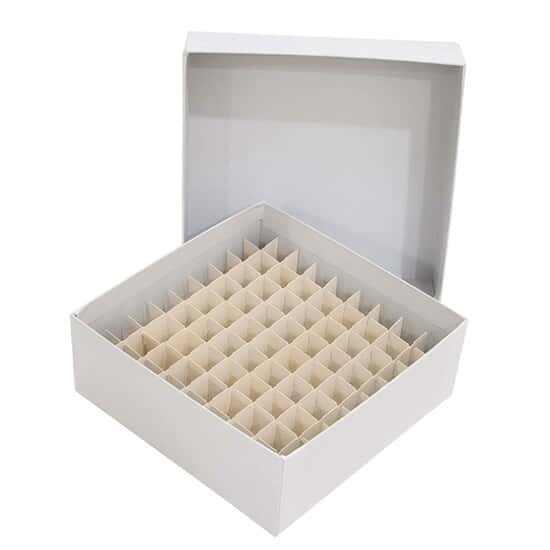  |
- Home
-
Products
- Pig Farming Equipment
- Cattle Farming Equipment
- Sheep & Goat Farming Equipment
- Poultry Farming Equipment
- Feeding & Drinking Systems
- Veterinary & Breeding Equipment
- Testing & Diagnostic Equipment
- Cleaning & Biosecurity Equipment
- Climate Control Equipment
- Livestock Weighing Equipment
- Manure & Waste Management
- Farm Transport & Handling
-
Solutions
- Pig Farm Solutions
- Dairy Farm Solutions
- Beef Cattle Farm Solutions
- Sheep & Goat Farm Solutions
- Layer Farm Solutions
- Broiler Farm Solutions
- Feeding & Drinking System Solutions
- Climate Control Solutions
- Biosecurity & Disinfection Solutions
- Manure & Waste Management
- Smart Farming Solutions
- Farm Renovation and Upgrade Solutions
- Partners
- Projects
- Resources
- News
- About Us
- Contact
Comments & Inquiries
Leave your questions or requirements below. We will reply as soon as possible.