


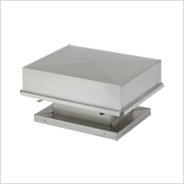


| Product Name | Dairy Barn Roof Exhaust Fan |
| Product Image |  |
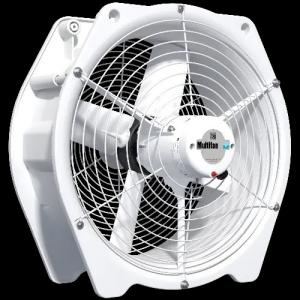
| Product Overview | The Dairy Barn Roof Exhaust Fan is designed for mechanical air extraction in commercial dairy facilities. Installed at the roof or ridge area, it helps remove warm, humid and stale air while supporting controlled air exchange throughout the barn. Roof-level exhaust is especially useful for managing moisture and accumulated warm air near the upper part of the building. It can complement natural ventilation, cross ventilation, tunnel ventilation or other mechanical ventilation arrangements according to the barn structure and climate. The system is suitable for free-stall barns, enclosed dairy buildings, milking facilities and other cattle housing applications. Properly designed dairy ventilation supports air quality, heat and moisture removal, and cattle comfort. |
| Key Features | • Roof or ridge-mounted configuration for upper-level air extraction • Helps remove warm, humid and stale air from dairy buildings • Supports moisture and condensation management • Suitable for commercial dairy and cattle housing projects • Can complement natural, cross, tunnel or mechanical ventilation systems • Roof installation preserves wall space for doors, curtains and other livestock equipment • Corrosion-resistant construction options available for demanding barn environments • Direct-drive or belt-drive configurations available according to project requirements • Fixed-speed or variable-speed operation available upon request • Optional weather hood, damper, shutter and protective guard configurations • Designed for convenient cleaning, inspection and service access • Suitable for new dairy barn construction and ventilation retrofit projects Roof exhaust systems are commonly used in dairy ventilation to remove contaminated air and assist with heat and moisture control. Commercial livestock ventilation suppliers also provide roof and ridge exhaust configurations specifically for dairy applications. |
| Structural Components | A typical Dairy Barn Roof Exhaust Fan consists of a fan assembly, electric motor, exhaust housing or transition body, roof mounting structure, protective guard, damper or shutter, weather hood and electrical connection components. Depending on the selected configuration, the housing and transition components may use galvanized steel, coated steel, aluminum, FRP, stainless steel or other corrosion-resistant materials. In humid dairy environments, material selection should consider moisture, ammonia, dust, manure gases, washing procedures and long-term exposure to agricultural conditions. The roof mounting structure can be adapted to metal roofing, insulated sandwich panels, agricultural steel structure buildings and other suitable roof systems. Waterproof flashing and sealing should be incorporated into the installation design. Ridge-mounted designs can integrate the fan body and roof transition into a compact assembly, reducing the structural footprint around the roof opening. |
| Working Principle / Structural Principle | The electric motor drives the fan assembly to exhaust indoor air through the roof or ridge outlet. As contaminated or warm air is removed, replacement air enters through designed openings, curtains, inlets or other ventilation paths. In naturally ventilated or hybrid dairy barns, roof exhaust can assist the upward movement and removal of warm, moisture-laden air. In mechanically ventilated buildings, the fan works together with controlled air inlets to establish the required airflow pattern. During colder periods, controlled roof exhaust can help remove moisture and stale air without unnecessarily increasing drafts at cow level. During warmer conditions, increased exhaust capacity can assist with heat removal. Fan quantity, location and operating stages should be determined according to barn dimensions, cattle capacity, air inlet arrangement, static pressure, climate and the overall ventilation design. |
| Technical Specifications | Fan type: Roof-mounted dairy barn exhaust fan Installation: Roof or ridge mounted Fan size: Customizable Airflow capacity: According to project requirements Static pressure performance: According to project requirements Motor type: AC, EC or project-specific configuration Motor power: Customizable Drive system: Direct drive or belt drive according to project requirements Voltage and frequency: Designed according to local electrical standards Speed control: Available upon request Housing material: Galvanized steel, coated steel, aluminum, FRP or project-specific material Impeller or blade material: According to project requirements Roof transition: Customizable Weather hood: Available upon request Damper or shutter: Available upon request Protective guard: Available upon request Corrosion protection: Designed according to local climate and farm conditions Final airflow, motor power, fan dimensions and static pressure performance should be confirmed after the dairy barn ventilation calculation. No fixed parameters are assumed for this general product configuration. |
| Applications | • Commercial dairy farms • Free-stall dairy barns • Enclosed cattle housing • Tie-stall and livestock barns • Milking and holding facilities • Calf and young-stock buildings • Agricultural steel structure dairy buildings • Naturally ventilated barns with mechanical roof exhaust • Cross-ventilated and hybrid dairy barns • Dairy barn ventilation retrofit projects • New dairy farm construction projects The fan can be integrated with circulation fans, fresh-air inlets, curtains, environmental sensors and climate-control systems to create a complete dairy barn ventilation solution. |
| Customization Options | The Dairy Barn Roof Exhaust Fan can be configured according to barn dimensions, cattle capacity, roof structure, ventilation concept and local climate. Customization may include fan size, airflow capacity, motor power, voltage, frequency, drive type, blade configuration, housing material, roof curb dimensions, ridge transition, weather hood, damper, shutter, protective guard and corrosion-resistant treatment. Variable-speed motors, EC motor configurations, temperature and humidity sensors, pressure sensors and climate-control interfaces are available upon request. For large dairy projects, multiple roof exhaust fans can be arranged according to barn length, stall layout, cattle population, air inlet positions and seasonal ventilation requirements. All variable specifications are Customizable, According to project requirements, or Available upon request. |
| Installation & Maintenance | The fan is installed on a prepared roof opening, ridge opening or dedicated roof mounting structure. The transition body and mounting base should be securely connected to the building structure and properly sealed against rainwater penetration and uncontrolled air leakage. Installation should be coordinated with roof trusses, purlins, roofing panels, insulation, ridge components and electrical services. For agricultural steel structure buildings, the support arrangement should be confirmed during the building design stage. Fan position and quantity should be determined through the ventilation calculation rather than a fixed spacing rule. Barn geometry, stall arrangement, cattle density, air inlet location and seasonal operating requirements should be considered. Routine maintenance includes cleaning the fan assembly and exhaust path, inspecting the motor and electrical connections, checking mounting hardware, examining dampers or shutters and maintaining roof seals. Tool-less or easily removable hood and shutter configurations can be specified where simplified cleaning and service access are required. |
| Project Cases | The Dairy Barn Roof Exhaust Fan is suitable for commercial dairy engineering projects requiring controlled roof-level air extraction. Typical applications include free-stall dairy complexes, enclosed cattle barns, milking facilities, holding areas, young-stock buildings and agricultural steel structure livestock facilities. For large-scale dairy projects, fan quantity, airflow capacity, roof location, exhaust direction and control strategy can be developed according to building dimensions, cattle capacity, ventilation requirements and local climate. The product can be supplied as an individual exhaust component or integrated into a complete dairy barn ventilation package for agricultural engineering companies, livestock equipment distributors, system integrators and commercial farm procurement teams. No specific customer installation is claimed here; final equipment selection should be based on project drawings and ventilation calculations. |
| Product FAQ | Q: What is a Dairy Barn Roof Exhaust Fan? A: It is a roof- or ridge-mounted mechanical exhaust unit designed to remove indoor air from dairy barns and support controlled ventilation. Q: Why use roof exhaust in a dairy barn? A: Roof exhaust provides an outlet for warm and moisture-laden air near the upper part of the building while helping maintain a planned airflow path through the barn. Q: Can it be used in a free-stall dairy barn? A: Yes. The fan can be configured for free-stall, enclosed and other commercial cattle housing according to the ventilation design. Q: Can the fan operate during winter? A: Yes. Controlled exhaust can help remove moisture and stale air during colder periods. The operating strategy should be designed to avoid excessive drafts and heat loss. Q: Can it work with natural ventilation? A: Yes. Roof exhaust fans can supplement natural ventilation when additional mechanical air exchange is required. Q: Can it be integrated with cross ventilation? A: Yes. Roof exhaust can be incorporated into cross, hybrid or other mechanical ventilation arrangements according to the barn design. Q: Can the fan speed be controlled? A: Variable-speed operation is available upon request and depends on the selected motor and control configuration. Q: Can it be installed on an agricultural steel structure building? A: Yes. The mounting base and roof transition can be designed according to the steel structure, purlins, trusses and roofing system. Q: What materials are available? A: Galvanized steel, coated steel, aluminum, FRP, stainless steel and engineered polymer components may be selected according to project requirements and environmental conditions. Q: Can the product be customized for different dairy farms? A: Yes. Fan size, airflow, motor configuration, materials, mounting structure, corrosion protection and control functions can be designed according to local climate and farm conditions. Q: How should the roof fan be maintained? A: Routine maintenance includes cleaning the fan and exhaust path, checking electrical and mounting components, inspecting shutters or dampers and maintaining roof seals. |
| Product Gallery | 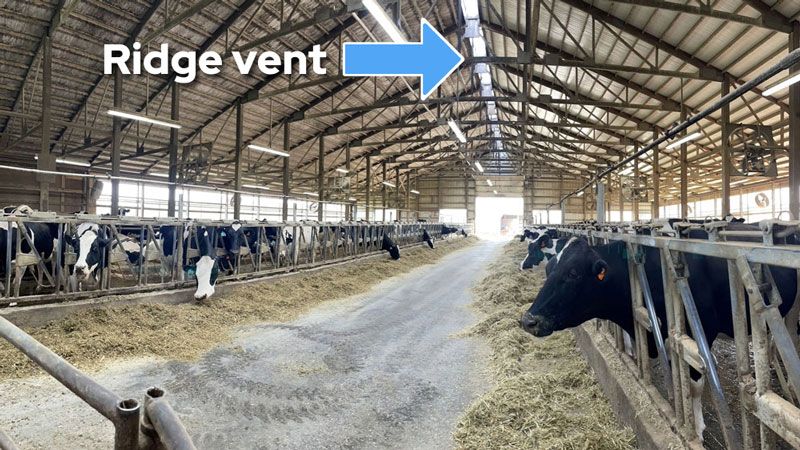  |
- Home
-
Products
- Pig Farming Equipment
- Cattle Farming Equipment
- Sheep & Goat Farming Equipment
- Poultry Farming Equipment
- Feeding & Drinking Systems
- Veterinary & Breeding Equipment
- Testing & Diagnostic Equipment
- Cleaning & Biosecurity Equipment
- Climate Control Equipment
- Livestock Weighing Equipment
- Manure & Waste Management
- Farm Transport & Handling
-
Solutions
- Pig Farm Solutions
- Dairy Farm Solutions
- Beef Cattle Farm Solutions
- Sheep & Goat Farm Solutions
- Layer Farm Solutions
- Broiler Farm Solutions
- Feeding & Drinking System Solutions
- Climate Control Solutions
- Biosecurity & Disinfection Solutions
- Manure & Waste Management
- Smart Farming Solutions
- Farm Renovation and Upgrade Solutions
- Partners
- Projects
- Resources
- News
- About Us
- Contact
Comments & Inquiries
Leave your questions or requirements below. We will reply as soon as possible.