| Product Name |
Flexible Ventilation Duct Hose |
| Product Image |
|
| Product Overview |
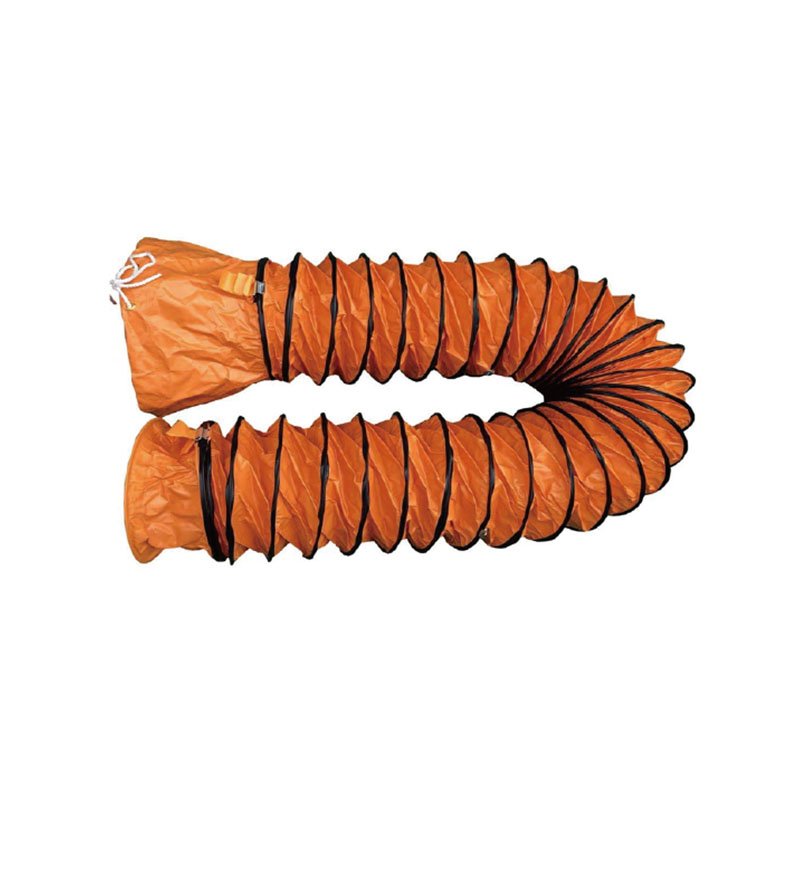
The Flexible Ventilation Duct Hose is designed to provide a practical air-transfer path for livestock ventilation systems. Its flexible structure allows the duct to be routed around building structures, ventilation equipment and other installation obstacles while maintaining a continuous airflow passage.
The hose is particularly suitable for fan-assisted air supply, air distribution, exhaust connections and localized ventilation in livestock buildings. It can be used as part of a complete livestock ventilation system or as a flexible connection between fans, air-handling equipment and designated ventilation areas.
SHEWUYOU's existing flexible ventilation duct reference uses reinforced PVC mesh fabric with spiral wire support. The published configuration is designed to provide flexibility, structural support and practical durability for agricultural ventilation environments. Final material and construction should be selected according to project requirements. :contentReference[oaicite:4]{index=4}
For international B2B customers, the duct hose can be configured according to farm layout, airflow requirements, duct routing, connection dimensions and local operating conditions. It is suitable for new livestock facilities, ventilation renovation projects and agricultural engineering applications.
|
| Key Features |
- Flexible Airflow Routing: The hose can be curved and routed around structural obstacles and ventilation equipment.
- Reinforced Flexible Construction: Spiral wire support helps maintain the duct's general shape during installation and operation.
- Reinforced PVC Fabric: The published SHEWUYOU configuration uses three-layer reinforced PVC mesh fabric for flexible agricultural ventilation applications. :contentReference[oaicite:5]{index=5}
- Air Transfer Function: Suitable for fresh-air supply, exhaust, air distribution and localized ventilation applications.
- Compact Storage: The flexible and compressible structure can reduce storage and transportation volume compared with rigid duct sections.
- Farm Environment Suitability: Material configurations can be selected according to humidity, cleaning procedures and local farm conditions.
- Wear Protection: An external protective strip can be configured to reduce abrasion at high-contact areas.
- Easy System Integration: Can be connected with compatible fans, air inlets, outlets, connectors and other ventilation components.
- Project Flexibility: Diameter, length and connection configuration are customizable according to the ventilation design.
- OEM / Project Supply: Suitable for distributors, agents, agricultural engineering companies and project-based procurement.
|
| Structural Components |
- Flexible Duct Body: Provides the main enclosed airflow passage between the air source and the designated ventilation area.
- Reinforced PVC Mesh Fabric: Provides the flexible body structure and mechanical reinforcement for the duct.
- Spiral Wire Frame: Supports the duct circumference and allows the hose to expand, compress and bend.
- External Wear Protection: Protective strip configuration can help reduce abrasion where the duct contacts structural components.
- End Connection Section: Provides the interface for connection to compatible fans, ducts or ventilation equipment.
- Fastening Components: Clamps, straps or other suitable fixing hardware can be selected according to the installation method.
- Suspension Points: Suitable support arrangements can be used for overhead installation and long duct runs.
- Sealing Interface: Connection areas can be configured to reduce unnecessary air leakage at duct joints.
|
| Working Principle / Structural Principle |
The Flexible Ventilation Duct Hose works together with a compatible fan or air-handling unit. When the fan generates a pressure difference, air is moved through the internal passage of the flexible hose toward the required supply or discharge location.
For positive-pressure applications, the hose can distribute fresh or conditioned air from the fan to selected areas of the livestock building. For exhaust or air-transfer applications, it can provide a flexible route for warm, humid or stale air to move toward the designated discharge point.
The spiral reinforcement supports the duct wall while retaining flexibility. This allows the hose to follow practical installation routes without requiring multiple rigid elbows. System performance depends on correct matching of duct diameter, length, fan capacity, bends, outlet arrangement and operating pressure.
In livestock housing, ventilation design should provide adequate air exchange while avoiding unwanted drafts. Proper duct routing and outlet positioning are therefore important parts of the overall livestock ventilation system design. :contentReference[oaicite:6]{index=6}
|
| Technical Specifications |
- Product Type: Flexible ventilation duct hose
- Primary Function: Air supply, air transfer, air distribution and exhaust connection
- Main Material: Reinforced PVC mesh fabric
- Construction: Flexible / compressible / extendable
- Internal Support: Spiral wire reinforcement
- Published SHEWUYOU Diameter Options: Approximately 400 mm / 500 mm
- Published Material Thickness: Approximately 0.38 mm
- Water Resistance: Waterproof configuration available
- Flame Resistance: Flame-retardant configuration available
- Chemical Resistance: Acid and alkali resistance according to selected material configuration
- External Protection: Wear-resistant protective strip configuration available
- Duct Length: Customizable
- Connection Diameter: According to project requirements
- Color: Customizable
- Installation Method: According to project requirements
- Operating Conditions: Designed according to local climate and farm conditions
- OEM / ODM: Available upon request
Published specifications are subject to the selected product configuration. Final technical data should be confirmed before ordering. Where project-specific data is required, specifications are available upon request.
|
| Applications |
- Commercial pig house ventilation systems
- Farrowing, gestation, nursery and finishing pig houses
- Broiler and layer poultry house ventilation
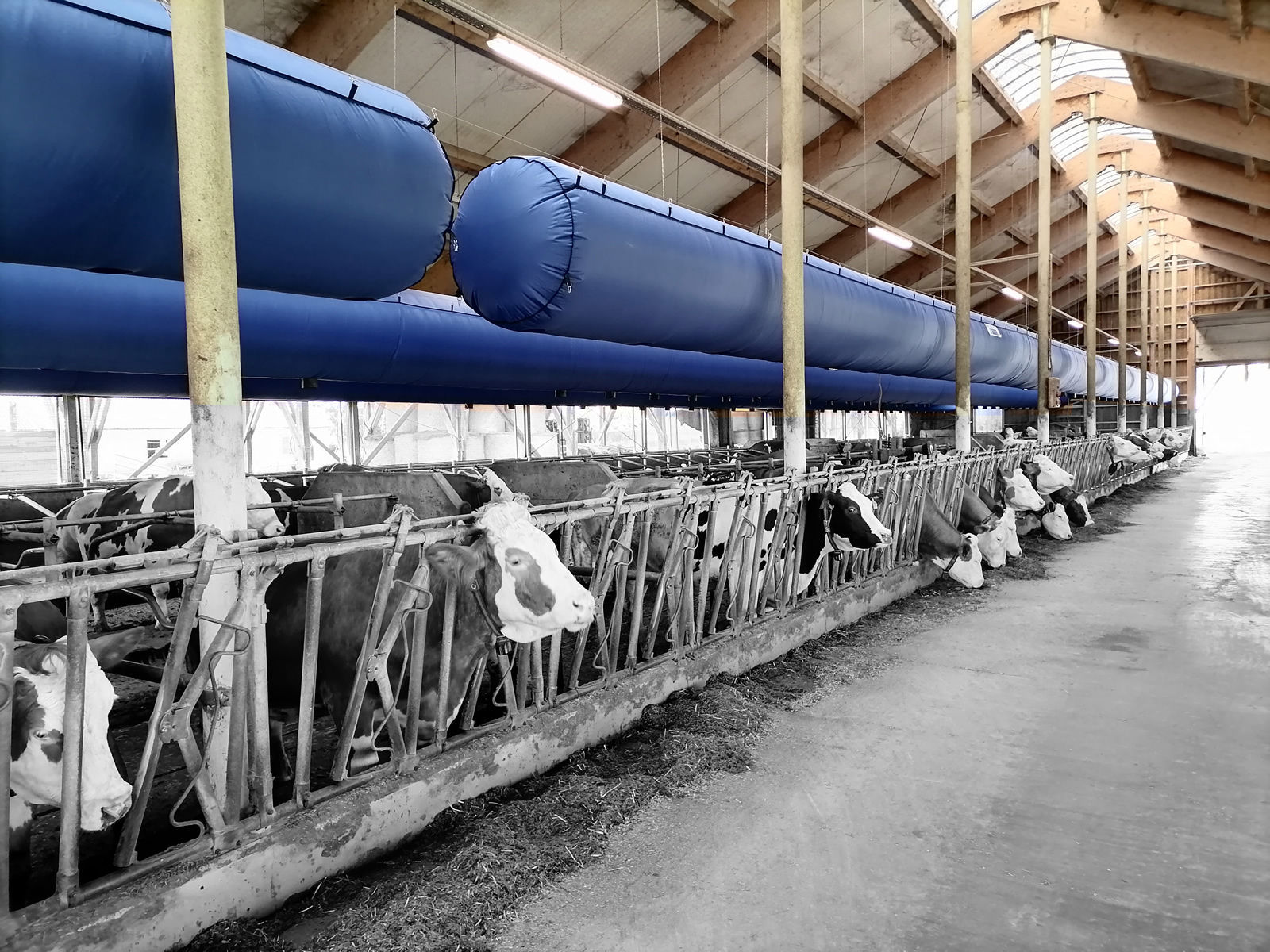
- Dairy cattle barns and milking-area ventilation
- Beef cattle and calf housing
- Sheep and goat housing facilities
- Fresh-air distribution and localized livestock ventilation
- Fan-to-duct and duct-to-equipment flexible connections
- Ventilation renovation and replacement projects
- New pig farm construction, steel structure building and international agricultural project applications
|
| Customization Options |
- Diameter: Customizable according to required airflow, fan connection and ventilation design.
- Length: According to project requirements and installation distance.
- Material Configuration: Selected according to climate, humidity, chemical exposure and farm cleaning conditions.
- End Connection: Configurable according to compatible fan, duct or ventilation equipment interface.
- Reinforcement: Spiral wire and external protection configuration can be selected according to application requirements.
- Suspension Arrangement: Designed according to building structure and duct routing.
- Color and Identification: Customizable for project or distributor requirements.
- OEM / ODM: Available upon request for distributors, agents and agricultural engineering companies.
|
| Installation & Maintenance |
Installation:
- Review the ventilation design and confirm the required duct route, fan location, outlet position and support points before installation.
- Verify the selected hose diameter and connection interface match the fan, connector or other ventilation equipment.
- Unpack and fully inspect the hose before installation. Check the fabric, spiral wire, protective strip and end connection areas for damage.
- Extend the duct carefully and avoid dragging it over sharp edges, rough concrete or metal components.
- Connect the hose to the fan or duct interface using appropriate clamps, straps or fastening hardware.
- Ensure the connection is properly aligned and sufficiently sealed to minimize unnecessary air leakage.
- For suspended installation, use suitable support points to prevent excessive sagging and avoid excessive tension on the duct ends.
- Keep bends as smooth as practical. Excessive bending, compression or unnecessary length can increase airflow resistance.
- After installation, operate the ventilation system and inspect the hose for abnormal vibration, movement, leakage or deformation.
- Confirm airflow distribution and adjust outlet positions or duct routing where required by the ventilation design.
Maintenance:
- Inspect the hose regularly for tears, punctures, abrasion, deformation or damaged spiral reinforcement.
- Check all clamps, straps, suspension points and connection interfaces for looseness.
- Inspect high-contact areas where the hose may rub against walls, roof structures, frames or equipment.
- Remove accumulated dust, feathers, dirt and other deposits according to the farm's cleaning procedures.
- Use cleaning methods and chemicals compatible with the selected duct material.
- Check duct connections after ventilation equipment replacement or system modification.
- Replace damaged sections before they affect airflow distribution or system safety.
- When not in use, store the duct in a clean, dry location away from sharp objects and unnecessary mechanical pressure.
|
| Project Cases |
Illustrative Project Scenario 1 – Commercial Pig Farm in Southeast Asia
A new commercial pig farm requires flexible air distribution between ventilation fans and different animal rooms. The duct hose is routed beneath the roof structure and connected to the ventilation equipment according to the building layout. The flexible construction simplifies routing around structural members and supports future maintenance.
Illustrative Project Scenario 2 – Poultry House in the Middle East
A steel structure poultry building requires an adaptable air-transfer solution for a long ventilation route. The duct diameter and length are selected according to the ventilation design, fan connection and local climate conditions. Suspension points are arranged to maintain the planned airflow route.
Illustrative Project Scenario 3 – Livestock Farm Renovation in Eastern Europe
An existing livestock building is upgraded with additional ventilation equipment. Flexible duct hose is used to connect new equipment to the existing ventilation layout where rigid ducting would require complex structural modifications.
Illustrative Project Scenario 4 – Agricultural Engineering Project in Africa
An agricultural engineering contractor requires flexible ventilation ducting for multiple livestock buildings. The hose configuration is coordinated with the building dimensions, ventilation equipment, connection points and installation conditions to support standardized project procurement.
The project scenarios above are illustrative applications prepared for product communication and are not presented as completed customer projects.
|
| Product FAQ |
Q1: What is a flexible ventilation duct hose used for?
A: It provides a flexible airflow passage for air supply, air distribution, exhaust and connections between fans or air-handling equipment and designated areas of a building.
Q2: Can this duct hose be used in pig houses?
A: Yes. It is suitable for compatible pig-house ventilation applications, including air supply, air transfer, exhaust connections and ventilation renovation projects.
Q3: Is it suitable for poultry houses?
A: Yes. The hose can be configured for poultry ventilation systems according to the required airflow, duct dimensions, fan interface and building layout.
Q4: What diameter should I choose?
A: The diameter should be selected according to fan capacity, required airflow, duct length, operating pressure, outlet arrangement and project design. Customizable configurations are available.
Q5: Can the duct length be customized?
A: Yes. Length is customizable according to the installation distance and project requirements.
Q6: Can it be connected directly to a ventilation fan?
A: Yes, when the duct diameter and connection interface are compatible. Suitable clamps, straps or other connection accessories should be selected according to the installation configuration.
Q7: Is the flexible duct suitable for humid livestock environments?
A: Suitable material configurations can be selected for humid livestock environments. Final material selection should consider local climate, cleaning chemicals and operating conditions.
Q8: Can the hose be used around structural obstacles?
A: Yes. Its flexible construction allows practical routing around many building structures and equipment. Sharp bends and excessive compression should be avoided because they can increase airflow resistance.
Q9: What information is required for a project quotation?
A: Recommended information includes animal type, building dimensions, required airflow, fan model or capacity, duct diameter, approximate duct length, connection method, installation environment and project quantity.
Q10: Can SHEWUYOU provide customized ducting for distributors and engineering companies?
A: Yes. Custom configurations and OEM / ODM support are available upon request, subject to technical evaluation and confirmed project requirements.
|
| Product Gallery |

 |



Comments & Inquiries
Leave your questions or requirements below. We will reply as soon as possible.