

| Product Showcase | Content | ||||||||||||||||||||||||||||||
|---|---|---|---|---|---|---|---|---|---|---|---|---|---|---|---|---|---|---|---|---|---|---|---|---|---|---|---|---|---|---|---|
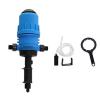
| Product Name | Automatic Eye Drop Vaccinator with Vaccine Cooling System | ||||||||||||||||||||||||||||||
| Product Image | 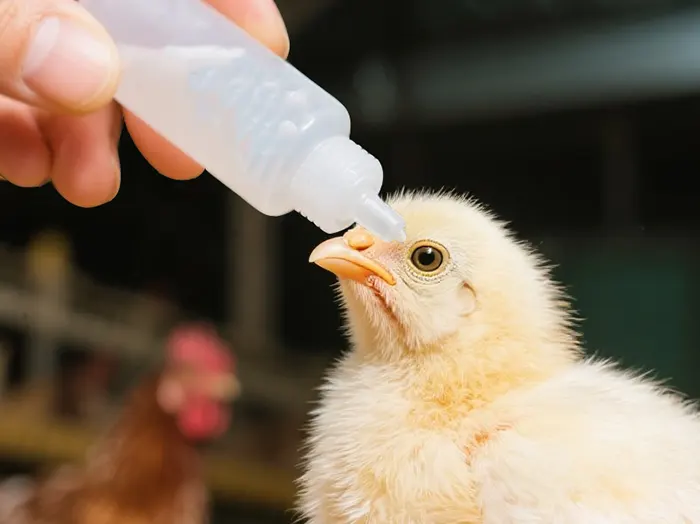 |
||||||||||||||||||||||||||||||
| Product Overview |
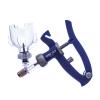
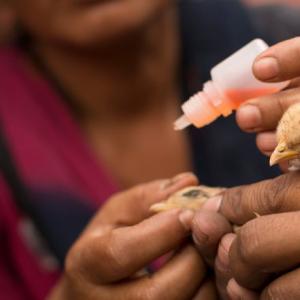
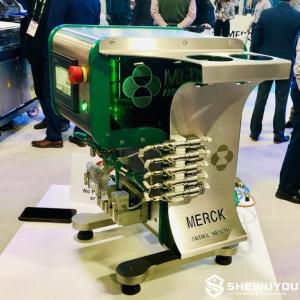
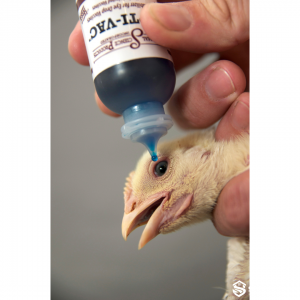
The Automatic Eye Drop Vaccinator with Vaccine Cooling System is designed for controlled individual ocular vaccination of day-old chicks in commercial poultry hatcheries. The equipment combines an electronically controlled dosing mechanism, precision dispensing nozzle, chick counting function and vaccine temperature-management system in a compact vaccination workstation. During operation, the dosing mechanism produces a controlled vaccine droplet and holds it at the dispensing nozzle until the chick's eye contacts and absorbs the drop. This suspended-droplet principle helps operators visually confirm application while reducing the repetitive bottle handling associated with conventional manual eye-drop vaccination. A cooling chamber or gel-filled cooling arrangement can be integrated around the vaccine reservoir to help limit temperature rise during continuous hatchery operation. Control method, dosing configuration, cooling arrangement and electrical specification can be adapted according to project requirements. |
||||||||||||||||||||||||||||||
| Key Features |
|
||||||||||||||||||||||||||||||
| Structural Components |
|
||||||||||||||||||||||||||||||
| Working Principle |
Prepared vaccine is connected to the liquid delivery circuit and positioned within the cooled holding arrangement. Depending on the selected configuration, the vaccination cycle is initiated by a sensor, push button, foot control or other operator input. The electronic dosing mechanism meters a controlled quantity of vaccine and forms a droplet at the dispensing nozzle. The droplet is designed to remain suspended rather than falling immediately. The operator carefully positions the chick so the open eye contacts the droplet and absorbs the vaccine. After a completed cycle, the integrated counter can increase the recorded number of vaccinated chicks. This supports production monitoring and helps hatchery personnel compare vaccination counts with chick processing quantities. The vaccine cooling arrangement surrounds or supports the vaccine container with a cooled chamber or gel-filled cooling jacket, helping reduce heat transfer from the hatchery environment during continuous vaccination work. |
||||||||||||||||||||||||||||||
| Technical Specifications |
Reference specifications are based on comparable commercial eye-drop vaccination equipment. Final vaccine selection, dose, preparation, temperature and administration procedure must follow the vaccine manufacturer's approved instructions and the applicable veterinary vaccination program. |
||||||||||||||||||||||||||||||
| Applications |
|
||||||||||||||||||||||||||||||
| Customization Options |
|
||||||||||||||||||||||||||||||
| Installation & Maintenance |
The vaccinator is normally installed on a stable hatchery workbench close to the chick handling area. Working height and nozzle position should allow comfortable chick handling while keeping the vaccine reservoir and cooling arrangement accessible to the operator.
|
||||||||||||||||||||||||||||||
| Product FAQ |
Q1: What is the vaccine cooling system used for? The cooling arrangement helps limit warming of prepared vaccine during continuous hatchery operation. A cooling chamber or gel-filled cooling jacket can be configured according to equipment requirements. Q2: Is this machine fully automatic? The vaccine dosing cycle can be automatically activated by a sensor, while individual chicks are normally positioned by an operator for ocular application. Q3: How is the vaccine droplet applied? The dosing system forms a controlled droplet and holds it at the nozzle. The chick's open eye is carefully brought into contact with the suspended droplet for uptake. Q4: Can the machine count vaccinated chicks? Yes. An electronic counting function can record completed vaccination cycles and support hatchery production records. Q5: Can the vaccine dose be adjusted? Yes. The electronic dosing system can be configured within the applicable equipment range. Final settings must always comply with the vaccine manufacturer's approved instructions. Q6: What production capacity can be expected? Comparable commercial equipment specifies approximately 1,800 chicks per hour. Actual throughput depends on operator experience, chick handling and vaccination procedures. Q7: Can the electrical configuration be customized? Yes. Electrical supply and optional battery-supported configurations can be selected according to destination-market and project requirements. Q8: Can SHEWUYOU supply spare parts and consumables? Yes. Vaccine tubing, dispensing components, consumable spares and maintenance kits can be supplied according to the selected equipment configuration. |
||||||||||||||||||||||||||||||
| Product Gallery |
|
- Home
-
Products
- Pig Farming Equipment
- Cattle Farming Equipment
- Sheep & Goat Farming Equipment
- Poultry Farming Equipment
- Feeding & Drinking Systems
- Veterinary & Breeding Equipment
- Testing & Diagnostic Equipment
- Cleaning & Biosecurity Equipment
- Climate Control Equipment
- Livestock Weighing Equipment
- Manure & Waste Management
- Farm Transport & Handling
-
Solutions
- Pig Farm Solutions
- Dairy Farm Solutions
- Beef Cattle Farm Solutions
- Sheep & Goat Farm Solutions
- Layer Farm Solutions
- Broiler Farm Solutions
- Feeding & Drinking System Solutions
- Climate Control Solutions
- Biosecurity & Disinfection Solutions
- Manure & Waste Management
- Smart Farming Solutions
- Farm Renovation and Upgrade Solutions
- Partners
- Projects
- Resources
- News
- About Us
- Contact
Comments & Inquiries
Leave your questions or requirements below. We will reply as soon as possible.