

| Product Showcase | Content |
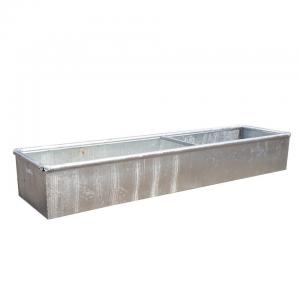
| Product Name | Solar Heated Livestock Water Trough |
| Product Image | |
| Product Overview |
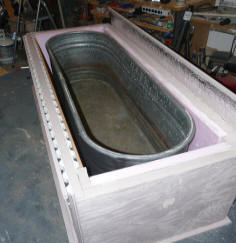
The Solar Heated Livestock Water Trough is designed to help maintain accessible drinking water during cold-weather livestock operations by combining solar thermal gain with thermal insulation and an appropriately designed drinking opening. The system is particularly useful where conventional electric stock-tank heaters are difficult or expensive to operate. The basic concept uses a water-holding trough enclosed by an insulated structure, with a solar-facing collector or heat-absorbing surface positioned to capture available sunlight. Reducing exposed water surface and limiting heat loss through the sides and base can significantly improve the thermal performance of a livestock watering point. :contentReference[oaicite:1]{index=1} For commercial livestock projects, the trough can be engineered around the local water source, herd size, climate, site orientation and farm construction system. Water can be supplied through a float-controlled pressurized line or another project-specific filling arrangement. :contentReference[oaicite:2]{index=2} |
| Key Features |
|
| Structural Components |
|
| Working Principle / Structural Principle |
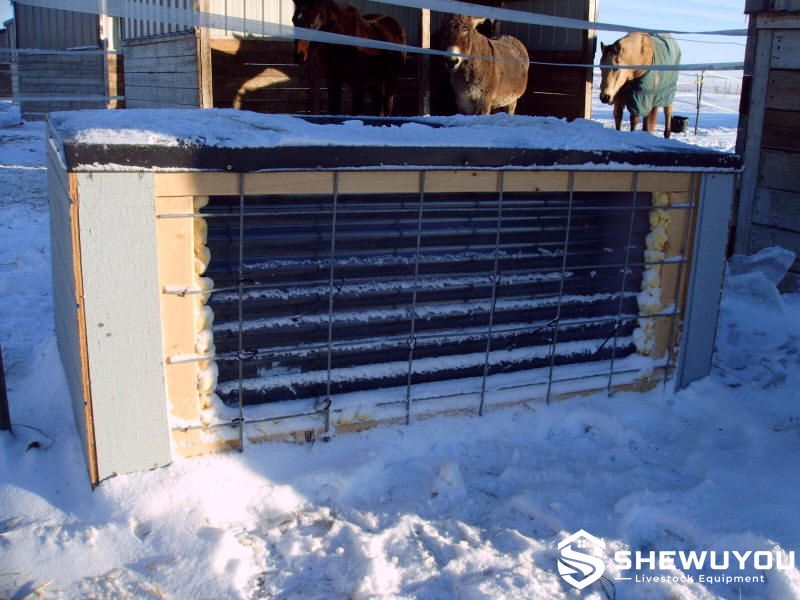
The system is based on the combination of solar thermal gain and heat-loss reduction. Solar radiation reaches the solar-facing absorber or collector, where the energy is converted into heat. The collected heat is transferred toward the water-holding trough, while insulation around the reservoir slows heat loss to the surrounding air and ground. :contentReference[oaicite:3]{index=3} The drinking area can be partially enclosed or covered so that only the necessary access opening remains exposed. This reduces the effective exposed water surface and helps retain thermal energy, particularly during cold and windy periods. :contentReference[oaicite:4]{index=4} Where an automatic water supply is used, a float valve maintains the operating water level as livestock consume water. For regions with extended periods of severe frost or limited solar availability, supplemental heating can be incorporated according to project requirements. :contentReference[oaicite:5]{index=5} |
| Technical Specifications | |
| Applications |
The Solar Heated Livestock Water Trough is suitable for livestock operations where freezing conditions, remote locations or energy availability make conventional heated waterers less practical.
|
| Customization Options |
Solar-heated livestock watering systems require site-specific consideration because solar availability, ambient temperature, wind exposure, water demand and winter conditions vary significantly between regions.
Final configuration can be designed according to local climate, solar exposure, minimum winter temperature, livestock population, water-source capacity, installation location and farm construction requirements. |
| Installation & Maintenance |
Site Selection: Position the solar-heated trough where the collector can receive adequate winter sunlight. Avoid unnecessary shading from buildings, trees, silos and other farm structures. The final orientation should be determined according to local solar conditions. Foundation: Install the trough on a stable, level and load-bearing base suitable for the filled water weight and expected livestock activity. Concrete foundations or engineered support frames can be used according to the project design. Water Connection: Connect the trough to a suitable water source through a float valve or specified water-control assembly. Water lines in freezing regions should be buried, insulated or otherwise protected according to local frost depth and farm conditions. Solar Collector: Keep the collector surface clean and unobstructed. Check protective glazing, absorber surfaces and structural fasteners regularly for damage, contamination or loosening. Maintenance: Clean the drinking area regularly, inspect the float valve and water inlet for blockage, and remove sediment or organic contamination from the trough. Drain and service the system according to the seasonal maintenance plan. In regions with prolonged severe freezing or insufficient winter solar radiation, use the specified backup heating solution where applicable. |
| Project Applications |
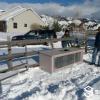
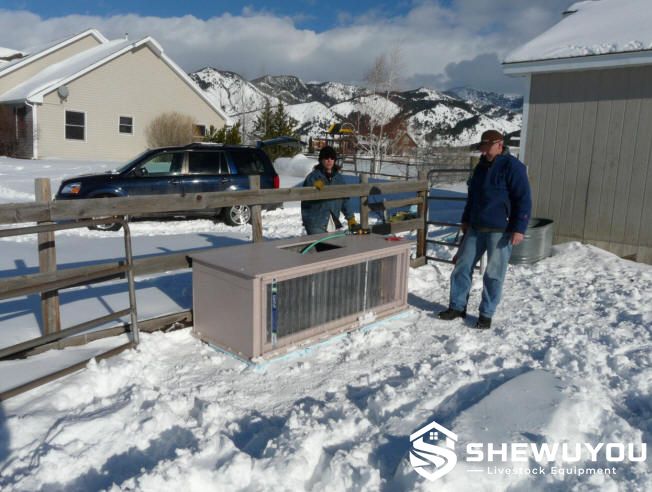
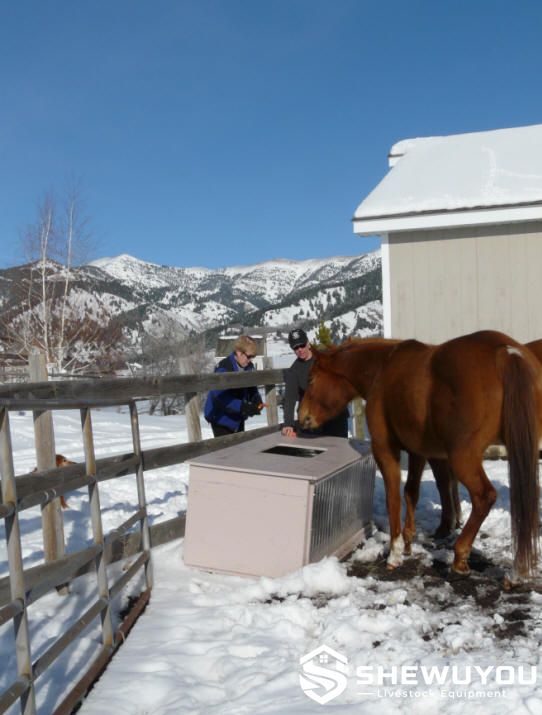
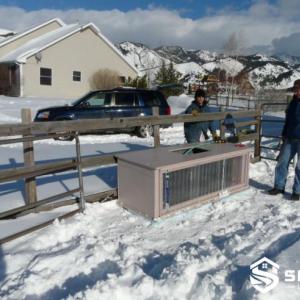
The solar-heated stock-tank concept has been demonstrated in cold-weather livestock applications using a combination of insulated enclosure, solar collection, reduced exposed water area and livestock access openings. Field-built systems have been used with horses and stock animals in snowy winter conditions. :contentReference[oaicite:6]{index=6} For commercial farm construction, the same thermal-design principles can be adapted into a purpose-built livestock watering station with a stronger enclosure, engineered foundation, automatic water supply and livestock protection. Final performance depends on solar exposure, insulation, water turnover, ambient temperature and local weather conditions. |
| Product FAQ |
Q1. How does a solar heated livestock water trough work? Solar radiation is captured by a solar-facing absorber or collector and converted into thermal energy. Insulation and reduced exposed water surface help retain that heat and slow the cooling of the water. :contentReference[oaicite:7]{index=7} Q2. Can a solar heated trough prevent freezing without electricity? A properly insulated passive solar design can substantially reduce ice formation and may operate without supplemental heat under suitable conditions. However, performance depends on solar exposure, ambient temperature, wind and system design. Extreme or prolonged cold may require backup heating. :contentReference[oaicite:8]{index=8} Q3. Can the trough have an automatic water supply? Yes. A pressurized water line and float valve can be incorporated to maintain the required water level automatically. :contentReference[oaicite:9]{index=9} Q4. Is the system suitable for remote pasture locations? Yes. Solar-assisted watering is particularly suitable for remote sites where grid electricity is unavailable or costly to install. The water source, solar exposure and seasonal livestock requirements should be evaluated before system selection. Q5. Can the water trough be customized for cattle? Yes. Trough capacity, dimensions, insulation, drinking openings, water-control components, solar collector configuration and structural protection can be customized according to project requirements. Q6. Can supplemental heating be added? Yes. For projects exposed to extended periods of severe frost or limited winter sunlight, a backup electric heating solution can be specified according to local conditions and system design. Commercial heated livestock waterers also commonly use optional electric heating elements as a supplemental solution. :contentReference[oaicite:10]{index=10} Q7. What information is required for project quotation? Recommended project information includes livestock type and population, water-source type, required trough capacity, minimum winter temperature, solar exposure, installation location, available power supply and preferred mounting or foundation arrangement. |
| Product Gallery |
- Home
-
Products
- Pig Farming Equipment
- Cattle Farming Equipment
- Sheep & Goat Farming Equipment
- Poultry Farming Equipment
- Feeding & Drinking Systems
- Veterinary & Breeding Equipment
- Testing & Diagnostic Equipment
- Cleaning & Biosecurity Equipment
- Climate Control Equipment
- Livestock Weighing Equipment
- Manure & Waste Management
- Farm Transport & Handling
-
Solutions
- Pig Farm Solutions
- Dairy Farm Solutions
- Beef Cattle Farm Solutions
- Sheep & Goat Farm Solutions
- Layer Farm Solutions
- Broiler Farm Solutions
- Feeding & Drinking System Solutions
- Climate Control Solutions
- Biosecurity & Disinfection Solutions
- Manure & Waste Management
- Smart Farming Solutions
- Farm Renovation and Upgrade Solutions
- Partners
- Projects
- Resources
- News
- About Us
- Contact

Comments & Inquiries
Leave your questions or requirements below. We will reply as soon as possible.