

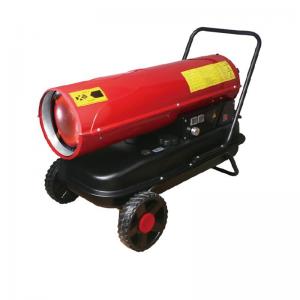
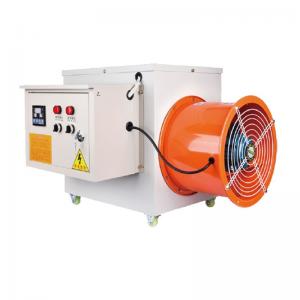
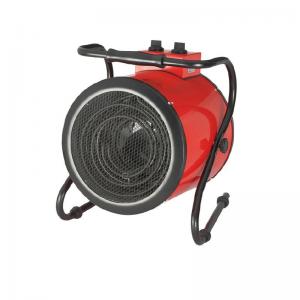
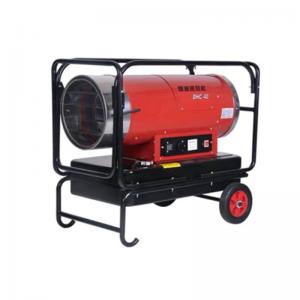
| Product Name | Gas Fired Forced Air Heater |
| Product Image |  |
| Product Overview |
The Gas Fired Forced Air Heater combines a gas burner with a fan to move warm air into a livestock building. It is suited to projects that require room heating and planned air distribution during cold weather or early animal-rearing stages. For commercial pig and poultry farms, heating capacity and unit placement are selected according to building heat loss, animal age, insulation and ventilation demand. The air outlet can be positioned to serve occupied areas while keeping equipment clear of pens, feeders and service routes. The heater can be specified during pig farm construction or assessed for an existing steel structure building. Mounting, gas pipework, electrical supply and controls should be coordinated with the farm’s livestock equipment and ventilation layout. Fuel type and combustion arrangement depend on the selected model. Direct-fired installations require ventilation provisions for combustion air and combustion products; indirect-fired installations require the specified flue arrangement. |
| Key Features |
|
| Structural Components |
|
| Working Principle / Structural Principle |
When the temperature controller calls for heat, the heater starts its specified ignition sequence. Once safe operation is confirmed, the burner generates heat and the fan delivers warm air through the outlet. Airflow direction, heater spacing and building ventilation affect how heat reaches animal areas. These factors are reviewed together when selecting unit quantity and heating capacity. Heating does not replace minimum ventilation. Combustion-air, exhaust-air and flue requirements must follow the selected heater’s instructions and applicable local requirements. |
| Technical Specifications |
|
| Applications |
|
| Customization Options |
|
| Installation & Maintenance |
Installation: Calculate the building heating load and review the fuel supply, electrical service and livestock ventilation system. Qualified personnel should secure the heater to suitable supports, maintain model-specific clearances and complete gas, electrical and any required flue connections. Keep the air outlet clear of combustible materials and obstructing equipment. Commission the unit by checking gas tightness, ignition, flame-safety shutdown, fan operation and controller response. Maintenance: Follow the selected model’s service manual. Remove dust from air openings and guards; inspect the burner, fan, mounting hardware and gas connections. Check safety-device operation at the specified service intervals. Shut off gas and isolate electrical power before maintenance, and use qualified personnel for gas-system work. |
| Project Cases |
Illustrative pig farm scenario: An engineering contractor plans suspended heaters for nursery rooms. Heating capacity, controller settings and minimum ventilation are specified for each room’s occupancy and building envelope. Illustrative poultry scenario: A multi-house broiler project selects heater quantity and locations for each building. Gas distribution, structural supports and warm-air paths are coordinated before installation. |
| Product FAQ |
1. How is heating capacity selected? 2. Can the heater run on natural gas or LPG? 3. Can it be suspended from a steel structure? 4. What is the difference between direct-fired and indirect-fired heating? 5. Is ventilation required while heating? 6. Can it connect to a farm climate controller? 7. Can the heater be used in an existing barn? 8. What details are needed for a quotation? 9. Who should install and service the gas system? |
| Product Gallery |   |
- Home
-
Products
- Pig Farming Equipment
- Cattle Farming Equipment
- Sheep & Goat Farming Equipment
- Poultry Farming Equipment
- Feeding & Drinking Systems
- Veterinary & Breeding Equipment
- Testing & Diagnostic Equipment
- Cleaning & Biosecurity Equipment
- Climate Control Equipment
- Livestock Weighing Equipment
- Manure & Waste Management
- Farm Transport & Handling
-
Solutions
- Pig Farm Solutions
- Dairy Farm Solutions
- Beef Cattle Farm Solutions
- Sheep & Goat Farm Solutions
- Layer Farm Solutions
- Broiler Farm Solutions
- Feeding & Drinking System Solutions
- Climate Control Solutions
- Biosecurity & Disinfection Solutions
- Manure & Waste Management
- Smart Farming Solutions
- Farm Renovation and Upgrade Solutions
- Partners
- Projects
- Resources
- News
- About Us
- Contact

Comments & Inquiries
Leave your questions or requirements below. We will reply as soon as possible.