

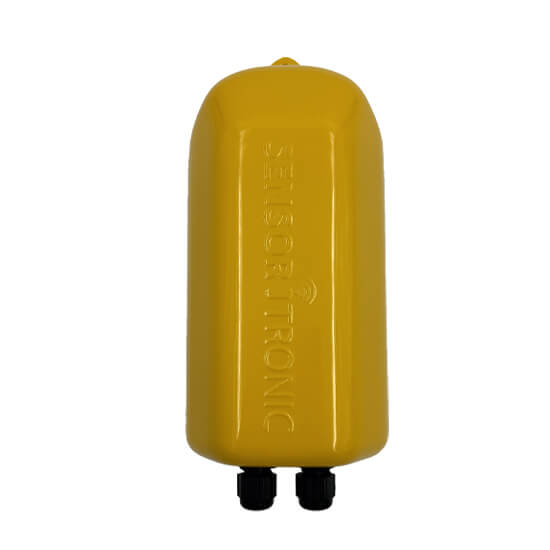
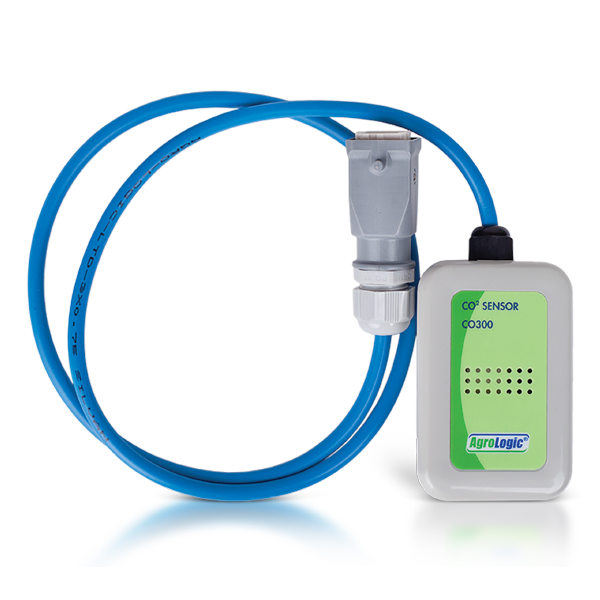
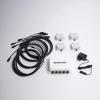
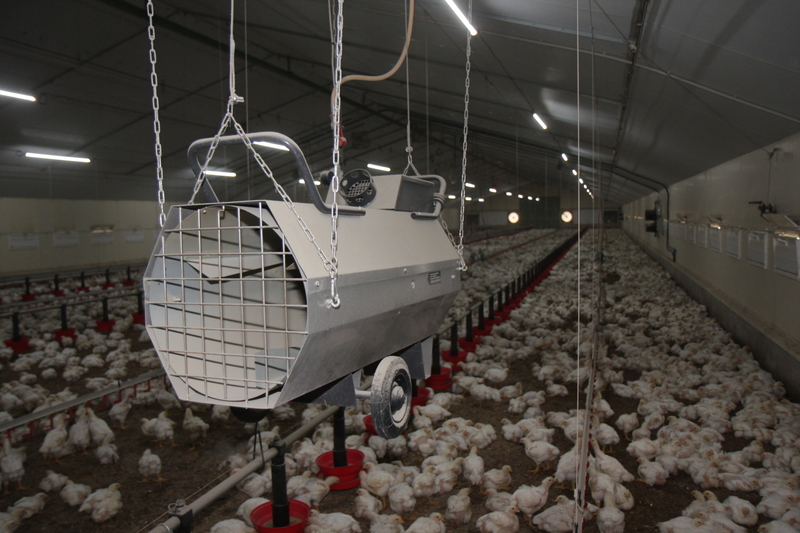
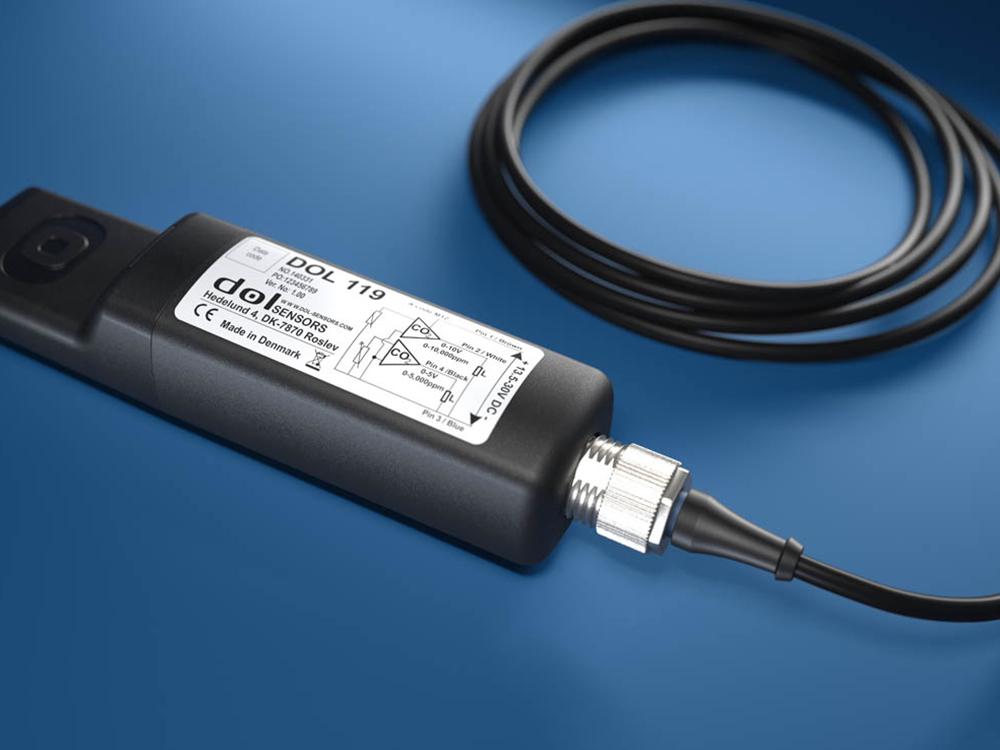
| Product Name | NDIR Livestock CO2 Transmitter | ||||||||||||||||||||||||||||||||||||||
| Product Image |  |
||||||||||||||||||||||||||||||||||||||
| Product Overview | The NDIR Livestock CO2 Transmitter is a fixed environmental sensor designed for continuous measurement of carbon dioxide concentration in livestock buildings and other controlled indoor environments. Using non-dispersive infrared sensing technology, the transmitter provides stable CO2 measurement for integration with livestock ventilation controllers, environmental monitoring systems, PLC equipment and centralized farm management platforms. The reference transmitter is available with 0–2000 ppm or 0–5000 ppm measurement ranges and a standard 4–20 mA output. It is particularly suitable for pig houses, poultry buildings, calf houses, dairy facilities and other livestock applications where CO2 concentration is used as an indicator of ventilation and indoor air quality. |
||||||||||||||||||||||||||||||||||||||
| Key Features | NDIR Measurement Technology: Uses non-dispersive infrared technology to measure carbon dioxide without consuming the target gas during normal sensing. Stable Long-Term Monitoring: Designed for continuous indoor CO2 measurement with good long-term measurement stability. Two Measurement Ranges: Reference configurations are available for 0–2000 ppm and 0–5000 ppm applications. 4–20 mA Output: Standard industrial current output simplifies connection to compatible livestock climate controllers, PLC systems, data loggers and environmental monitoring equipment. Compact Construction: Small sensor housing simplifies installation in equipment rooms, protected barn locations and environmental monitoring cabinets. Low Power Consumption: Suitable for continuous operation as part of a permanent livestock-house monitoring system. Ventilation Management Support: CO2 measurements can provide additional environmental information for minimum ventilation and air-quality management. Project Integration: Cable length, controller connection and monitoring architecture can be configured according to project requirements. |
||||||||||||||||||||||||||||||||||||||
| Structural Components | NDIR Optical Measurement Cell: Detects carbon dioxide by measuring absorption of infrared radiation at CO2-sensitive wavelengths. Infrared Source: Generates controlled infrared energy through the measurement chamber. Optical Detector: Measures changes in received infrared intensity caused by carbon dioxide absorption. Signal Processing Electronics: Converts the optical response into a stable concentration signal and 4–20 mA output. Air Inlet / Diffusion Area: Allows surrounding air to reach the sensing chamber for continuous measurement. ABS Housing: Protects the internal electronics and optical components. Stainless Steel Hardware: Provides durable assembly of the sensor enclosure. Electrical Connector: Provides power and analog signal connections to the environmental monitoring system. |
||||||||||||||||||||||||||||||||||||||
| Working Principle | The transmitter uses non-dispersive infrared technology to determine carbon dioxide concentration. Air enters the sensing area and is exposed to infrared radiation inside the optical measurement chamber. Carbon dioxide molecules absorb infrared energy at characteristic wavelengths. The detector compares the transmitted infrared signal with the reference signal and the internal electronics calculate the corresponding CO2 concentration. The measured value is converted into a 4–20 mA analog signal that can be transmitted to a compatible climate controller, PLC, data logger or farm environmental monitoring system. In livestock buildings, the CO2 signal can be evaluated together with temperature, relative humidity, ammonia and ventilation status to provide a more complete view of indoor air quality. |
||||||||||||||||||||||||||||||||||||||
| Technical Specifications |
|
||||||||||||||||||||||||||||||||||||||
| Applications | Pig Houses: Suitable for CO2 monitoring in farrowing rooms, nursery buildings, gestation houses and finishing barns. Poultry Houses: Provides continuous carbon dioxide data in broiler, layer and breeder buildings. Calf and Dairy Buildings: Suitable for enclosed calf houses, dairy barns and other cattle facilities requiring indoor air-quality monitoring. Minimum Ventilation Management: CO2 concentration can provide useful information when evaluating ventilation performance during cold-weather operation. Livestock Climate Control: The 4–20 mA signal can be connected to compatible controllers for centralized environmental monitoring. Pig Farm Construction: Suitable for inclusion in new commercial pig farm projects together with ventilation fans, air inlets, heating, cooling and environmental controllers. Steel Structure Livestock Buildings: Can be incorporated into electrical and automation systems during new barn construction. Existing Farm Modernization: Provides a practical option for adding continuous CO2 measurement to existing livestock-house environmental systems. |
||||||||||||||||||||||||||||||||||||||
| Customization Options | The CO2 monitoring solution can be configured according to livestock species, building size, ventilation system and environmental-control requirements. Available project options may include: • 0–2000 ppm measurement configuration • 0–5000 ppm measurement configuration • 4–20 mA controller interface • Custom sensor cable length • Universal mounting support • Multiple monitoring points • Centralized environmental controller integration • Combined CO2, NH3, temperature and humidity monitoring • Data logger integration • Alarm functions according to controller configuration • Pig house and poultry house project packages • OEM and distributor configurations Final system layout can be designed according to local climate and farm conditions. |
||||||||||||||||||||||||||||||||||||||
| Installation & Maintenance | Install the transmitter at a representative indoor monitoring location where the air reflects actual livestock-house conditions. Avoid placing the sensor immediately beside a fresh-air inlet, exhaust fan, heater outlet or other location that may produce a non-representative local CO2 concentration. Because the reference enclosure is an IP21 indoor design, the transmitter should be installed in a protected location away from direct water spray, pressure washing, condensation and excessive dust contamination. Connect the low-voltage DC power supply and 4–20 mA signal wiring according to the controller and sensor wiring requirements. Verify polarity and electrical connections before commissioning. After installation, confirm that the environmental controller receives a stable CO2 signal and that the displayed concentration changes correctly with surrounding air conditions. Keep the sensor air inlet clean and unobstructed. Periodically inspect the housing, cable, terminals and mounting hardware. Calibration or verification intervals should follow the selected sensor configuration and project quality-control requirements. |
||||||||||||||||||||||||||||||||||||||
| Project Cases | NDIR CO2 transmitters can be incorporated into environmental-control systems for commercial pig farms, poultry complexes, dairy facilities and livestock research buildings. In a mechanically ventilated pig house, sensors can be installed in selected production rooms and connected to the central climate computer. CO2 measurements can then be evaluated together with temperature, humidity, ammonia concentration, fan operation and air-inlet position. For long poultry buildings, multiple CO2 monitoring points can be selected according to ventilation zones and house length. In new steel structure livestock projects, sensor wiring and installation points can be planned during construction together with ventilation, electrical and environmental-control systems. |
||||||||||||||||||||||||||||||||||||||
| Product FAQ | Q: What does this transmitter measure? A: It continuously measures carbon dioxide concentration in indoor air. Q: What sensing technology is used? A: It uses NDIR, or non-dispersive infrared, carbon dioxide measurement technology. Q: What measurement ranges are available? A: The reference product is available with 0–2000 ppm and 0–5000 ppm ranges. Q: What output signal does it provide? A: The reference transmitter provides a standard 4–20 mA analog output. Q: Can it connect to a livestock climate controller? A: Yes. A compatible controller with a suitable 4–20 mA input can receive the CO2 signal for monitoring or environmental-control applications. Q: Is it suitable for pig houses? A: Yes. The reference manufacturer specifically lists livestock holdings among the intended CO2 monitoring applications. Q: Can it be installed directly in a wet wash-down area? A: The reference configuration is IP21 and is intended for protected indoor installation, so direct water spray and pressure washing should be avoided. Q: Can multiple transmitters be installed in one livestock building? A: Yes. Multiple monitoring points can be designed according to building dimensions, ventilation zones and project requirements. Q: Can cable length be customized? A: Yes. Standard sensor cables and customized cable lengths can be selected according to project requirements. Q: Can CO2 monitoring be combined with ammonia monitoring? A: Yes. CO2 transmitters can be integrated into a wider environmental monitoring system together with ammonia, temperature, humidity and other compatible sensors. |
||||||||||||||||||||||||||||||||||||||
| Product Gallery | 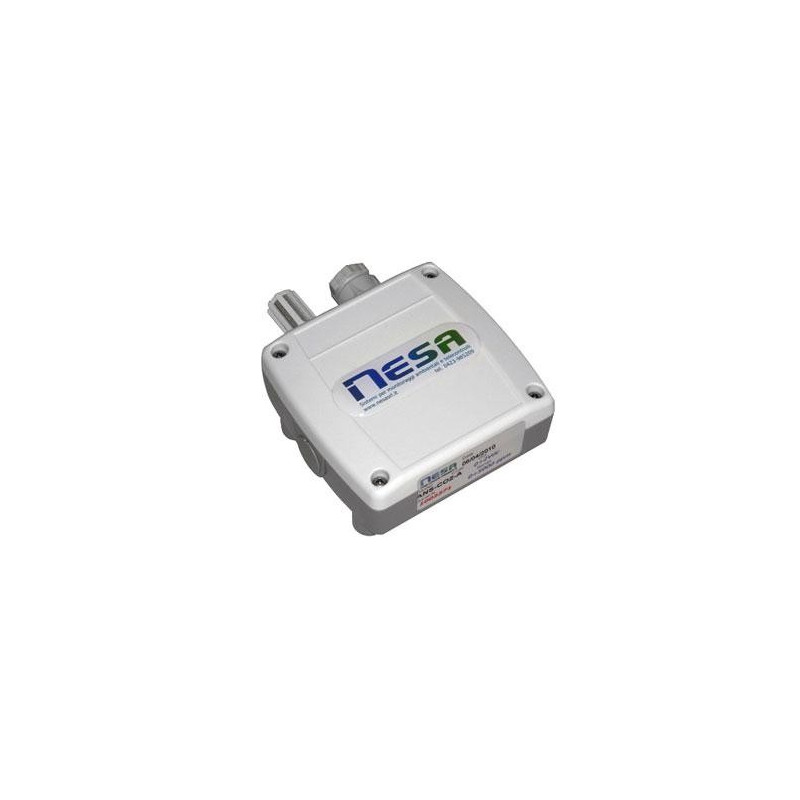 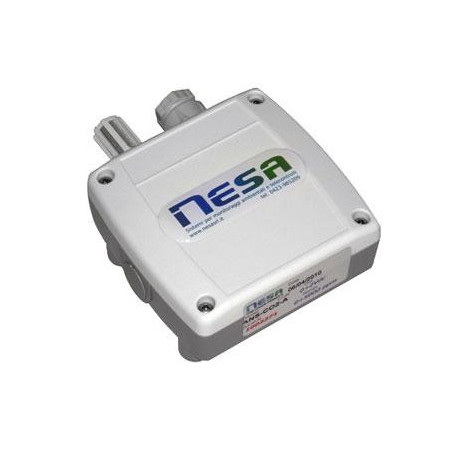 |
- Home
-
Products
- Pig Farming Equipment
- Cattle Farming Equipment
- Sheep & Goat Farming Equipment
- Poultry Farming Equipment
- Feeding & Drinking Systems
- Veterinary & Breeding Equipment
- Testing & Diagnostic Equipment
- Cleaning & Biosecurity Equipment
- Climate Control Equipment
- Livestock Weighing Equipment
- Manure & Waste Management
- Farm Transport & Handling
-
Solutions
- Pig Farm Solutions
- Dairy Farm Solutions
- Beef Cattle Farm Solutions
- Sheep & Goat Farm Solutions
- Layer Farm Solutions
- Broiler Farm Solutions
- Feeding & Drinking System Solutions
- Climate Control Solutions
- Biosecurity & Disinfection Solutions
- Manure & Waste Management
- Smart Farming Solutions
- Farm Renovation and Upgrade Solutions
- Partners
- Projects
- Resources
- News
- About Us
- Contact

Comments & Inquiries
Leave your questions or requirements below. We will reply as soon as possible.