| Product Name |
Automatic Vehicle Disinfection System for Farms |
| Product Image |
 |
| Product Overview |
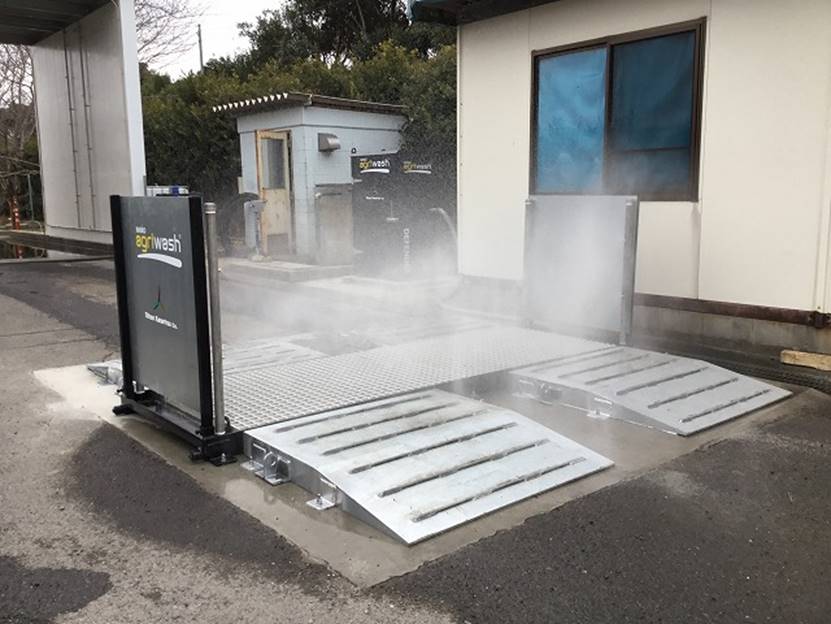
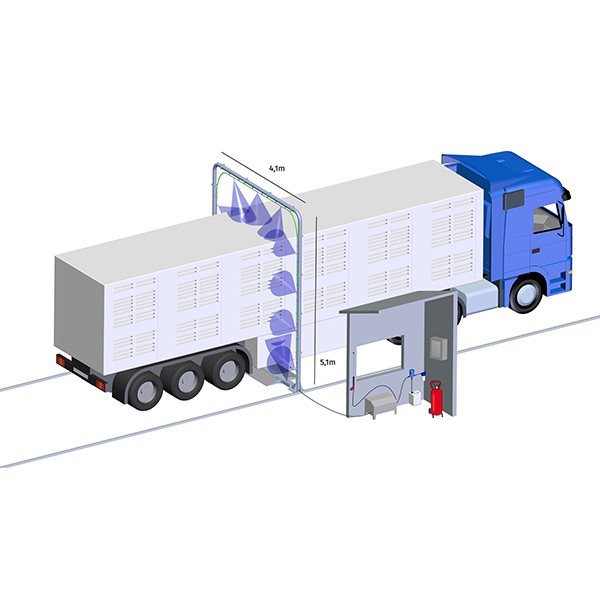
The Automatic Vehicle Disinfection System for Farms is a drive-through biosecurity solution designed for commercial livestock farms, poultry complexes, breeding facilities, agricultural production sites and other controlled-access areas. It automatically applies a compatible disinfectant solution to vehicle tyres, wheels, underbody and chassis as vehicles pass through the treatment platform.
The system combines an automatic vehicle detection sensor, spray platform, strategically positioned spray nozzles, chemical dosing equipment, water supply components and control system. Depending on the project configuration, contaminated liquid can be collected through a dedicated tray and drainage connection for controlled wastewater handling.
By automating the vehicle treatment cycle, the system reduces dependence on manual spraying and provides a repeatable process at the farm entrance. Surface-mounted configurations can be installed on suitable concrete, asphalt or compacted bases, while inset installation can be selected for permanent projects.
The system can be engineered around vehicle dimensions, traffic volume, farm layout, climate conditions and local biosecurity procedures. It is suitable for new pig farm construction, poultry farm construction and modernization of existing livestock facilities. |
| Key Features |
- Automatic Vehicle Detection: Entry sensors initiate the configured disinfection cycle when a vehicle enters the treatment area.
- Drive-Through Operation: Vehicles can pass through the designated treatment zone without requiring operators to manually spray each vehicle.
- Targeted Vehicle Coverage: Spray nozzles are positioned to treat tyres, wheels, underbody and chassis areas.
- Adjustable Chemical Dosing: The dosing system can be configured according to the selected compatible disinfectant and site requirements.
- Controlled Spray Cycle: Spray duration and operating sequence can be adjusted according to vehicle traffic and biosecurity procedures.
- Galvanized Steel Construction: Structural components are designed for demanding agricultural environments and regular vehicle traffic.
- Surface-Mounted Installation: Suitable configurations can be installed without extensive excavation or complex civil works.
- Inset Installation Option: The system can be incorporated into a prepared foundation for a low-profile permanent installation.
- Wastewater Collection: Collection trays and drain connections can help control contaminated liquid generated during the treatment cycle.
- Heavy Vehicle Compatibility: Structural capacity can be designed according to vehicle axle loads and project requirements.
- Two-Way Traffic Option: Entry and exit detection can be configured for farms requiring vehicle treatment in both directions.
- Project-Specific Engineering: Platform width, spray area, tank capacity, pump performance and control functions can be customized.
|
| Structural Components |
- Drive-Through Spray Platform: Reinforced steel platform forms the main vehicle treatment zone.
- Side Spray Bars: Vertical or lateral spray assemblies target tyres, wheels and lower vehicle surfaces.
- Undercarriage Spray Line: Bottom-mounted nozzles provide additional coverage beneath the vehicle.
- Entry and Exit Sensors: Vehicle detection devices activate the automatic spray sequence.
- Water Tank: Header or storage tank capacity can be selected according to the system configuration and site water supply.
- High-Pressure or Low-Pressure Pump: Pump performance is selected according to the spray arrangement and required application method.
- Chemical Dosing Unit: Controlled dosing system introduces the selected compatible disinfectant into the spray circuit.
- Control Cabinet: Electrical controls manage sensor activation, pump operation and the programmed spray cycle.
- Galvanized Side Screens: Side protection helps define the spray zone and control liquid movement.
- Collection Tray: The platform can incorporate a shallow collection area with drainage connection for controlled wastewater handling.
- Access Ramps: Low-profile ramps can be supplied for surface-mounted configurations.
- Drainage Interface: Drain valves and outlet connections can be designed according to the farm's wastewater management system.
|
| Working Principle / Structural Principle |
When a vehicle approaches the treatment platform, an entry sensor detects the vehicle and activates the automatic disinfection sequence. The control system starts the pump and chemical dosing system according to the programmed operating cycle.
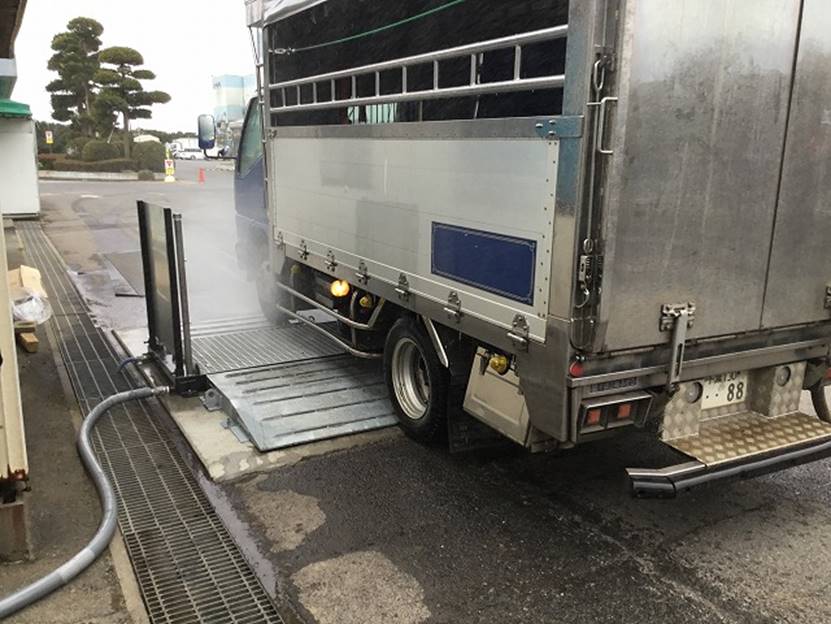
As the vehicle moves across the platform, strategically positioned spray nozzles apply the prepared disinfectant solution to the tyres, wheels, underbody and chassis. The spray arrangement can be designed to provide coverage from the sides and beneath the vehicle, including suitable configurations for larger agricultural and livestock transport vehicles.
After the configured cycle is completed, the system stops automatically or remains ready for the next vehicle according to the control logic. For two-way traffic sites, separate entry and exit sensors can be incorporated.
The platform can include a collection tray and drainage connection to capture contaminated liquid and direct it toward the farm's approved wastewater management system. Cleaning and disinfection procedures should be established according to the farm biosecurity SOP and the disinfectant manufacturer's approved instructions. |
| Technical Specifications |
| Product Type |
Automatic Drive-Through Vehicle Disinfection System |
| Primary Application |
Farm vehicle tyres, wheels, underbody and chassis disinfection |
| Activation |
Automatic vehicle sensor activation |
| Installation Type |
Surface-mounted or inset installation |
| Reference Spray Pressure |
Up to approximately 3 bar for selected configurations |
| Reference Spray Area |
Approximately 1 m to 2 m depending on system configuration |
| Reference Water Tank Capacity |
Approximately 180–185 L for compact configurations; larger systems available according to project requirements |
| Reference Pump Flow |
Approximately 90 L/min for selected compact configurations |
| Electrical Supply |
Single-phase 240 V reference configuration; other standards available upon request |
| Control Panel |
IP65 reference configuration |
| Vehicle Load |
Up to 10,000 kg per axle for selected configurations |
| Chemical Dosing |
Adjustable according to disinfectant and project requirements |
| Wastewater Collection |
Collection tray and drainage connection available according to configuration |
| Traffic Direction |
Single-direction or two-way activation according to project requirements |
| Customization |
Available according to vehicle dimensions, traffic volume, climate and farm layout |
The above figures are reference values from comparable automatic farm vehicle disinfection configurations. Final specifications should be confirmed according to the selected system, vehicle fleet, local electrical standard and project design.
|
| Applications |
- Commercial Pig Farms: Automated vehicle disinfection at farm entrances and controlled clean-zone access points.
- Poultry Farms: Treatment of feed trucks, livestock transport vehicles, service vehicles and authorized visitors' vehicles.
- Cattle and Dairy Farms: Vehicle sanitation for livestock transport, feed delivery and farm service traffic.
- Breeding and Quarantine Facilities: Vehicle treatment at controlled transition points between different biosecurity zones.
- Feed Mills and Agricultural Facilities: Entrance biosecurity for vehicles moving between farms and production facilities.
- Livestock Transport Stations: Automated treatment of vehicles entering or leaving designated sanitation areas.
- Abattoirs and Food Processing Sites: Vehicle biosecurity applications where controlled access and sanitation are required.
- New Farm Construction Projects: Integration into vehicle circulation, drainage, electrical and biosecurity infrastructure during the planning stage.
- Existing Farm Upgrades: Surface-mounted configurations can be used to improve vehicle biosecurity with limited civil modification.
|
| Customization Options |
The system can be engineered according to the farm's vehicle fleet, traffic volume, entrance dimensions, climate and biosecurity workflow.
- Platform Dimensions: Width, length and vehicle clearance can be designed according to the largest vehicle using the entrance.
- Spray Coverage: Nozzle quantity, spray-bar arrangement and spray direction can be configured for tyres, wheels, underbody and chassis.
- Pump Performance: Pump pressure and flow can be selected according to the required spray pattern and application method.
- Water Tank: Tank capacity can be customized according to traffic volume and site water availability.
- Chemical Dosing: Dosing equipment can be configured for compatible disinfectants and required application concentrations.
- Control Logic: Entry-only, exit-only or two-way vehicle detection can be configured according to traffic flow.
- Installation Method: Surface-mounted, low-profile ramp or inset configurations are available according to civil engineering conditions.
- Drainage System: Collection tray, drain valve and wastewater connection can be designed according to local environmental and farm requirements.
- Structural Materials: Galvanized steel and suitable stainless steel components can be selected according to climate and chemical exposure.
- Heavy Vehicle Design: Platform load capacity can be engineered according to axle load and vehicle type.
- Electrical Configuration: Power supply and control components can be adapted to local electrical standards.
- OEM / Project Supply: Branding, spare parts, documentation, packaging and project-specific engineering are available upon request.
|
| Installation & Maintenance |
Installation: Surface-mounted configurations can be installed on a properly engineered concrete, asphalt or compacted base. For permanent projects, the platform can also be incorporated into a prepared foundation. The installation should include suitable drainage, electrical supply, water supply and safe vehicle access.
- Confirm vehicle width, height, wheelbase and maximum axle load before final installation.
- Ensure the installation foundation is level, stable and capable of supporting the specified vehicle load.
- Position entry and exit sensors where reliable vehicle detection can be achieved.
- Connect the water supply, pump, dosing system and control cabinet according to the approved installation design.
- Check every spray nozzle for correct orientation and unobstructed flow.
- Set the spray cycle and chemical dosing according to the farm biosecurity procedure and disinfectant manufacturer's instructions.
- Inspect and clean filters regularly to maintain stable water flow.
- Flush the spray circuit when appropriate after chemical use or extended periods of operation.
- Inspect nozzles, hoses, valves, pumps and electrical connections regularly.
- Remove accumulated mud and organic material from the platform and drainage area.
- Check collection trays and drainage lines to prevent blockage and uncontrolled wastewater discharge.
- Inspect galvanized structures and fastening points for damage or corrosion.
- Test automatic sensors and control functions at scheduled intervals.
- Protect water lines and liquid-handling components from freezing where required by local climate conditions.
|
| Project Cases |
Commercial Pig Farm Entrance: An automatic drive-through system can be positioned at the controlled vehicle entrance to treat feed trucks, livestock transport vehicles, waste collection vehicles and service vehicles before they enter production areas.
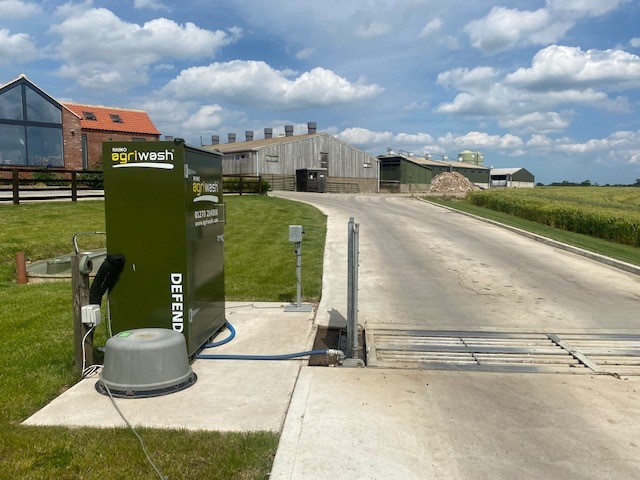
Poultry Production Complex: A compact platform can be integrated into the access road of a poultry farm, providing automatic vehicle treatment without requiring personnel to manually spray every incoming vehicle.
Large Livestock Project: A higher-capacity configuration can be engineered for heavier vehicles and higher traffic volumes, with larger spray areas, increased water capacity and two-way vehicle detection.
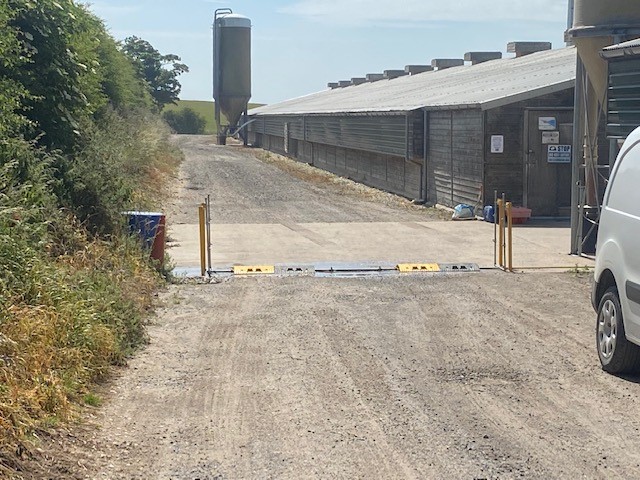
Existing Farm Biosecurity Upgrade: A surface-mounted system with optional low-profile ramps can be installed where minimizing excavation and civil works is important.
Integrated Farm Construction: For new pig farm construction or poultry farm construction projects, the vehicle disinfection platform can be coordinated with farm roads, drainage, electrical infrastructure, clean/dirty zones and other biosecurity equipment.
|
| Product FAQ |
Q: What is an Automatic Vehicle Disinfection System for Farms?
A: It is an automated drive-through biosecurity system that sprays a compatible disinfectant solution onto vehicle tyres, wheels, underbody and chassis as the vehicle passes through a designated treatment platform.
Q: Is it suitable for commercial pig farms?
A: Yes. The system is suitable for commercial pig farms, poultry farms, cattle farms, breeding facilities and other livestock production sites requiring controlled vehicle sanitation.
Q: How does automatic activation work?
A: An entry sensor detects the approaching vehicle and triggers the programmed spray cycle. The system then operates according to the configured pump, dosing and control settings.
Q: Which vehicle areas are treated?
A: The spray layout can target tyres, wheels, underbody and chassis. Nozzle positioning is designed according to the vehicle type and required coverage.
Q: Can the system handle trucks and livestock transport vehicles?
A: Yes. Platform dimensions and structural load capacity can be engineered according to the dimensions and axle loads of the vehicles used at the farm.
Q: Does the system require excavation?
A: Not necessarily. Surface-mounted configurations can be installed on a suitable prepared base. An inset configuration can also be designed for permanent flush installation.
Q: Can the disinfectant concentration be adjusted?
A: Yes. The chemical dosing system can be configured or adjusted according to the selected compatible disinfectant and the farm's approved biosecurity procedure.
Q: How is contaminated wastewater handled?
A: A collection tray and drainage connection can be incorporated to capture used spray liquid and direct it toward the site's controlled wastewater management system.
Q: Can vehicles be disinfected in both directions?
A: Yes. Two-way traffic activation can be incorporated into suitable configurations using separate entry and exit detection.
Q: Can the system be customized for a new farm construction project?
A: Yes. Platform dimensions, vehicle clearance, spray arrangement, pump capacity, water tank, dosing system, drainage, electrical configuration and control functions can be designed according to project requirements.
Q: What maintenance does the system require?
A: Routine maintenance includes nozzle and filter cleaning, pump inspection, sensor testing, drainage maintenance, chemical-system flushing and inspection of structural and electrical components.
|
| Product Gallery |
 |



Comments & Inquiries
Leave your questions or requirements below. We will reply as soon as possible.