


| Product Name | Veterinary Laboratory Centrifuge | ||||||||||||||||||||||||||||||||||
| Product Image | 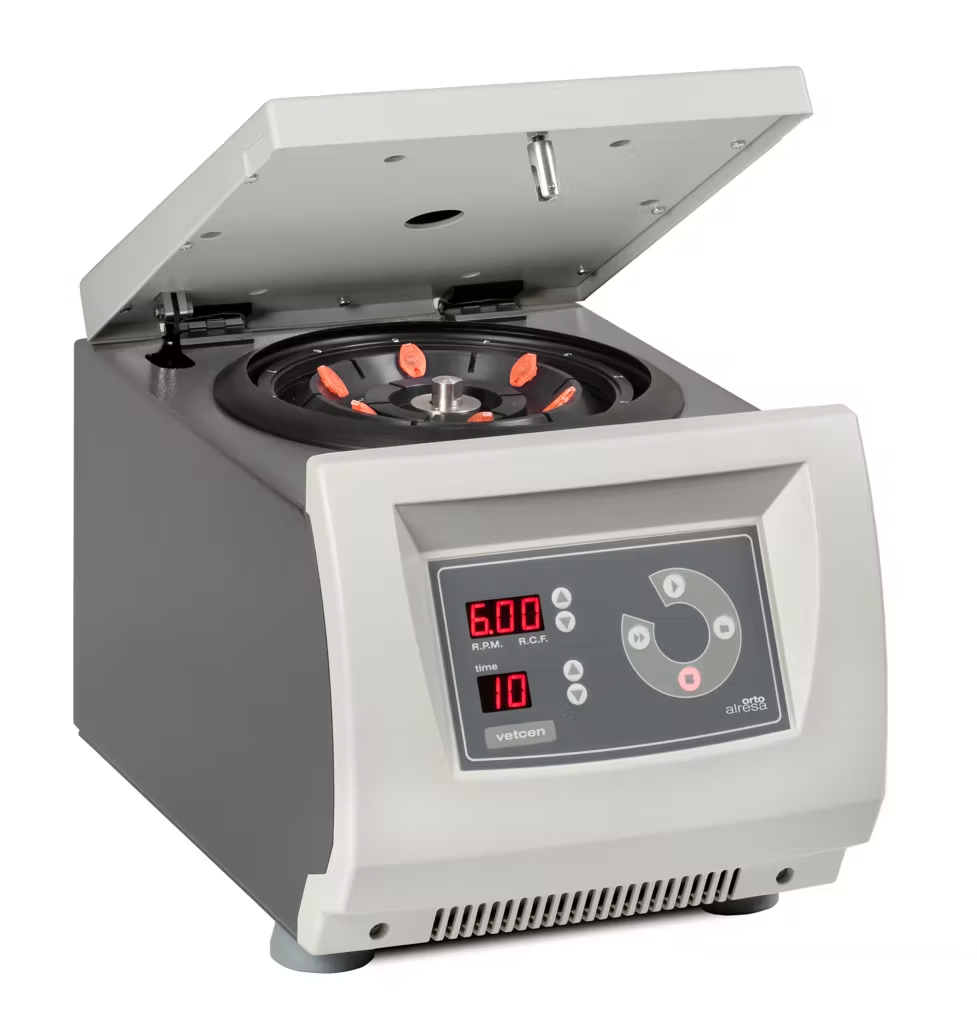 |
||||||||||||||||||||||||||||||||||
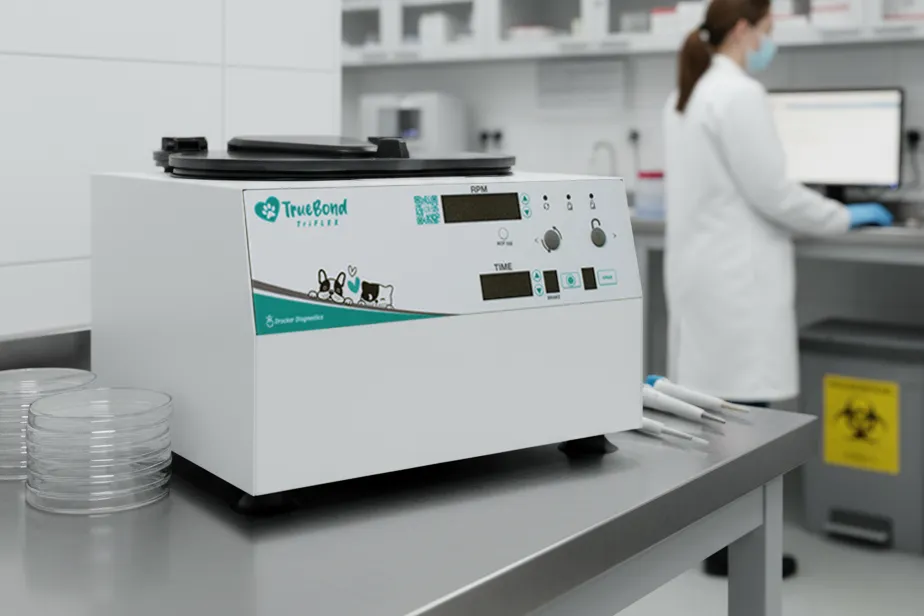
| Product Overview | The Veterinary Laboratory Centrifuge is a compact, ventilated benchtop centrifuge designed specifically for veterinary laboratory applications where sample volumes are moderate and different tube formats may need to be processed within the same workflow. Its dedicated multitube rotor can process microtubes and capillary tubes in the same centrifugation cycle, providing practical flexibility for veterinary clinical analysis and animal health testing. The compact footprint is suitable for laboratories where bench space, workflow efficiency and easy sample access are important considerations. For commercial pig farms, livestock production groups, veterinary clinics and centralized animal health laboratories, the centrifuge can support routine sample preparation and microhematocrit-related workflows. Configuration and electrical versions can be supplied According to project requirements. |
||||||||||||||||||||||||||||||||||
| Key Features |
|
||||||||||||||||||||||||||||||||||
| Structural Components | The Veterinary Laboratory Centrifuge incorporates a compact external housing, centrifugation chamber, fixed-angle multitube rotor, sample adapters, motor drive, LED control panel, safety lid and forced-ventilation system. The referenced configuration uses a multitube rotor capable of combining microtube and capillary tube positions. This arrangement allows different veterinary sample formats to be processed during the same run, reducing the need for separate centrifugation equipment in small clinical laboratories. Typical structural components include:
|
||||||||||||||||||||||||||||||||||
| Working Principle / Structural Principle | The centrifuge separates sample components according to density by applying controlled centrifugal force. Tubes and capillary samples are positioned in the rotor and balanced before the operating cycle begins. During rotation, denser components migrate toward the outer or lower region of the sample while lighter fractions remain closer to the rotational axis. This separation principle is used for a range of veterinary laboratory sample preparation procedures. The multitube rotor allows microtubes and capillary tubes to be processed in the same run. For veterinary hematology workflows, compatible capillary tubes can be used for microhematocrit-related procedures. Microtubes can be used for other small-volume sample preparation applications according to the validated laboratory method. The LED control system allows RPM, RCF and centrifugation time to be programmed. Acceleration and deceleration can also be adjusted to suit the requirements of the applicable procedure. |
||||||||||||||||||||||||||||||||||
| Technical Specifications |
|
||||||||||||||||||||||||||||||||||
| Applications |
|
||||||||||||||||||||||||||||||||||
| Customization Options | For international B2B procurement, the Veterinary Laboratory Centrifuge can be specified according to the laboratory workflow, sample formats, operating environment and regional electrical requirements. Possible project considerations include rotor configuration, microtube and capillary tube capacity, adapters, operating programs, voltage version, packaging and accessory combinations. For commercial pig farms, livestock groups and agricultural engineering projects, equipment specifications can be coordinated with veterinary laboratory layout, work benches, electrical infrastructure, sample reception areas and biosecurity zoning. Project configurations are Customizable, According to project requirements, and Available upon request. |
||||||||||||||||||||||||||||||||||
| Installation & Maintenance | The Veterinary Laboratory Centrifuge is designed for straightforward benchtop installation. Place the unit on a stable and level laboratory work surface with sufficient clearance for ventilation, lid opening and routine maintenance. Before operation, verify that the rotor and adapters are correctly installed. Sample tubes and capillary tubes must be positioned according to the rotor configuration and balanced before each run. Do not exceed the specified rotor speed, capacity or compatible tube dimensions. The stainless steel centrifugation chamber is designed for easy cleaning. Rotors and adapters can be removed by the user and are autoclavable where permitted by the applicable equipment instructions. Routine maintenance should include inspection of the rotor, tube carriers, adapters, lid, safety mechanism and centrifugation chamber. Spills should be cleaned promptly using laboratory-approved cleaning and disinfection procedures. The brushless induction motor is designed as a maintenance-free drive system. Periodic equipment inspection and calibration should be performed according to the applicable laboratory quality system and manufacturer's recommendations. |
||||||||||||||||||||||||||||||||||
| Project Cases | The Veterinary Laboratory Centrifuge is suitable for procurement programs involving commercial pig farms, integrated livestock production groups, veterinary clinics, animal health laboratories, diagnostic service providers and agricultural engineering contractors. For a commercial swine production complex, the centrifuge can be installed in a dedicated herd health laboratory for routine microhematocrit and small-volume sample processing. Its combined microtube and capillary tube capability can help reduce the need for separate compact centrifuges. For centralized livestock diagnostic centers, the equipment can be positioned at sample preparation workstations alongside hematology, molecular testing and other veterinary laboratory equipment. For new farm construction and livestock engineering projects, centrifuge requirements can be incorporated into the laboratory equipment schedule together with bench layout, electrical services, sample flow and biosecurity zoning. Equipment quantities and project configurations are Available upon request. |
||||||||||||||||||||||||||||||||||
| Product FAQ |
Q: What is the Veterinary Laboratory Centrifuge designed for? Q: Can microtubes and capillary tubes be processed in the same run? Q: What is the maximum speed? Q: What is the maximum sample capacity? Q: Is it suitable for commercial pig farm laboratories? Q: What safety systems are included? Q: How is the centrifuge maintained? Q: Can the centrifuge be specified for an international livestock project? |
||||||||||||||||||||||||||||||||||
| Product Gallery |
|
- Home
-
Products
- Pig Farming Equipment
- Cattle Farming Equipment
- Sheep & Goat Farming Equipment
- Poultry Farming Equipment
- Feeding & Drinking Systems
- Veterinary & Breeding Equipment
- Testing & Diagnostic Equipment
- Cleaning & Biosecurity Equipment
- Climate Control Equipment
- Livestock Weighing Equipment
- Manure & Waste Management
- Farm Transport & Handling
-
Solutions
- Pig Farm Solutions
- Dairy Farm Solutions
- Beef Cattle Farm Solutions
- Sheep & Goat Farm Solutions
- Layer Farm Solutions
- Broiler Farm Solutions
- Feeding & Drinking System Solutions
- Climate Control Solutions
- Biosecurity & Disinfection Solutions
- Manure & Waste Management
- Smart Farming Solutions
- Farm Renovation and Upgrade Solutions
- Partners
- Projects
- Resources
- News
- About Us
- Contact

Comments & Inquiries
Leave your questions or requirements below. We will reply as soon as possible.