
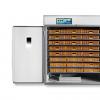


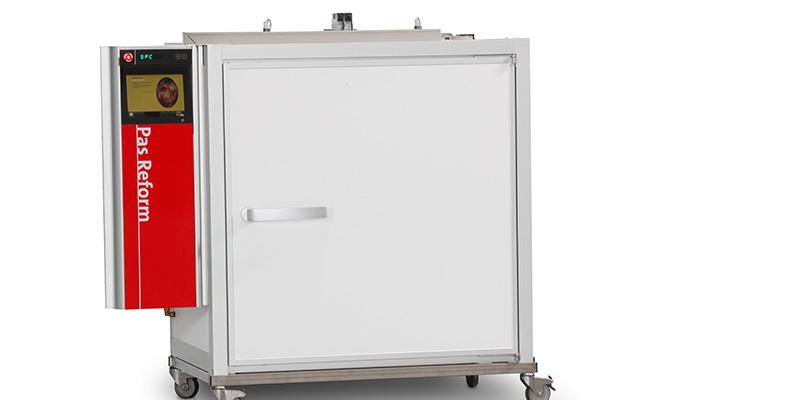
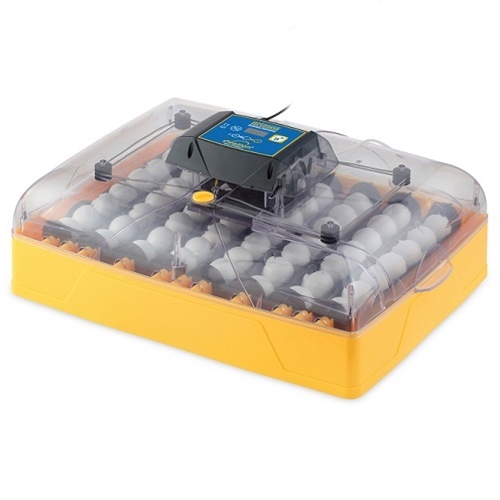

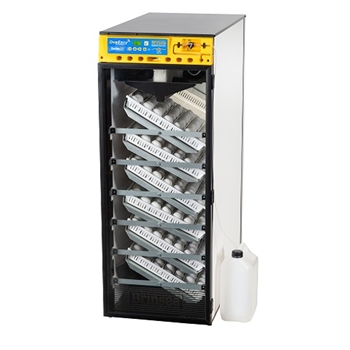
| Product Name | Turkey Egg Incubator | ||||||||||||||||||||||||||||||||
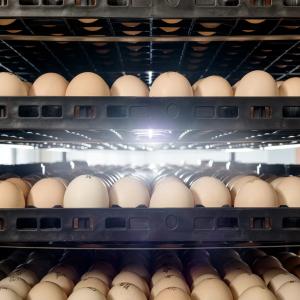
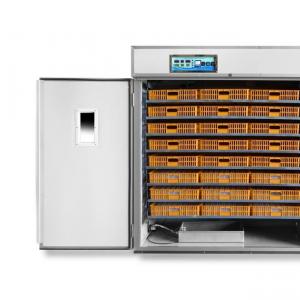
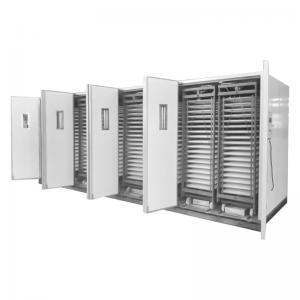
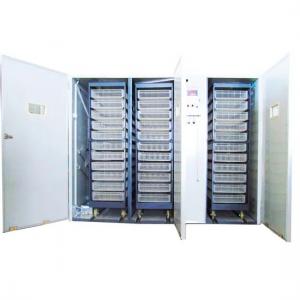
| Product Image | 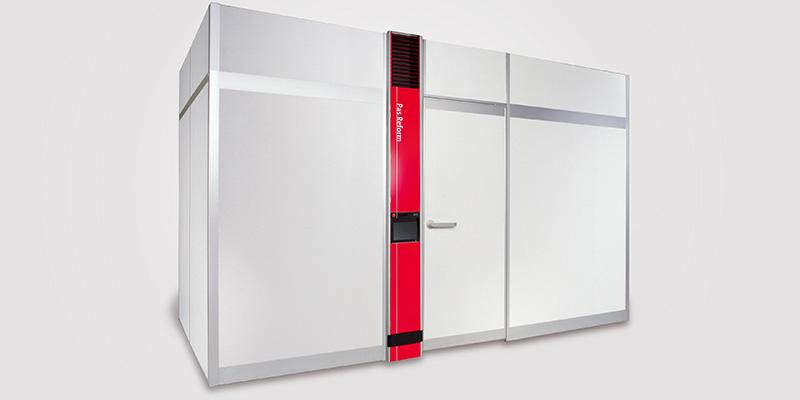 |
||||||||||||||||||||||||||||||||
| Product Overview | The Turkey Egg Incubator is a commercial hatchery system developed for the controlled incubation of fertile turkey eggs. Compared with standard chicken incubation, turkey embryos require careful management of eggshell temperature, metabolic heat removal, humidity, ventilation and airflow throughout the incubation cycle. The system combines automatic heating, cooling, humidification, ventilation, air circulation and egg turning to maintain a stable environment around each batch of eggs. Species-specific incubation programs can be configured according to turkey breed, egg size, breeder flock age, storage history and hatchery management requirements. The incubator is suitable for turkey breeder operations, commercial hatcheries, poultry genetics projects and integrated agricultural facilities requiring reliable large-scale poult production. |
||||||||||||||||||||||||||||||||
| Key Features |
|
||||||||||||||||||||||||||||||||
| Structural Components |
|
||||||||||||||||||||||||||||||||
| Working Principle | Fertile turkey eggs are placed in dedicated trays and loaded into the incubator on setter trolleys. Once the incubation program starts, the control system coordinates heating, cooling, humidity, ventilation, airflow and automatic egg turning. During early development, the embryos generate relatively little metabolic heat. As incubation progresses, heat production increases substantially, making effective cooling and airflow increasingly important. The control system adjusts the chamber environment according to programmed turkey incubation requirements. Humidity and ventilation are managed to support appropriate moisture loss and gaseous exchange. At the end of the setter stage, the eggs are transferred to a suitable turkey hatcher for the final phase of development and poult emergence. |
||||||||||||||||||||||||||||||||
| Technical Specifications |
|
||||||||||||||||||||||||||||||||
| Turkey-Specific Incubation Management | Turkey eggs are larger than standard broiler eggs and developing turkey embryos can generate comparatively high metabolic heat during later incubation. Effective airflow, cooling capacity and adequate spacing between eggs and trays are therefore important considerations in commercial turkey incubator design. Moisture loss should also be monitored throughout incubation because appropriate air-cell development is essential for successful internal pipping and pulmonary respiration. Ventilation should provide sufficient oxygen while avoiding unnecessary over-ventilation that can disturb chamber temperature and humidity. For advanced commercial hatcheries, eggshell temperature and carbon dioxide monitoring can be incorporated into the incubation control strategy to respond more closely to changing embryo requirements. |
||||||||||||||||||||||||||||||||
| Applications |
|
||||||||||||||||||||||||||||||||
| Customization Options | The Turkey Egg Incubator can be configured according to turkey breed, fertile egg size, weekly setting volume, hatchery output target, storage practice and available building dimensions. Available customization may include egg capacity, tray dimensions, trolley arrangement, incubation program, cooling capacity, airflow configuration, humidification method, ventilation control, sensor package, control interface and electrical specification. The complete system can be designed according to local climate and farm conditions, hatchery building layout and future production expansion requirements. |
||||||||||||||||||||||||||||||||
| Installation & Maintenance | Before installation, confirm hatchery production capacity, setter room dimensions, trolley movement routes, ventilation requirements, cooling water supply, drainage and electrical infrastructure. The incubator should be installed on a stable and level floor with sufficient service space. Air supply, exhaust ducts, cooling connections and electrical services should be installed according to the approved hatchery engineering layout. Routine maintenance includes checking temperature and humidity sensors, air circulation fans, cooling circuits, turning mechanisms, humidification components, ventilation dampers, door seals and electrical connections. Trays, trolleys and incubation chambers should be thoroughly cleaned and disinfected between production cycles according to hatchery biosecurity procedures. |
||||||||||||||||||||||||||||||||
| Project Cases | In commercial turkey hatchery projects, incubators are normally integrated into a complete workflow including fertile egg receiving, storage, pre-incubation preparation, setting, incubation, candling, transfer, hatching and poult handling. For larger poultry groups, modular setter capacity can be planned in stages according to weekly egg volume and future expansion. In new steel structure hatchery buildings, incubator positioning can be coordinated with service corridors, ventilation rooms, egg transfer routes and sanitation zones during the project engineering stage. |
||||||||||||||||||||||||||||||||
| Product FAQ | Q: Why does turkey egg incubation require dedicated settings? A: Turkey eggs and embryos differ from chicken eggs in size, metabolic heat production and incubation duration, making species-specific temperature, cooling, airflow and ventilation management important. Q: Can the incubator capacity be customized? A: Yes. Capacity can be configured according to weekly fertile egg volume, hatchery output requirements and available floor space. Q: Does the system provide automatic egg turning? A: Yes. Commercial setter configurations use automatic turning to support normal embryo development. Q: Can eggshell temperature be monitored? A: Yes. Eggshell temperature monitoring can be integrated into advanced configurations according to project requirements. Q: Can CO2 be monitored for ventilation management? A: CO2 sensing and related ventilation control are available upon request for advanced incubation projects. Q: Is a separate turkey hatcher required? A: In commercial hatchery systems, turkey eggs are normally transferred from the setter to a dedicated hatcher for the final phase of incubation. Q: What information is required for quotation? A: Recommended information includes turkey breed, weekly setting volume, egg size range, required annual output, preferred automation level, local electrical supply and available hatchery dimensions. |
||||||||||||||||||||||||||||||||
| Product Gallery | 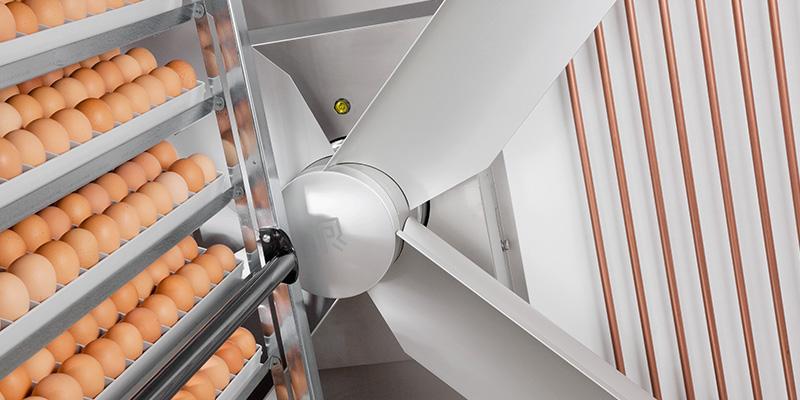 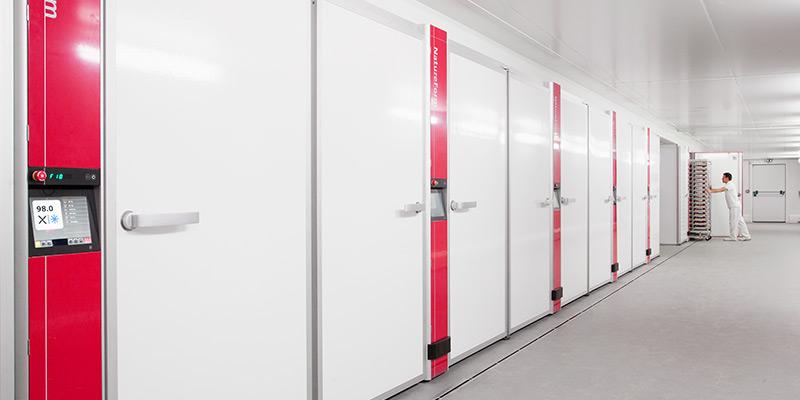 |
- Home
-
Products
- Pig Farming Equipment
- Cattle Farming Equipment
- Sheep & Goat Farming Equipment
- Poultry Farming Equipment
- Feeding & Drinking Systems
- Veterinary & Breeding Equipment
- Testing & Diagnostic Equipment
- Cleaning & Biosecurity Equipment
- Climate Control Equipment
- Livestock Weighing Equipment
- Manure & Waste Management
- Farm Transport & Handling
-
Solutions
- Pig Farm Solutions
- Dairy Farm Solutions
- Beef Cattle Farm Solutions
- Sheep & Goat Farm Solutions
- Layer Farm Solutions
- Broiler Farm Solutions
- Feeding & Drinking System Solutions
- Climate Control Solutions
- Biosecurity & Disinfection Solutions
- Manure & Waste Management
- Smart Farming Solutions
- Farm Renovation and Upgrade Solutions
- Partners
- Projects
- Resources
- News
- About Us
- Contact
Comments & Inquiries
Leave your questions or requirements below. We will reply as soon as possible.