
.JPG)


| Product Name | ELISA Microplate for Veterinary Diagnostics |
| Product Image | 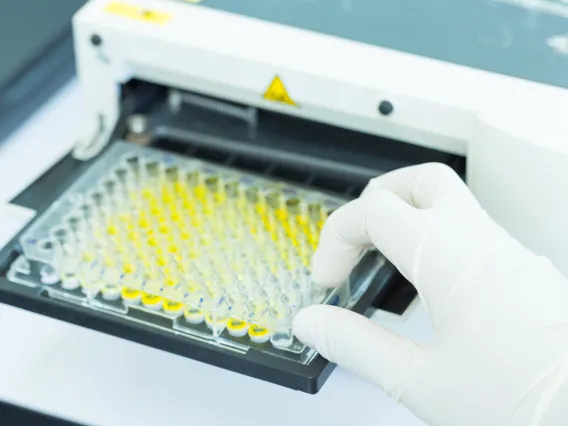 |
| Product Overview | ELISA Microplate for Veterinary Diagnostics is a laboratory consumable designed to provide multiple individual reaction wells for enzyme-linked immunosorbent assays and other immunoassay procedures. The microplate provides a standardized platform for sample loading, reagent incubation, washing, and optical signal detection. The 96-well format is widely used for veterinary serology, antibody and antigen testing, livestock disease surveillance, herd health monitoring, and laboratory screening programs. Clear, white, and black plate configurations can be selected according to the required detection method, while surface treatments can be selected for different biomolecule-binding requirements. :contentReference[oaicite:1]{index=1} For commercial pig farms and integrated livestock operations, the microplate can support centralized veterinary laboratories and diagnostic workflows where multiple animal samples are processed in parallel. |
| Key Features |
Commercial ELISA microplates are available in clear, white, and black configurations with different surface chemistries and well geometries for specific detection and binding applications. :contentReference[oaicite:2]{index=2} |
| Structural Components | The microplate consists of a rigid plate frame and an array of individual reaction wells. Each well is formed as an independent compartment for sample, reagent, washing solution, or reaction mixture. A typical 96-well plate uses an 8 × 12 well arrangement. Available well geometries may include flat-bottom, round-bottom, or V-bottom designs depending on the intended assay and handling method. The plate can also include a skirt or flange structure for improved handling and compatibility with laboratory automation equipment. Surface treatment is an important structural and functional element. High-binding surfaces are designed to improve immobilization of suitable proteins or antibodies, while medium-binding and other surface types are available for different assay chemistries. :contentReference[oaicite:3]{index=3} |
| Working Principle / Structural Principle | The ELISA microplate provides a solid-phase reaction platform. Depending on the assay design, target antigens, antibodies, or other assay components are immobilized or captured on the well surface. Patient or animal specimens and assay reagents are then added sequentially according to the validated testing procedure. After incubation and washing steps, an enzyme-linked detection component and substrate are used to generate a measurable signal. The resulting colorimetric, fluorescent, or luminescent signal is read by a compatible microplate reader and interpreted according to the applicable assay protocol. Well geometry and plate color can affect washing and optical detection. Flat-bottom wells are commonly used for optical measurements, while black or white plates can be selected for suitable fluorescence or luminescence workflows. :contentReference[oaicite:4]{index=4} |
| Technical Specifications |
Commercial examples demonstrate that 96-well plates are available with different surface treatments, colors, well shapes, and working-volume specifications. Exact parameters should be selected according to the assay and compatible microplate reader. :contentReference[oaicite:5]{index=5} |
| Applications |
|
| Customization Options | SHEWUYOU supports project-oriented microplate configurations for international veterinary, livestock, agricultural, and laboratory customers.
|
| Installation & Maintenance | The ELISA Microplate is a laboratory consumable and requires no mechanical installation. Before use, operators should verify the plate format, surface treatment, well geometry, sterility status, package integrity, and compatibility with the intended assay and microplate reader. During operation, samples and reagents should be dispensed according to the validated ELISA procedure. Consistent pipetting, incubation, washing, and liquid removal are important for minimizing well-to-well variation. After use, the disposable plate should be handled according to the laboratory's applicable biological waste and chemical waste procedures. Unused plates should remain in their original packaging and be protected from dust, moisture, excessive heat, chemicals, and physical deformation. |
| Project Cases | ELISA Microplates for Veterinary Diagnostics are suitable for procurement programs serving commercial pig farms, integrated livestock groups, veterinary diagnostic laboratories, agricultural engineering companies, animal health service providers, and laboratory consumable distributors. For large-scale livestock projects, plate format, surface treatment, color, sterility, packaging, labeling, and supply quantities can be coordinated according to the diagnostic workflow, testing volume, laboratory equipment, local operating conditions, and procurement schedule. The standardized multi-well format is particularly suitable for projects requiring parallel processing of multiple animal samples, controls, and reference materials in a centralized veterinary laboratory environment. |
| Product FAQ | Q: What is an ELISA Microplate used for in veterinary diagnostics? A: It provides a multi-well solid-phase platform for ELISA and other immunoassay procedures used in animal disease testing, serology, and herd health monitoring. Q: Why is a 96-well format commonly used? A: The 8 × 12 arrangement allows multiple samples, controls, standards, and reagents to be processed in parallel, making it suitable for routine and higher-throughput laboratory workflows. Q: What is the difference between high-binding and medium-binding plates? A: The surface treatment affects how biomolecules interact with the well surface. High-binding surfaces are designed for greater immobilization of suitable proteins or antibodies, while medium-binding surfaces provide a different binding profile. The appropriate surface should be selected according to the assay design. :contentReference[oaicite:6]{index=6} Q: Which plate color should be selected? A: Clear plates are commonly used for absorbance or colorimetric measurements. White and black plates can be selected for suitable luminescence or fluorescence workflows where optical background and signal characteristics need to be considered. :contentReference[oaicite:7]{index=7} Q: Can the microplate be customized for commercial livestock projects? A: Yes. Well format, surface treatment, color, working volume, sterility, lid, labeling, packaging, and other specifications can be customized according to project requirements. |
| Product Gallery | 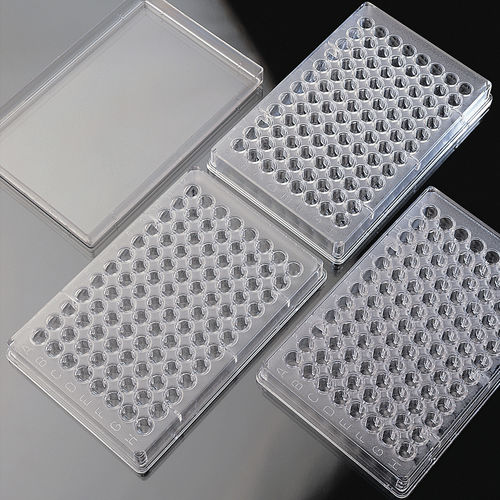 |
- Home
-
Products
- Pig Farming Equipment
- Cattle Farming Equipment
- Sheep & Goat Farming Equipment
- Poultry Farming Equipment
- Feeding & Drinking Systems
- Veterinary & Breeding Equipment
- Testing & Diagnostic Equipment
- Cleaning & Biosecurity Equipment
- Climate Control Equipment
- Livestock Weighing Equipment
- Manure & Waste Management
- Farm Transport & Handling
-
Solutions
- Pig Farm Solutions
- Dairy Farm Solutions
- Beef Cattle Farm Solutions
- Sheep & Goat Farm Solutions
- Layer Farm Solutions
- Broiler Farm Solutions
- Feeding & Drinking System Solutions
- Climate Control Solutions
- Biosecurity & Disinfection Solutions
- Manure & Waste Management
- Smart Farming Solutions
- Farm Renovation and Upgrade Solutions
- Partners
- Projects
- Resources
- News
- About Us
- Contact
Comments & Inquiries
Leave your questions or requirements below. We will reply as soon as possible.