

.JPG)


| Product Name | Veterinary Blood Collection Tube |
| Product Image |  |
| Product Overview | Veterinary Blood Collection Tube is a professional specimen collection consumable designed for obtaining, containing, and transporting animal blood samples for laboratory analysis. It is suitable for livestock health monitoring, veterinary diagnostics, herd management, and disease surveillance. Different tube configurations can use specific additives or no additive according to the intended laboratory workflow. Common configurations include EDTA tubes for anticoagulated whole-blood testing, heparin tubes for plasma-based testing, serum tubes with clot activator, and sodium citrate tubes for coagulation-related analysis. The product is suitable for commercial pig farms, livestock breeding groups, veterinary laboratories, agricultural projects, distributors, and farm engineering procurement programs. |
| Key Features |
|
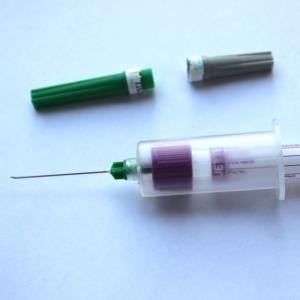
| Structural Components | A typical veterinary blood collection tube consists of a transparent specimen tube, closure or stopper, protective cap, identification label, and a specified additive when required. Depending on the selected configuration, the tube may contain EDTA, heparin, sodium citrate, clot activator, separator gel, glycolytic inhibitor, or no additive. These configurations are widely represented in professional evacuated blood collection systems. Exact materials, closure structure, additive formulation, tube dimensions, and internal treatment are available according to product configuration and project requirements. |
| Working Principle / Structural Principle | The tube is used with an appropriate blood collection needle or collection device. During collection, blood enters the tube and is retained under the selected collection configuration. Additive-containing tubes are designed for specific specimen types. For example, EDTA is used as an anticoagulant for whole-blood applications, heparin supports plasma preparation, and sodium citrate is used for coagulation testing. Serum clot-activator tubes promote clot formation before serum separation. The selected tube type should always correspond to the applicable veterinary laboratory test method and sample handling protocol. |
| Technical Specifications |
Professional blood collection systems commonly distinguish tube types by cap color and additive. Examples include lavender for EDTA, green for heparin, light blue for sodium citrate, and red or gold for serum configurations. |
| Applications |
|
| Customization Options | SHEWUYOU supports flexible configurations for international livestock, veterinary, and agricultural projects.
|
| Installation & Maintenance | Veterinary Blood Collection Tube is a sampling consumable and does not require mechanical installation. It is normally used with a compatible blood collection needle, holder, or other approved collection device. Before use, operators should verify package integrity, tube identification, additive type, expiration information, and storage conditions. During collection, the tube should be handled according to the applicable veterinary sampling procedure and the selected tube manufacturer's instructions. After collection, the tube should be properly closed, gently mixed when required by the tube specification, correctly labeled, and transported under the applicable laboratory conditions. Storage and handling requirements vary according to the additive and intended test. |
| Project Cases | Veterinary Blood Collection Tube is suitable for procurement programs serving commercial pig farms, livestock breeding groups, veterinary diagnostic laboratories, agricultural engineering companies, and animal health service providers. For large-scale farm projects, tube types can be selected according to the planned testing program, sampling frequency, animal species, laboratory workflow, packaging requirements, and procurement volume. Customized labeling and bulk packaging are available according to project requirements. |
| Product FAQ | Q: What is a Veterinary Blood Collection Tube used for? A: It is used to collect and contain animal blood specimens for veterinary laboratory testing, herd health monitoring, and disease surveillance. Q: Which tube type should be selected? A: The tube should be selected according to the required specimen and laboratory test. EDTA, heparin, serum, sodium citrate, glucose, and no-additive configurations are available depending on the application. Q: Can the tube be used for commercial pig farms? A: Yes. It can support routine blood sampling, herd health programs, veterinary inspection, and livestock disease surveillance. Q: Can the tube specifications be customized? A: Yes. Tube dimensions, nominal volume, additive configuration, labeling, packaging, and related specifications can be customized according to project requirements. |
| Product Gallery |   |
- Home
-
Products
- Pig Farming Equipment
- Cattle Farming Equipment
- Sheep & Goat Farming Equipment
- Poultry Farming Equipment
- Feeding & Drinking Systems
- Veterinary & Breeding Equipment
- Testing & Diagnostic Equipment
- Cleaning & Biosecurity Equipment
- Climate Control Equipment
- Livestock Weighing Equipment
- Manure & Waste Management
- Farm Transport & Handling
-
Solutions
- Pig Farm Solutions
- Dairy Farm Solutions
- Beef Cattle Farm Solutions
- Sheep & Goat Farm Solutions
- Layer Farm Solutions
- Broiler Farm Solutions
- Feeding & Drinking System Solutions
- Climate Control Solutions
- Biosecurity & Disinfection Solutions
- Manure & Waste Management
- Smart Farming Solutions
- Farm Renovation and Upgrade Solutions
- Partners
- Projects
- Resources
- News
- About Us
- Contact

Comments & Inquiries
Leave your questions or requirements below. We will reply as soon as possible.