

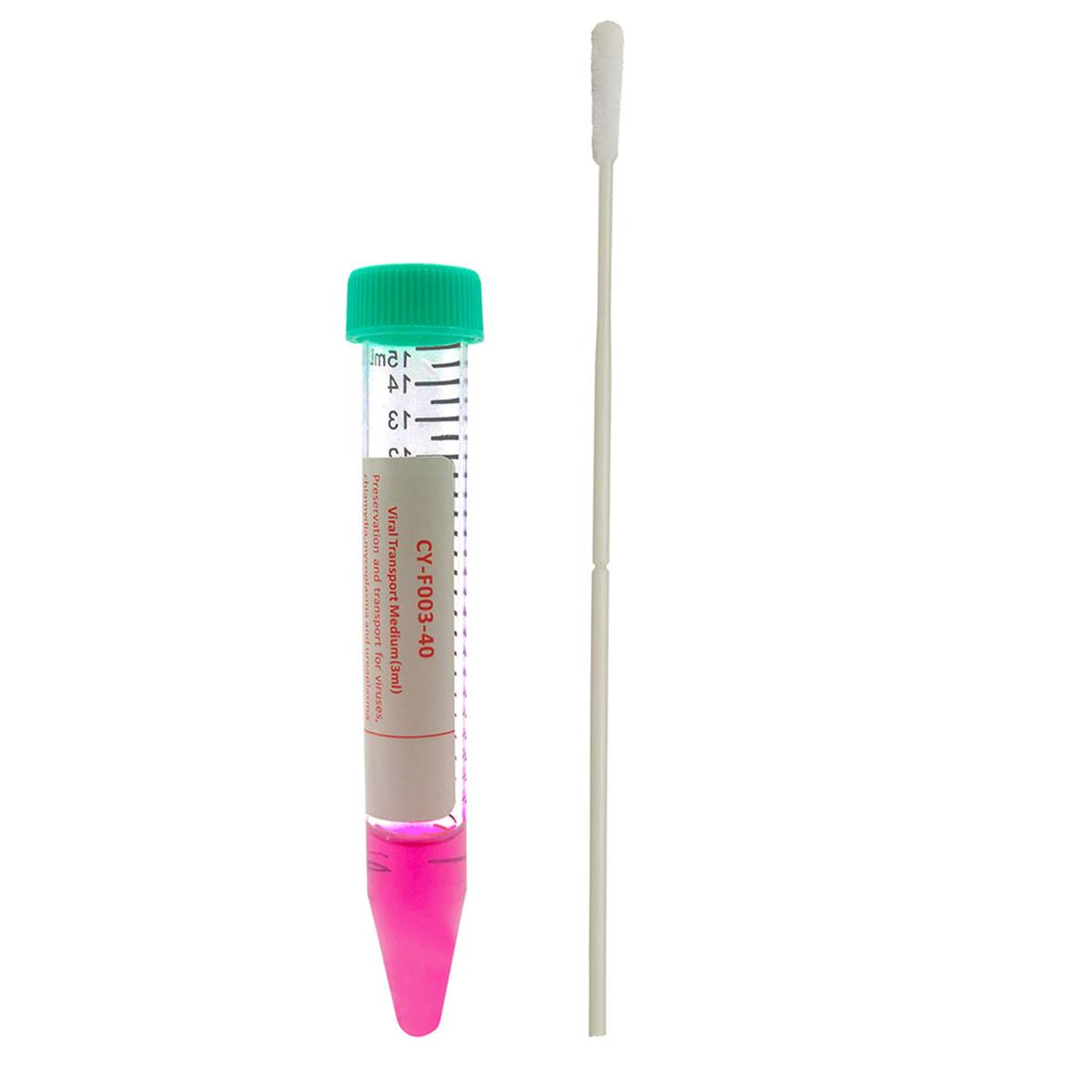
| Product Name | PCR Tubes for Veterinary Diagnostics |
| Product Image |  |
| Product Overview | PCR Tubes for Veterinary Diagnostics are specialized laboratory consumables designed to hold reaction mixtures during polymerase chain reaction (PCR) and real-time PCR (qPCR) testing. Thin-wall polypropylene construction supports efficient and consistent heat transfer between the thermal cycler block and reaction mixture. Individual tubes and multi-tube strips provide flexible formats for low- to medium-throughput veterinary diagnostic workflows. The tubes can be used for molecular testing associated with livestock disease surveillance, pathogen screening, herd health monitoring, and laboratory confirmation programs. Tube format, reaction volume, cap style, optical properties, color, packaging, and other specifications are customizable according to project requirements. :contentReference[oaicite:0]{index=0} |
| Key Features |
Well-designed PCR tubes are intended to support heat transfer, sample protection, sealing, and compatibility with thermal cycler formats. :contentReference[oaicite:1]{index=1} |
| Structural Components | A typical PCR tube consists of a thin-wall reaction vessel and a compatible cap or cap strip. The reaction vessel is commonly manufactured from polypropylene because of its suitability for thermal cycling and laboratory chemical handling. Configurations may include individual tubes, 8-tube strips, or other strip formats. Cap designs can include flat caps, domed caps, attached caps, or optically clear caps for real-time PCR applications. End tabs and labeling areas may be incorporated into strip configurations for sample identification. Exact tube geometry, wall thickness, cap structure, material grade, optical properties, and format are customizable or available upon request. :contentReference[oaicite:2]{index=2} |
| Working Principle / Structural Principle | The PCR tube serves as the reaction vessel for a prepared molecular diagnostic mixture. After the sample and required PCR reagents are dispensed into the tube, the tube is sealed and positioned in a compatible thermal cycler or real-time PCR instrument. During thermal cycling, the thin and uniform tube wall facilitates heat transfer between the instrument block and the reaction mixture. A properly fitted cap helps limit evaporation and maintain reaction containment throughout repeated heating and cooling cycles. Low-profile tubes reduce the distance between the reaction and heated lid and can reduce air space and condensation effects, particularly in low-volume PCR workflows. :contentReference[oaicite:3]{index=3} |
| Technical Specifications |
Common commercial PCR formats include 0.1 mL low-profile and 0.2 mL standard-profile tubes, while 8- and 12-tube strips are used for low- and medium-throughput workflows. Exact compatibility should be confirmed against the selected instrument. :contentReference[oaicite:4]{index=4} |
| Applications |
|
| Customization Options | SHEWUYOU supports project-oriented PCR consumable configurations for international veterinary and agricultural customers.
|
| Installation & Maintenance | PCR Tubes are laboratory consumables and require no mechanical installation. Before use, operators should verify the tube format, cap configuration, package integrity, cleanliness requirements, and compatibility with the intended thermal cycler or real-time PCR instrument. During setup, the reaction mixture should be dispensed using an appropriate pipetting procedure. The cap should be fully secured before thermal cycling to minimize evaporation and maintain reaction containment. After use, tubes should be handled and disposed of according to the laboratory's applicable biological waste and contamination-control procedures. Unused tubes should be stored in their original packaging under the recommended environmental conditions and protected from dust, moisture, chemicals, and physical deformation. |
| Project Cases | PCR Tubes for Veterinary Diagnostics are suitable for procurement programs serving commercial pig farms, integrated livestock groups, veterinary diagnostic laboratories, agricultural engineering companies, animal health service providers, and laboratory consumable distributors. For large-scale projects, tube format, cap type, reaction volume, packaging, labeling, and supply quantities can be coordinated according to the laboratory workflow, PCR instrument platform, testing volume, local operating conditions, and procurement schedule. |
| Product FAQ | Q: What are PCR Tubes for Veterinary Diagnostics used for? A: They are reaction vessels used to contain PCR or qPCR mixtures during molecular diagnostic testing of animal samples. Q: What PCR tube formats are available? A: Common formats include individual tubes and strips of 8 or 12 tubes. Standard and low-profile configurations are available according to instrument requirements. :contentReference[oaicite:5]{index=5} Q: What material is normally used? A: Polypropylene is widely used for PCR tubes because thin-wall polypropylene supports efficient thermal transfer during PCR cycling. :contentReference[oaicite:6]{index=6} Q: Can the tubes be used for qPCR? A: Yes, suitable optical-cap and tube configurations can be used for real-time PCR when compatible with the selected qPCR instrument and assay. Q: Can the PCR tubes be customized for a commercial livestock project? A: Yes. Tube format, capacity, profile, cap type, color, optical configuration, labeling, and packaging can be customized according to project requirements. |
| Product Gallery | |
- Home
-
Products
- Pig Farming Equipment
- Cattle Farming Equipment
- Sheep & Goat Farming Equipment
- Poultry Farming Equipment
- Feeding & Drinking Systems
- Veterinary & Breeding Equipment
- Testing & Diagnostic Equipment
- Cleaning & Biosecurity Equipment
- Climate Control Equipment
- Livestock Weighing Equipment
- Manure & Waste Management
- Farm Transport & Handling
-
Solutions
- Pig Farm Solutions
- Dairy Farm Solutions
- Beef Cattle Farm Solutions
- Sheep & Goat Farm Solutions
- Layer Farm Solutions
- Broiler Farm Solutions
- Feeding & Drinking System Solutions
- Climate Control Solutions
- Biosecurity & Disinfection Solutions
- Manure & Waste Management
- Smart Farming Solutions
- Farm Renovation and Upgrade Solutions
- Partners
- Projects
- Resources
- News
- About Us
- Contact

Comments & Inquiries
Leave your questions or requirements below. We will reply as soon as possible.