

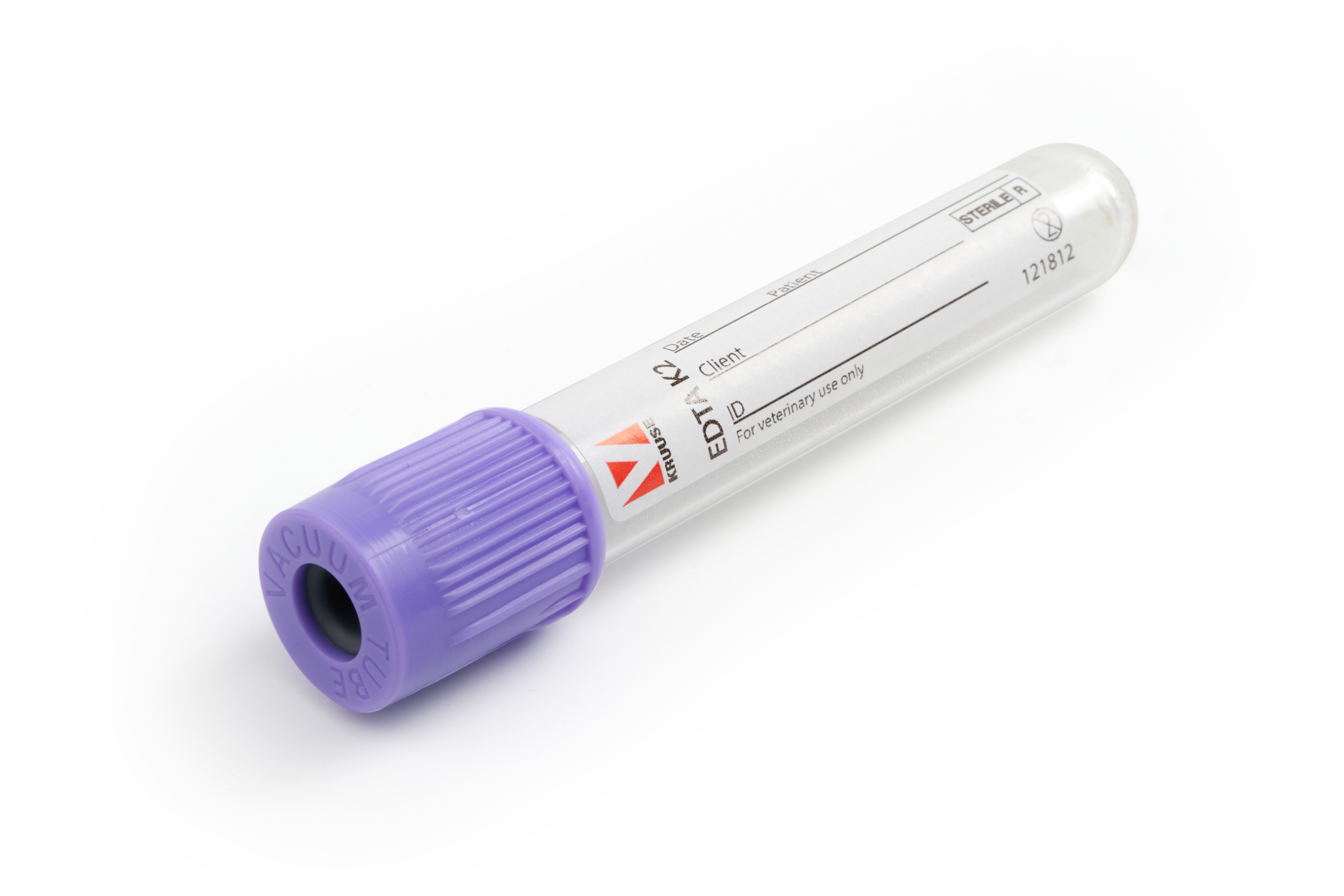
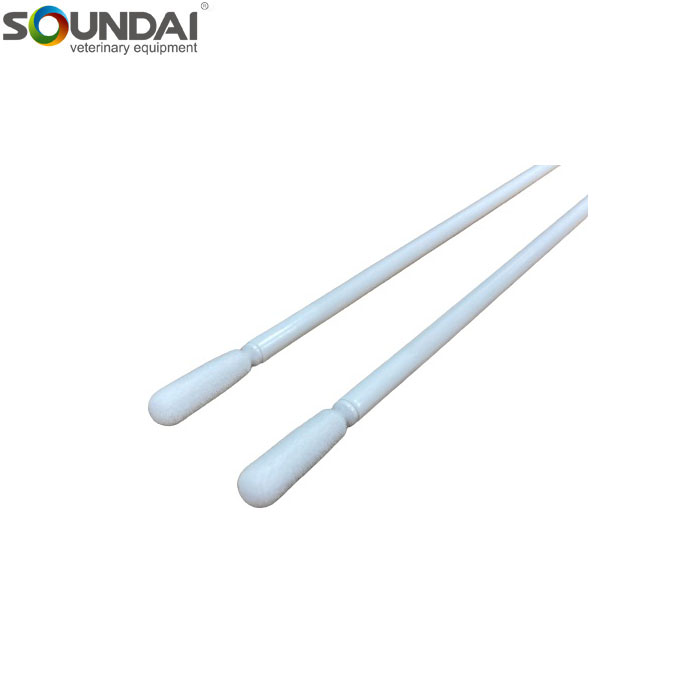
| Product Name | Veterinary Fecal Sample Collection Tool | ||||||||||||||||||||||||||||||
| Product Image |  |
||||||||||||||||||||||||||||||
| Product Overview | Veterinary Fecal Sample Collection Tool is designed for the convenient collection, transfer and containment of animal fecal specimens for veterinary laboratory testing, pathogen surveillance and animal health monitoring. The sampling system can include a dedicated fecal scoop, spatula or sampling applicator together with a screw-cap specimen tube or collection container. The configuration can be selected according to the animal species, sample type and downstream laboratory procedure. Fecal specimens are commonly used in veterinary diagnostic workflows involving gastrointestinal pathogens, enteric infections, parasites and microbiological or molecular analysis. Appropriate specimen collection and storage are important for maintaining sample quality before laboratory testing. The tool is suitable for commercial pig farms, cattle operations, goat-farming-equipment/" target="_blank" class="keylink">sheep and goat farms, poultry enterprises, veterinary clinics, diagnostic laboratories, livestock breeding programs and field disease-surveillance projects. The collection applicator, tube capacity, container material, cap, transport medium, labeling and packaging can be customized according to project requirements. |
||||||||||||||||||||||||||||||
| Key Features |
|
||||||||||||||||||||||||||||||
| Structural Components |
The exact components depend on the selected sampling method and intended laboratory application. |
||||||||||||||||||||||||||||||
| Working Principle / Structural Principle | The tool provides a controlled method for transferring animal fecal material from the collection site into a designated specimen container. The sampling applicator is used to collect an appropriate portion of the fecal specimen. The material is then transferred into the collection tube or container, which is securely closed to maintain specimen containment during handling and transportation. Depending on the downstream laboratory procedure, the sample may be submitted as fresh fecal material or placed into a validated transport or stabilization medium. The appropriate collection method should always correspond to the intended diagnostic test. Fecal samples can be used in veterinary investigations involving enteric pathogens, gastrointestinal parasites and other biological or health indicators. Proper specimen selection, collection, labeling, storage and shipment are important parts of the pre-analytical diagnostic workflow. The collection tool itself does not perform pathogen detection. It supports the sampling stage before laboratory examination, culture, antigen testing, PCR, sequencing or other compatible diagnostic procedures. |
||||||||||||||||||||||||||||||
| Technical Specifications |
|
||||||||||||||||||||||||||||||
| Applications |
|
||||||||||||||||||||||||||||||
| Customization Options |
|
||||||||||||||||||||||||||||||
| Installation & Maintenance | No permanent installation is required. The product is a disposable field sampling tool intended for use together with suitable specimen containers and veterinary sampling procedures. Before collection, verify the specimen container, transport medium if applicable, packaging integrity, labeling requirements and storage conditions specified for the intended laboratory test. Collect a representative fecal specimen using the designated scoop or spatula. Avoid unnecessary contact with soil, bedding, disinfectants, water or other environmental materials that could compromise the sample. Transfer the required specimen into the collection container and close the cap securely. If a transport or stabilization medium is supplied, follow the instructions applicable to that specific medium. Label the specimen with the animal identification, farm or facility information, sample type, collection date and other information required by the receiving laboratory. Maintain the sample under the storage and transportation conditions specified by the downstream laboratory method. WOAH guidance emphasizes appropriate specimen collection, containers, transport media, labeling, storage and shipment for veterinary diagnostic samples. Used sampling tools should be treated as potentially contaminated biological materials and disposed of according to applicable veterinary, occupational-safety and biological-waste requirements. |
||||||||||||||||||||||||||||||
| Project Cases |
Commercial Pig Farm: Fecal collection tools can be incorporated into routine herd-health sampling and enteric pathogen surveillance programs. Integrated Livestock Group: Standardized collection tools can help establish consistent fecal sampling procedures across multiple production sites. Veterinary Diagnostic Laboratory: Dedicated collection containers can support standardized receipt, identification and processing of fecal specimens. Animal Disease Surveillance: Sampling tools can be incorporated into field kits used for laboratory-based pathogen and parasite testing. Mobile Veterinary Service: Compact disposable components are convenient for veterinary teams collecting samples from multiple farms. Distributor and OEM Program: Sampling tools, specimen tubes, labels and packaging can be configured for regional veterinary supply programs. |
||||||||||||||||||||||||||||||
| Product FAQ |
Q: What is a Veterinary Fecal Sample Collection Tool used for? Q: Which animals can use this sampling tool? Q: What tests can use fecal samples? Q: Is the sampling tool disposable? Q: Can the collection tube size be customized? Q: Can transport medium be included? Q: Can the product be supplied as a complete sampling kit? Q: Can the product be private labeled? Q: How should fecal samples be transported? Q: Can the tool be used for livestock disease surveillance? |
||||||||||||||||||||||||||||||
| Product Gallery |
 |
- Home
-
Products
- Pig Farming Equipment
- Cattle Farming Equipment
- Sheep & Goat Farming Equipment
- Poultry Farming Equipment
- Feeding & Drinking Systems
- Veterinary & Breeding Equipment
- Testing & Diagnostic Equipment
- Cleaning & Biosecurity Equipment
- Climate Control Equipment
- Livestock Weighing Equipment
- Manure & Waste Management
- Farm Transport & Handling
-
Solutions
- Pig Farm Solutions
- Dairy Farm Solutions
- Beef Cattle Farm Solutions
- Sheep & Goat Farm Solutions
- Layer Farm Solutions
- Broiler Farm Solutions
- Feeding & Drinking System Solutions
- Climate Control Solutions
- Biosecurity & Disinfection Solutions
- Manure & Waste Management
- Smart Farming Solutions
- Farm Renovation and Upgrade Solutions
- Partners
- Projects
- Resources
- News
- About Us
- Contact

Comments & Inquiries
Leave your questions or requirements below. We will reply as soon as possible.