

| Product Showcase | Content |
|---|---|
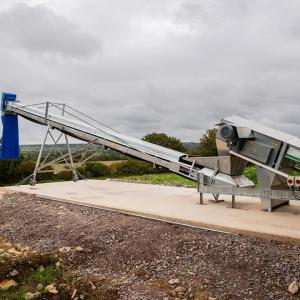
| Product Name | Inclined Manure Booster Conveyor |
| Product Image | 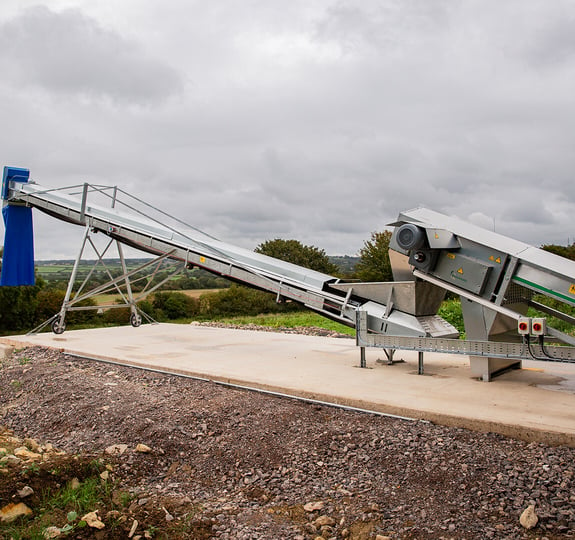 |
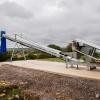
| Product Overview | The Inclined Manure Booster Conveyor receives manure from a cross conveyor or other upstream collection equipment and lifts it to a higher discharge point. It provides a transfer link between livestock housing and a collection truck, container, manure storage building or downstream processing system. Its length, elevation and transfer positions are planned around the building layout and daily manure volume. |
| Key Features |
|
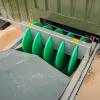
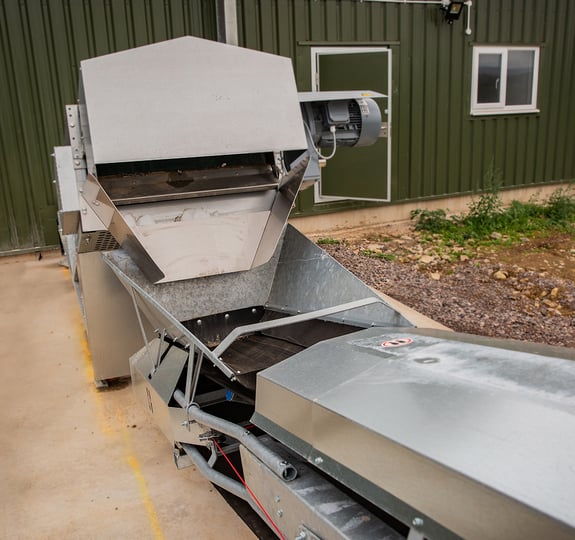
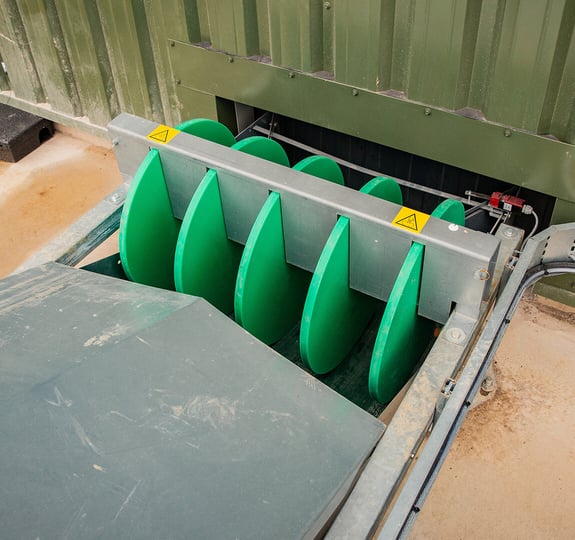
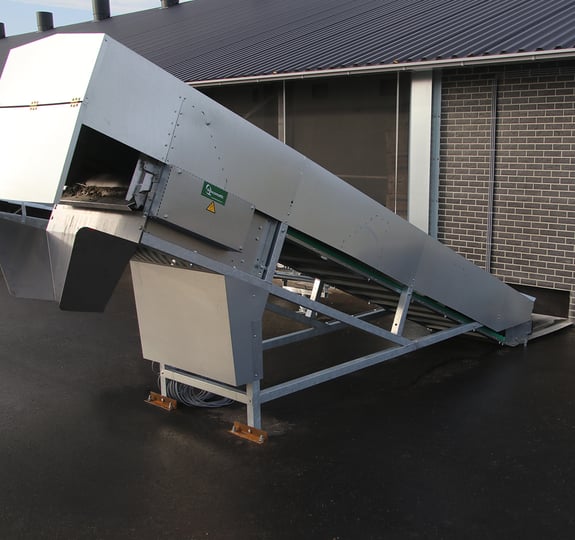
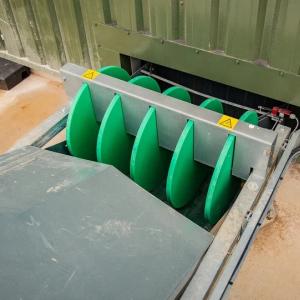
| Structural Components | A typical assembly comprises a manure-carrying belt, supporting frame, drive unit, end rollers, belt tensioning and tracking components, inlet transition, elevated discharge end and structural supports. Side containment, belt surface and weather protection are selected according to the manure characteristics and installation conditions. |
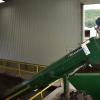
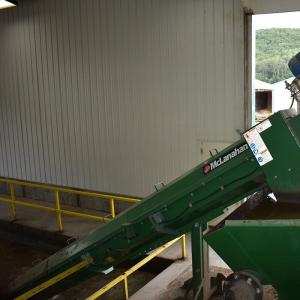
| Working Principle | Manure falls from the upstream conveyor onto the booster belt. The drive moves the load up the incline and discharges it at the upper end into the designated receiving point. The inlet must be positioned to limit spillage, while belt type and incline must be matched to the material so it remains on the conveyor during lifting. |
| Technical Specifications |
|
| Applications | Manure transfer in poultry houses, commercial livestock buildings and integrated manure handling projects. For pig farms, suitability depends on whether the material is sufficiently solid or dewatered for belt conveying; dilute slurry generally requires a different transfer method. The conveyor can be coordinated with steel structure building openings, external platforms and manure storage facilities. |
| Customization Options | Conveyor length, belt width, incline, discharge height, support frame, inlet orientation and control interface can be configured according to project requirements. Share the building drawings, upstream conveyor details, manure condition, receiving-point height and local climate conditions for equipment selection. |
| Installation & Maintenance | Align the inlet with the upstream discharge and secure the frame to foundations or engineered supports. Check clearances at wall openings, vehicle loading areas and service access points. During commissioning, verify belt tracking, tension, transfer and discharge. Routine maintenance includes removing buildup, inspecting the belt and rollers, and servicing the drive in accordance with the supplied manual. |
| Product FAQ |
What does a booster conveyor do? Can it load directly into a truck? Can it handle pig slurry? |
| Product Gallery |
|
- Home
-
Products
- Pig Farming Equipment
- Cattle Farming Equipment
- Sheep & Goat Farming Equipment
- Poultry Farming Equipment
- Feeding & Drinking Systems
- Veterinary & Breeding Equipment
- Testing & Diagnostic Equipment
- Cleaning & Biosecurity Equipment
- Climate Control Equipment
- Livestock Weighing Equipment
- Manure & Waste Management
- Farm Transport & Handling
-
Solutions
- Pig Farm Solutions
- Dairy Farm Solutions
- Beef Cattle Farm Solutions
- Sheep & Goat Farm Solutions
- Layer Farm Solutions
- Broiler Farm Solutions
- Feeding & Drinking System Solutions
- Climate Control Solutions
- Biosecurity & Disinfection Solutions
- Manure & Waste Management
- Smart Farming Solutions
- Farm Renovation and Upgrade Solutions
- Partners
- Projects
- Resources
- News
- About Us
- Contact
Comments & Inquiries
Leave your questions or requirements below. We will reply as soon as possible.