Global Livestock Equipment Manufacturer & Supplier
SHEWUYOU · Livestock Equipment
Integrated Equipment Solutions for Pig, Cattle & Poultry Farms

Galvanized Steel Pig House Exhaust Fan

Product Showcase Content
Product Name GALVANIZED STEEL PIG HOUSE EXHAUST FAN
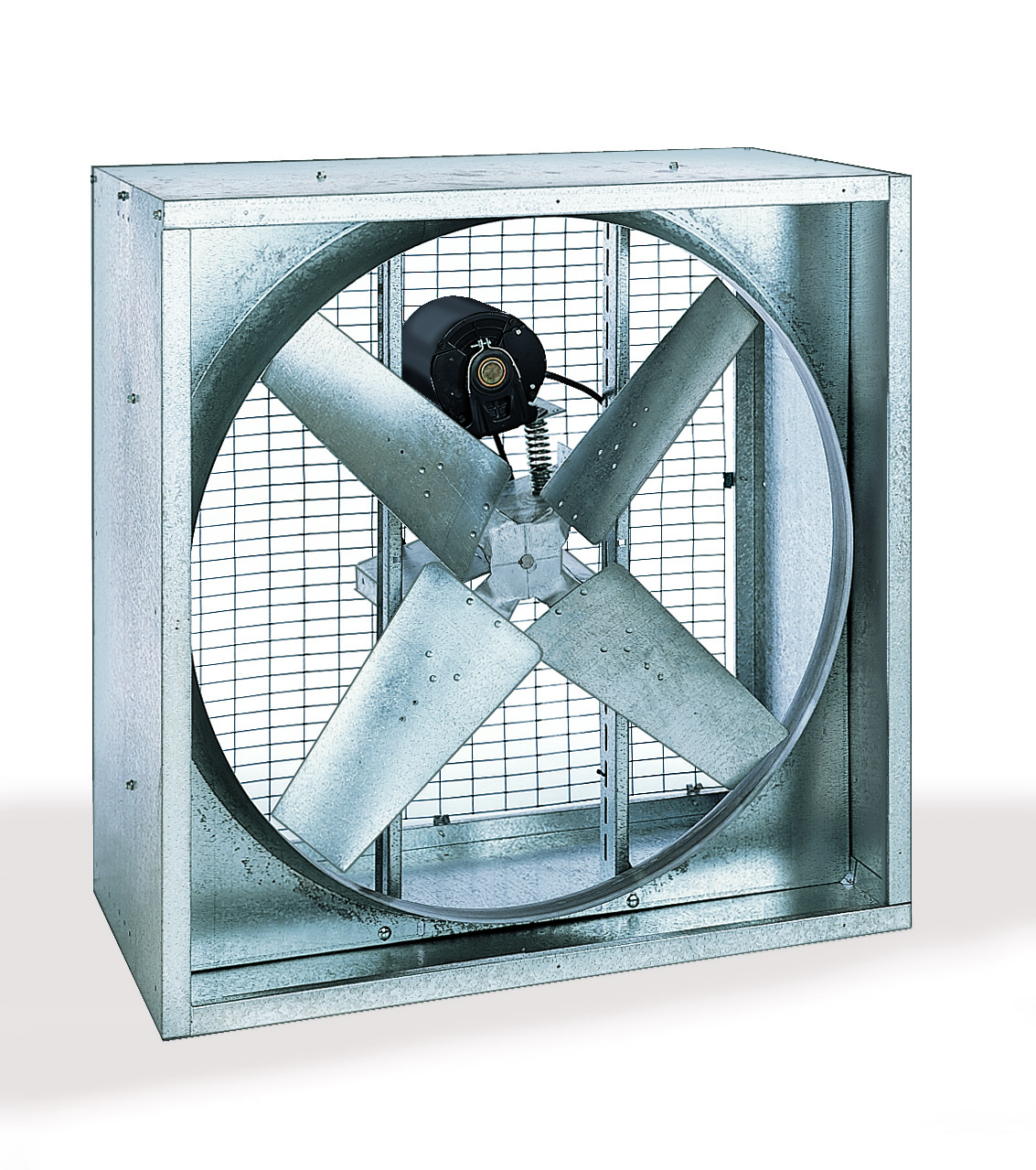
Product Image Galvanized Steel Pig House Exhaust Fan
Product Overview The Galvanized Steel Pig House Exhaust Fan is a heavy-duty ventilation fan designed for commercial pig houses, poultry houses and other livestock buildings requiring large-volume exhaust ventilation.

The fan combines a 275 g/m² hot-dip galvanized steel frame, 1270 mm stainless steel blades, automatic exhaust shutters and durable waterproof bearing components. It can be installed as part of negative-pressure or tunnel ventilation systems to remove heat, humidity, odors and contaminated air from livestock buildings.
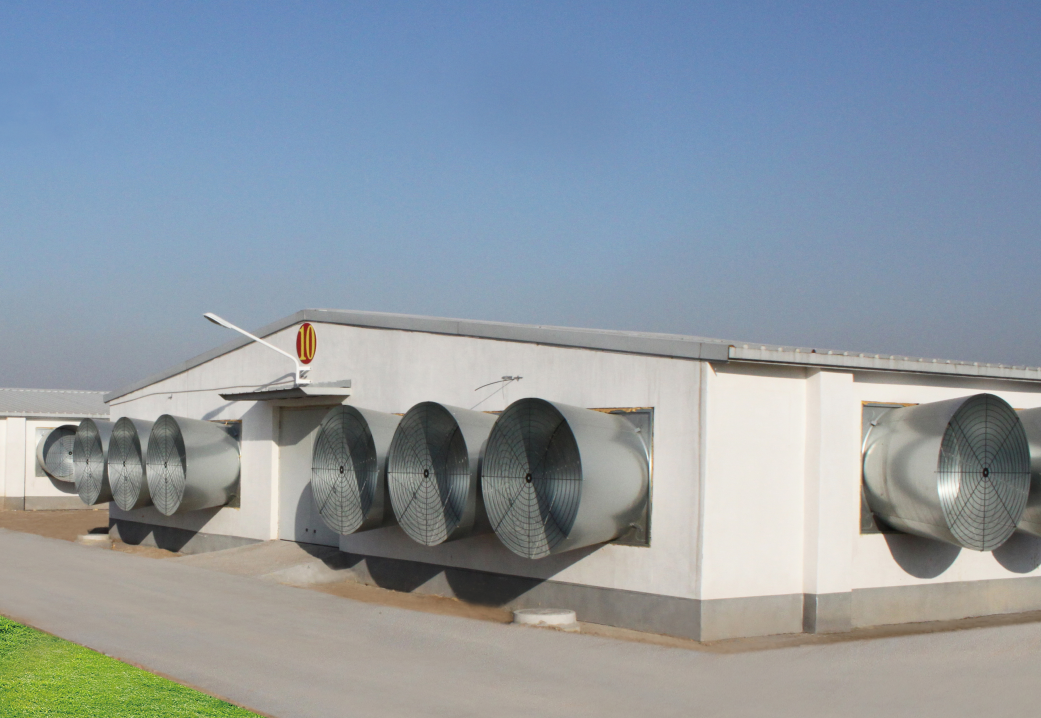
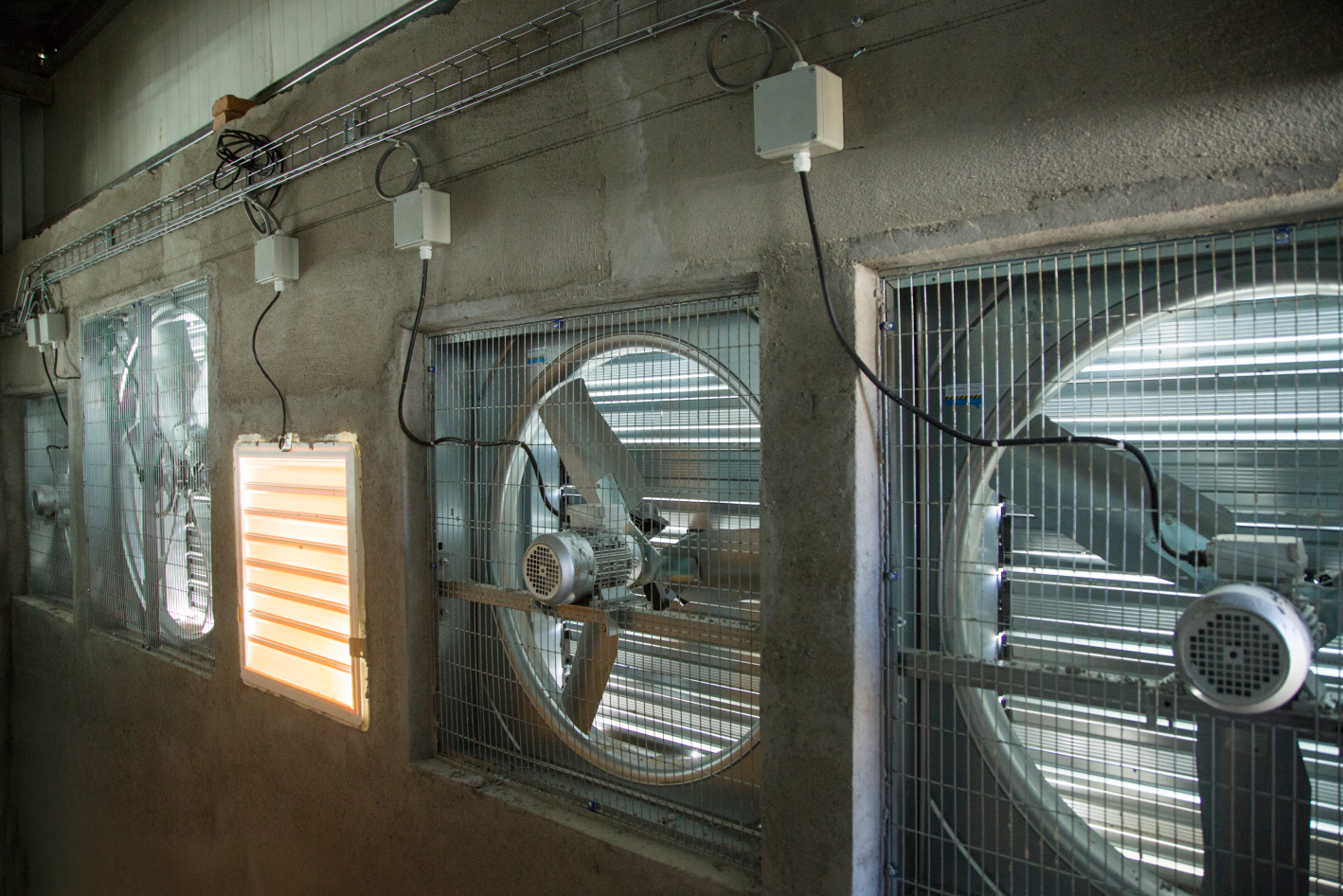
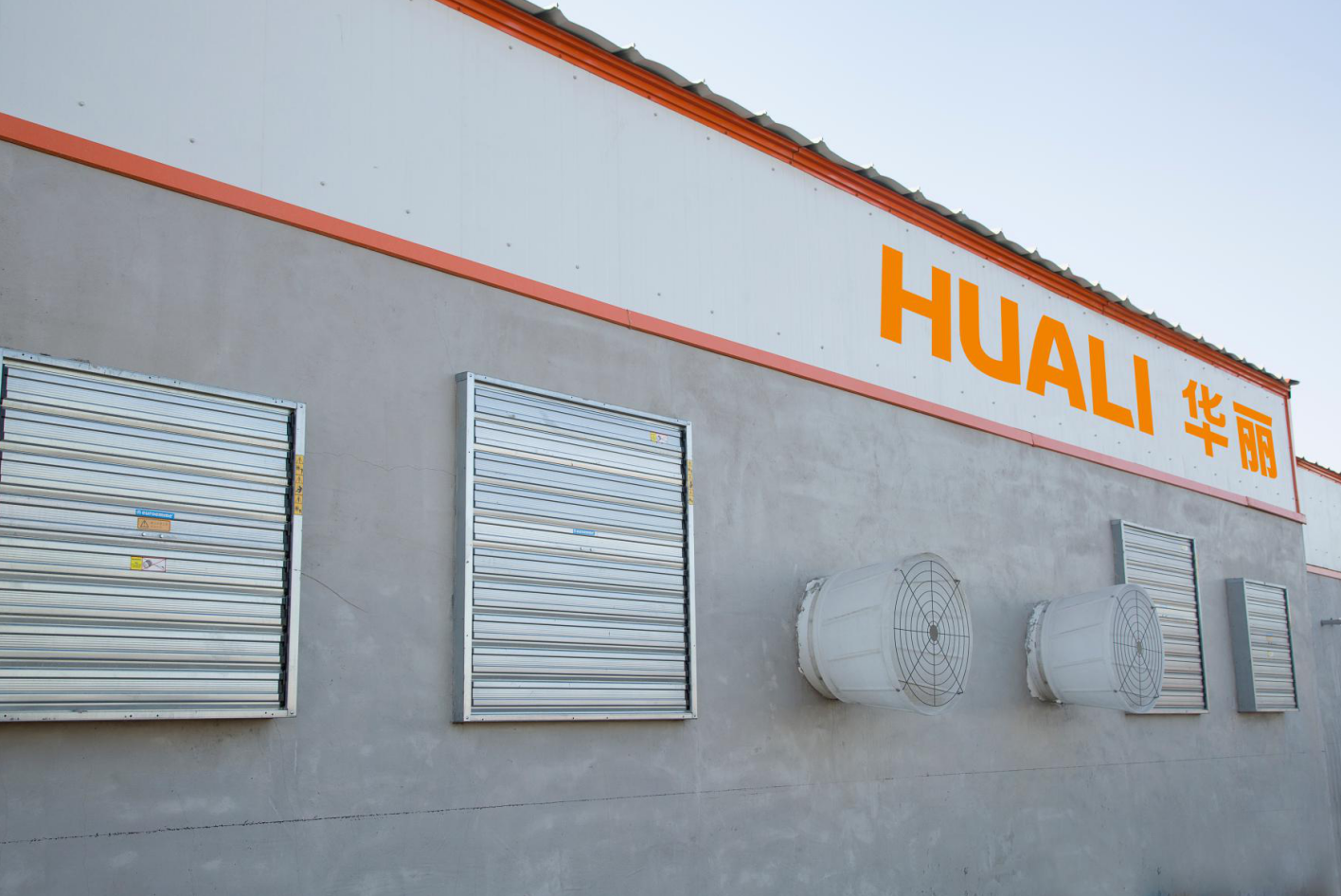
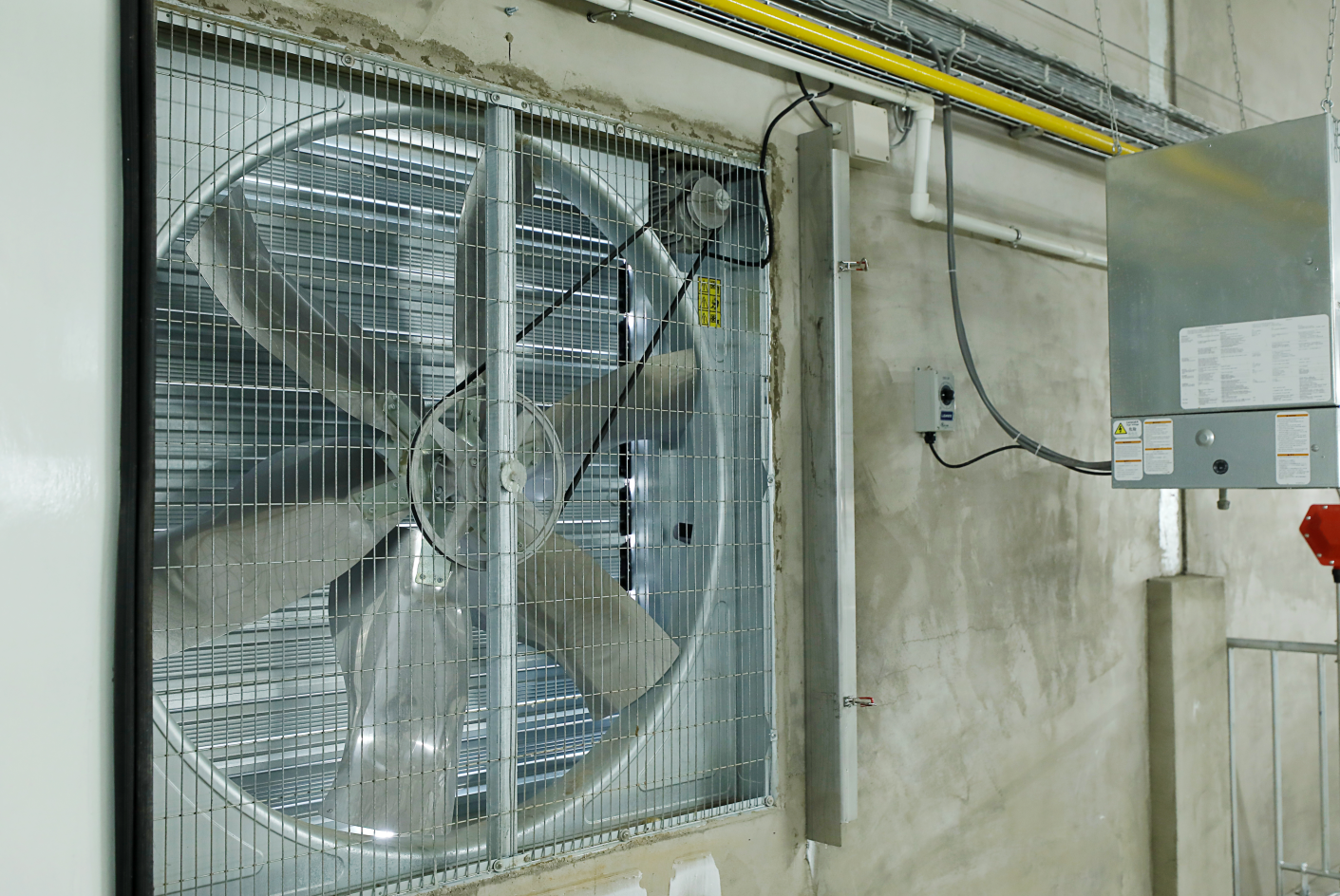
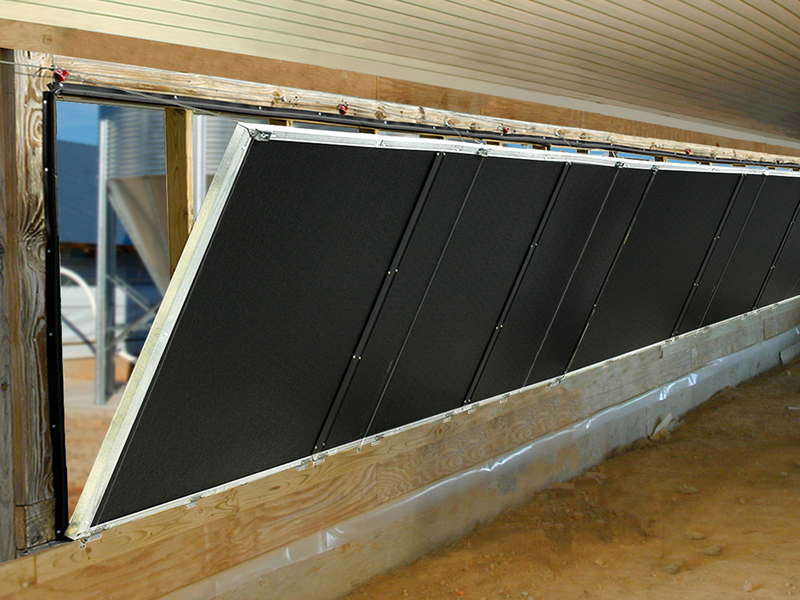
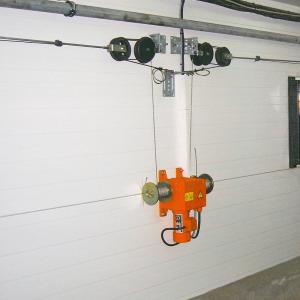
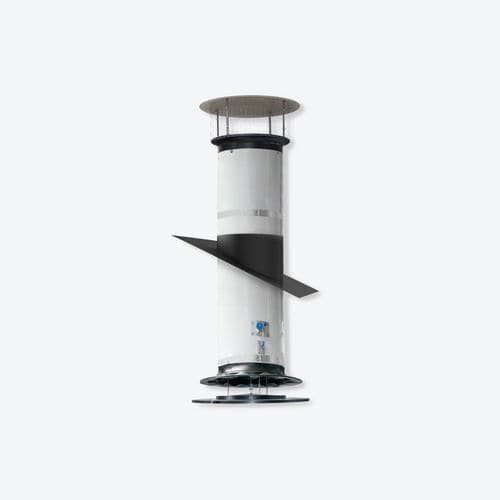
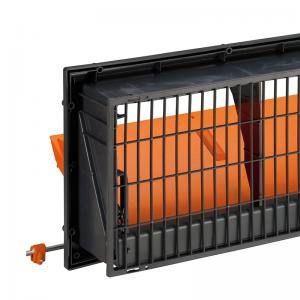
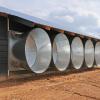
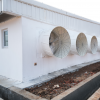
Product Gallery Galvanized box exhaust fan, cone exhaust fan configuration, stainless steel fan blades, automatic galvanized shutters and wall-mounted livestock-house ventilation installation.
Key Features
  • 275 g/m² Hot-Dip Galvanized Frame: Provides corrosion resistance for humid and ammonia-rich livestock environments.
  • 1270 mm Stainless Steel Blades: Large-diameter blades are designed for high-volume ventilation.
  • Dynamically Balanced Impeller: Each blade assembly is balanced to improve operating stability and reduce vibration.
  • Optimized Blade Angle: Professional aerodynamic blade geometry supports efficient airflow.
  • Automatic Exhaust Shutters: Galvanized louvers open automatically during fan operation and help close the wall opening when the fan stops.
  • 90° Shutter Opening: Automatic opening mechanism helps maintain a fully open exhaust path during operation.
  • Water-Resistant Bearings: Special bearing protection helps reduce moisture ingress and supports long service life.
  • Cone Fan Option: Bell-mouth exhaust cone configuration can improve airflow efficiency and reduce discharge resistance.
  • Wall-Mounted Installation: Suitable for modular installation along livestock-house end walls or sidewalls.
  • Climate-Control Compatible: Can be integrated with temperature controllers, staged ventilation systems or centralized environmental controls.
Working Principle The motor drives the stainless steel blade assembly to discharge indoor air through the wall-mounted fan opening. Continuous exhaust creates negative pressure inside the livestock building, drawing fresh outdoor air through designed air inlets, cooling pads or ventilation openings.

During operation, airflow opens the automatic shutters and removes accumulated heat, humidity, odors and airborne contaminants. In tunnel ventilation systems, multiple fans can operate in stages to increase air velocity during warm-weather production conditions.
Technical Specifications
Product Type Pig House Negative-Pressure Exhaust Fan
Frame Material Hot-Dip Galvanized Steel Sheet
Galvanized Coating Approx. 275 g/m²
Blade Material Stainless Steel
Blade Diameter Approx. 1270 mm
Blade Balancing Dynamic Balance Tested
Shutter Material Hot-Dip Galvanized Steel
Shutter Operation Automatic Opening
Maximum Shutter Opening Approx. 90°
Bearing Heavy-Duty Water-Resistant Bearing
Frame Drainage Bottom Drainage Outlet
Fan Configuration Standard Box Fan / Exhaust Cone Fan Available
Drive System Configured According to Selected Model
Motor Power Available According to Fan Configuration
Voltage / Frequency Customized According to Project and Local Power Supply
Airflow Capacity According to Fan Model and Operating Static Pressure
Installation Wall Mounted
Ventilation Mode Negative-Pressure / Tunnel Ventilation
Applications
  • Commercial pig houses
  • Farrowing and breeding sow barns
  • Piglet nursery houses
  • Finishing and fattening pig houses
  • Poultry houses and broiler farms
  • Dairy and cattle barns
  • Sheep and goat housing facilities
  • Negative-pressure ventilation systems
  • Tunnel ventilation and cooling-pad systems
  • Livestock building renovation projects
Installation & Maintenance
  • Confirm required ventilation capacity and fan quantity according to house dimensions, animal density and climate conditions.
  • Prepare reinforced wall openings according to the selected fan dimensions.
  • Install the fan square and level to avoid frame distortion and abnormal blade clearance.
  • Seal gaps between the fan frame and wall to prevent uncontrolled air leakage.
  • Check that automatic shutters open freely without obstruction.
  • Verify blade rotation direction before continuous operation.
  • Inspect bearings, belts, pulleys and motor components periodically according to the selected drive configuration.
  • Remove dust, feathers and accumulated debris from blades and shutters to maintain airflow efficiency.
  • Check blade balance and fasteners if abnormal vibration or noise develops.
  • Protect electrical components during high-pressure barn washing.
  • For automated farms, connect fan stages to a compatible environmental controller according to the ventilation design.
Product FAQ

Q: What material is the fan frame made from?
A: The frame is made from hot-dip galvanized steel sheet with a listed zinc coating of approximately 275 g/m².

Q: What is the blade diameter?
A: The listed stainless steel blade diameter is approximately 1270 mm.

Q: Are the fan blades balanced?
A: Yes. The product information states that each blade assembly undergoes dynamic balancing to support smooth operation.

Q: How do the rear shutters operate?
A: The hot-dip galvanized shutters use an automatic opening mechanism and are designed to remain approximately 90° open during normal fan operation.

Q: Is an exhaust cone available?
A: Yes. A bell-mouth exhaust cone configuration is available for projects requiring optimized discharge airflow.

Q: Can the fan be used with cooling pads?
A: Yes. It can be incorporated into negative-pressure cooling systems where exhaust fans draw outdoor air through evaporative cooling pads.

Q: Can the voltage and motor be customized?
A: Yes. Motor, voltage and frequency can be selected according to project requirements and the electrical standard of the destination market.

Q: How many fans are required for a pig house?
A: Fan quantity should be calculated from building dimensions, pig numbers, required air exchange, local climate and the performance curve of the selected fan model.


Comments & Inquiries

Leave your questions or requirements below. We will reply as soon as possible.