
| Product Name | Belt Drive Negative Pressure Exhaust Fan |
| Product Image | 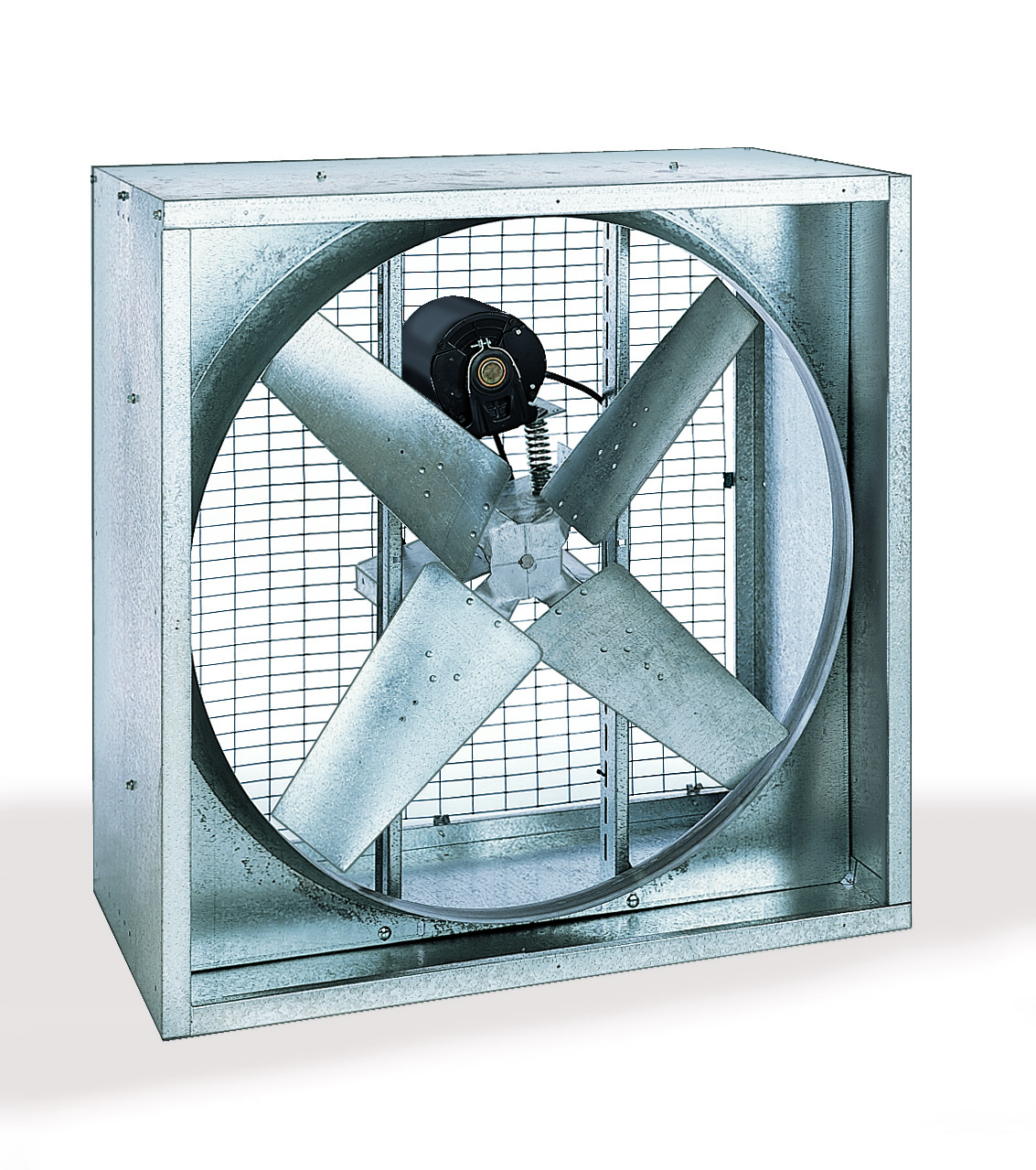 |
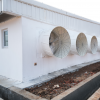
| Product Overview | The Belt Drive Negative Pressure Exhaust Fan is a heavy-duty axial ventilation solution for commercial pig farms, poultry houses, cattle barns, greenhouses and other agricultural buildings. It is designed to remove warm, humid and contaminated indoor air while drawing fresh air into the building through controlled air inlets. The belt drive arrangement separates the motor from the fan shaft and allows the transmission ratio to be selected according to the required airflow and operating conditions. This configuration is well suited to agricultural ventilation systems where serviceability, flexible fan selection and continuous operation are important. A galvanized steel housing and frame provide a practical structure for humid livestock environments, while the fan assembly can be combined with shutters, air inlets, cooling pads and environmental controllers to form a complete negative-pressure ventilation system. Fan size, motor specification, blade configuration, airflow capacity and mounting dimensions can be customized according to project requirements. |
| Key Features |
|
| Structural Components |
|
| Working Principle / Structural Principle | The fan operates as the exhaust component of a negative-pressure ventilation system. When the motor rotates, power is transferred through the belt and pulley assembly to the fan shaft and axial propeller. The rotating blades move air from inside the livestock building toward the exterior. This controlled exhaust creates a slight negative pressure inside the house, causing fresh air to enter through dedicated air inlets, wall openings, tunnel inlets or evaporative cooling pads. The ventilation system should be designed so that fan capacity, inlet area, building air tightness and static pressure are properly matched. In commercial pig houses, this arrangement can support removal of excess heat, humidity, dust and undesirable gases. Actual airflow performance depends on fan configuration, system static pressure, building dimensions, inlet design, climate and livestock density. |
| Technical Specifications |
|
| Applications |
|
| Customization Options | The fan can be engineered and supplied according to livestock type, farm capacity, building dimensions, local climate and ventilation strategy.
|
| Installation & Maintenance | Install the fan in a structurally suitable wall opening with a level and adequately reinforced mounting surface. The opening size, fan frame and mounting structure should be coordinated before installation. The fan should be securely fixed to the building structure, and the perimeter around the fan frame should be sealed to minimize uncontrolled air leakage. In a negative-pressure system, unnecessary air leakage can reduce ventilation control and increase the required fan capacity. After installation, verify fan rotation, belt alignment, belt tension, bearing condition, electrical connections and safety guards before commissioning. Follow the motor manufacturer's wiring and protection requirements and all applicable local electrical regulations. Routine maintenance should include cleaning dust and debris from the fan blades, housing and protective screens. Inspect the belt for wear, cracking or contamination and check pulley alignment and tension at scheduled intervals. Bearings, shaft components, fasteners and mounting points should be inspected periodically. Disconnect and isolate electrical power before any cleaning, inspection or mechanical maintenance. |
| Project Cases | Commercial Pig Farm Ventilation: Multiple belt drive exhaust fans can be arranged along the sidewall or end wall of a pig house to provide staged negative-pressure ventilation. New Steel Structure Pig House: Fan openings, mounting frames, air inlets and environmental controls can be coordinated with the steel structure building design before construction. Finishing House Upgrade: Existing exhaust ventilation can be upgraded by replacing older fans with higher-capacity belt drive units selected according to the actual building static pressure. Tunnel Ventilation Project: The fans can be combined with evaporative cooling pads, tunnel inlets and environmental controllers to create a complete summer ventilation system. Large Livestock Engineering Project: Fan quantity, diameter, motor power, blade configuration and installation positions can be determined from the project's ventilation calculation and climate conditions. |
| Product FAQ | Q: What is a Belt Drive Negative Pressure Exhaust Fan? A: It is an axial agricultural exhaust fan that uses a belt and pulley transmission to remove air from a livestock building and create controlled negative pressure. Q: Why use a belt drive instead of direct drive? A: A belt drive provides a serviceable transmission arrangement and allows the fan and motor operating conditions to be matched through pulley selection. The final choice should be based on the ventilation design and maintenance requirements. Q: Is it suitable for commercial pig farms? A: Yes. The configuration is suitable for commercial pig houses when fan capacity, static pressure, inlet design and building sealing are correctly matched. Q: What materials can be used for the fan housing? A: Galvanized steel is a common agricultural configuration. Other corrosion-resistant materials can be supplied according to project requirements. Q: Can the fan size be customized? A: Yes. Fan diameter, airflow capacity, blade configuration, motor specification and mounting dimensions are customizable according to project requirements. Q: Can it be installed in a steel structure pig house? A: Yes. The mounting frame and wall opening can be designed according to the steel structure building layout and selected fan dimensions. Q: What equipment can work with this exhaust fan? A: It can be integrated with air inlets, evaporative cooling pads, shutters, thermostats, environmental controllers and other ventilation components. Q: How is the correct fan capacity selected? A: Selection should consider livestock type, animal capacity, building volume, climate, required air exchange, inlet area and system static pressure. Q: Does the belt require regular maintenance? A: Yes. Belt condition, tension and pulley alignment should be checked periodically according to operating hours and site conditions. Q: Can the fan be supplied for international agricultural projects? A: Yes. Electrical configuration, mounting dimensions, materials and control interfaces can be specified according to destination-market and project requirements. |
| Product Gallery |   |
- Home
-
Products
- Pig Farming Equipment
- Cattle Farming Equipment
- Sheep & Goat Farming Equipment
- Poultry Farming Equipment
- Feeding & Drinking Systems
- Veterinary & Breeding Equipment
- Testing & Diagnostic Equipment
- Cleaning & Biosecurity Equipment
- Climate Control Equipment
- Livestock Weighing Equipment
- Manure & Waste Management
- Farm Transport & Handling
-
Solutions
- Pig Farm Solutions
- Dairy Farm Solutions
- Beef Cattle Farm Solutions
- Sheep & Goat Farm Solutions
- Layer Farm Solutions
- Broiler Farm Solutions
- Feeding & Drinking System Solutions
- Climate Control Solutions
- Biosecurity & Disinfection Solutions
- Manure & Waste Management
- Smart Farming Solutions
- Farm Renovation and Upgrade Solutions
- Partners
- Projects
- Resources
- News
- About Us
- Contact
Comments & Inquiries
Leave your questions or requirements below. We will reply as soon as possible.