
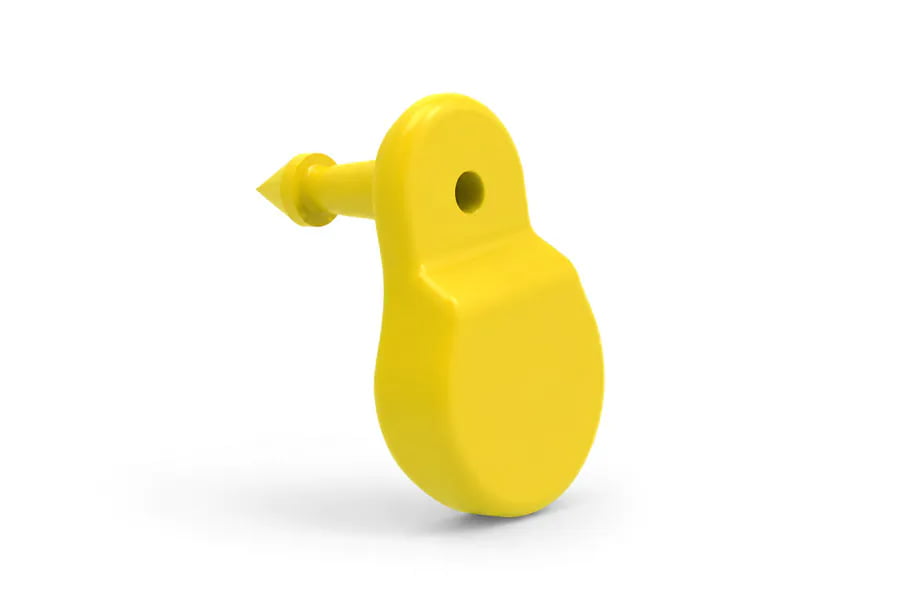

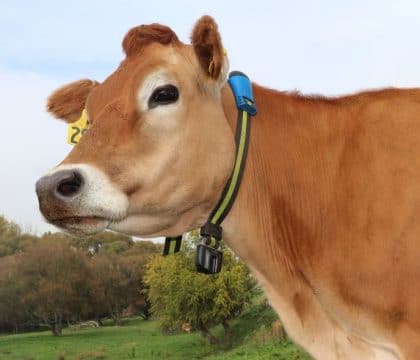
| Product Name | Automatic Cattle Estrus Detection System | ||||||||||||||||||||||||||||||||||
| Product Image | 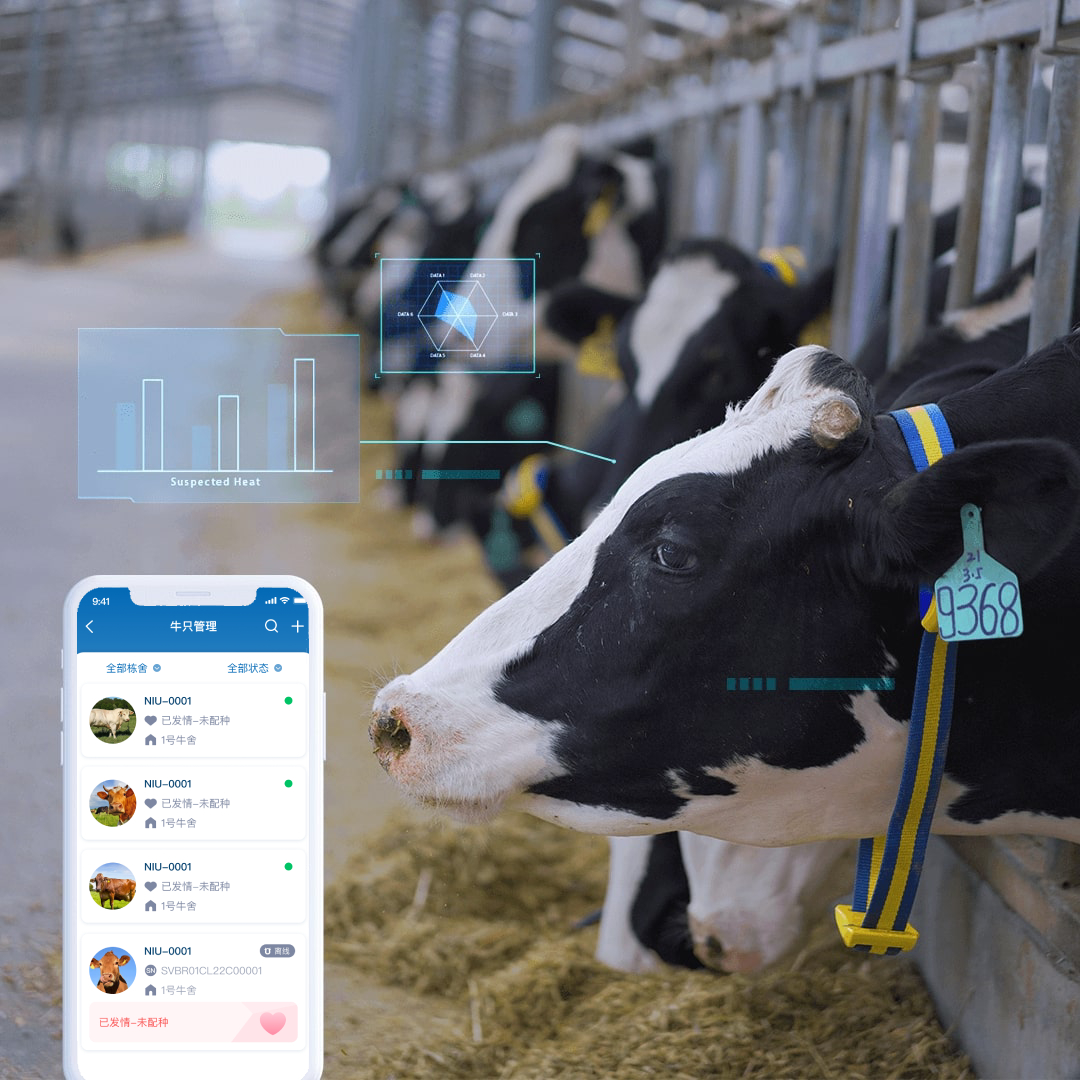 |
||||||||||||||||||||||||||||||||||
| Product Overview | The Automatic Cattle Estrus Detection System is a digital reproductive management solution designed for continuous monitoring of cows and heifers in dairy and beef operations. Wearable sensors automatically collect animal activity and behavior data and transmit the information to a central management platform for analysis. Changes in activity and reproductive behavior associated with estrus are analyzed continuously to identify cows that may be in heat. The system can generate individual-animal alerts and provide breeding personnel with guidance on the appropriate insemination period. Compared with periodic visual observation alone, automated monitoring provides continuous coverage throughout the day and night and can support farms where heat signs are short, weak or occur outside normal working hours. The system can be configured for commercial dairy farms, breeding centers, beef cattle operations and large livestock projects, with wearable sensor type, wireless infrastructure, software functions and integration options selected according to project requirements. |
||||||||||||||||||||||||||||||||||
| Key Features | 24/7 Automatic Heat Monitoring: Continuously monitors individual cattle behavior without depending entirely on scheduled manual observation. Behavior-Based Estrus Detection: Detects activity changes and behavioral patterns associated with natural heat, including increased movement and other reproductive behavior. Insemination Timing Support: The management platform can provide heat alerts together with information supporting selection of an appropriate artificial insemination period. Individual Cow Monitoring: Each wearable sensor is associated with an individual animal record, allowing reproductive events to be monitored cow by cow. Real-Time Herd Overview: Farm personnel can review cows requiring breeding attention through compatible computer, tablet or smartphone interfaces. Neck or Ear Sensor Options: Wearable monitoring configurations can be selected according to farm management requirements and project design. Reproduction Insights: Advanced configurations can assist in identifying irregular cycling, non-cycling animals and cows requiring further reproductive attention. Optional Health Monitoring: Selected sensor configurations can also monitor eating, rumination, inactivity or other behavioral information for integrated herd management. Scalable System Architecture: Sensor quantity, receiver coverage and software capacity can be expanded for different herd sizes and farm layouts. |
||||||||||||||||||||||||||||||||||
| Structural Components | Wearable Activity Sensor: Installed on the neck or ear of the cow to collect activity and behavioral data continuously. Animal Identification Module: Links collected sensor information with the corresponding cow record. RFID functionality is available according to selected configuration. Wireless Communication Network: Transfers monitoring information from animal sensors to the farm data-processing system. Receiver / Antenna Infrastructure: Installed according to cattle housing layout and communication requirements to collect sensor data. Central Controller or Gateway: Receives, processes and forwards monitoring information to the herd management platform. Estrus Analysis Software: Evaluates individual activity patterns and identifies behavior changes associated with heat. User Management Platform: Displays heat lists, animal records, alerts, reproductive history and other available herd information. Optional Sorting Integration: Advanced projects can connect reproductive alerts with compatible automatic sorting and routing systems. |
||||||||||||||||||||||||||||||||||
| Working Principle | Cattle commonly show changes in movement and social behavior during estrus. Depending on the monitoring technology, wearable sensors measure activity continuously and establish an individual behavioral baseline for each cow. When the system identifies a significant behavioral change consistent with heat, the software analyzes the pattern together with the animal's reproductive history and other available data. A heat alert is then generated for farm personnel. Advanced systems can present the estimated stage of heat and provide information supporting the selection of an appropriate insemination period. Alerts and reproductive information can be viewed through compatible computers, tablets or smartphones. Automatic estrus detection is intended to support reproductive management. Breeding decisions should also consider farm protocols, animal history, physical signs and veterinary or reproductive technician recommendations where appropriate. |
||||||||||||||||||||||||||||||||||
| Technical Specifications |
|
||||||||||||||||||||||||||||||||||
| Applications | Dairy Cow Heat Detection: Automatically identifies activity changes associated with estrus in lactating cows and replacement heifers. Artificial Insemination Management: Supports breeding teams with individual heat alerts and information for planning insemination. Large Dairy Farms: Continuous monitoring reduces dependence on manual visual observation in operations managing hundreds or thousands of animals. Replacement Heifer Programs: Provides automatic monitoring of breeding-age heifers housed separately from the milking herd. Beef Cattle Breeding: Can support reproductive monitoring in intensively managed beef breeding operations where communication infrastructure is available. Return-to-Heat Monitoring: Helps identify animals showing another heat cycle after previous breeding or insemination. Fertility Management: Advanced software can highlight irregular or absent reproductive activity for further management review. Livestock Breeding Centers: Suitable for genetic companies, embryo transfer programs and commercial cattle reproduction projects. Smart Dairy Farm Projects: Can be integrated with electronic identification, milking equipment, sorting gates and herd management software to establish a connected cattle management system. |
||||||||||||||||||||||||||||||||||
| Customization Options | The cattle estrus detection system can be configured according to herd size, cattle housing design, breeding workflow and existing farm automation infrastructure. Available options may include: • Neck-mounted activity sensors • Ear-mounted monitoring sensors • Heat detection functions • Health and behavior monitoring functions • Electronic animal identification • Receiver and antenna network design • Local controller or cloud-based management platform • PC, tablet and smartphone access • Heat alert notification settings • Artificial insemination timing support • Cow locating integration • Automatic sorting gate integration • Herd management software integration • Multi-barn and multi-group system architecture • Configuration according to project requirements |
||||||||||||||||||||||||||||||||||
| Installation & Maintenance | Before installation, evaluate herd capacity, cattle housing layout, barn dimensions, animal movement routes and existing network infrastructure. Install receivers, antennas, gateways or other communication components at positions that provide suitable coverage according to the selected system design. Large steel structure cattle buildings may require site-specific communication planning because partitions, building materials and equipment layout can influence wireless coverage. Attach the wearable sensor to each animal according to the selected neck or ear installation method. Register the sensor identification number with the corresponding cow record in the management software. After installation, verify sensor communication and confirm that animal data are being received correctly. Farm personnel should also be trained to interpret heat alerts and reproductive information. During routine use, inspect wearable devices for damage, incorrect positioning or excessive contamination. Communication equipment, power supplies and network connections should be checked periodically. Software data should be backed up according to farm management requirements, and firmware or platform updates should be performed according to system instructions. |
||||||||||||||||||||||||||||||||||
| Project Cases | Automatic cattle estrus detection systems are suitable for commercial dairy farms, replacement-heifer facilities, cattle breeding centers, artificial insemination programs and large livestock projects requiring continuous reproductive monitoring. For new dairy farm construction projects, sensor communication infrastructure can be considered during barn planning together with milking systems, cattle sorting equipment, identification devices and farm data networks. For existing farms, the system can be installed as a retrofit solution after evaluating barn coverage, animal groups and existing herd management software. Large projects can use scalable sensor and receiver configurations to cover several cattle barns, breeding groups or production areas while maintaining centralized reproductive management. |
||||||||||||||||||||||||||||||||||
| Product FAQ | Q: How does an automatic cattle estrus detection system identify heat? A: Wearable sensors continuously monitor activity and behavioral changes. The software analyzes these patterns and generates an alert when changes consistent with estrus are detected. Q: Does the system work continuously? A: Yes. Automatic activity monitoring systems are designed to collect information throughout the day and night. Q: Can it recommend when a cow should be inseminated? A: Selected software configurations provide information about heat progression and an appropriate insemination period to support breeding decisions. Q: Can I view alerts on a mobile phone? A: PC, tablet and smartphone access can be provided according to the selected management platform. Q: Does the system only detect increased walking? A: No. Advanced monitoring systems can analyze multiple activity and behavioral patterns associated with estrus rather than relying on a single movement measurement. Q: Can it help detect cows with fertility problems? A: Advanced reproductive software can highlight irregular cycling, non-cycling patterns or other animals requiring additional reproductive attention. Q: Is health monitoring available? A: Yes. Selected sensor configurations can additionally monitor eating, rumination, inactivity and other behaviors for herd health management. Q: Can neck and ear sensors be used? A: Yes. Different wearable formats are available according to system configuration and farm management requirements. Q: Is the system suitable for a large commercial dairy farm? A: Yes. Sensor quantity, receiver infrastructure and software capacity can be scaled according to herd size and barn layout. Q: Can it integrate with existing herd management software? A: Integration is available with compatible dairy management and farm automation platforms according to project requirements. Q: Does automatic detection completely replace visual observation? A: Automatic monitoring greatly reduces dependence on scheduled visual observation, but breeding personnel should still consider reproductive history, physical signs and farm breeding protocols when making insemination decisions. |
||||||||||||||||||||||||||||||||||
| Product Gallery | 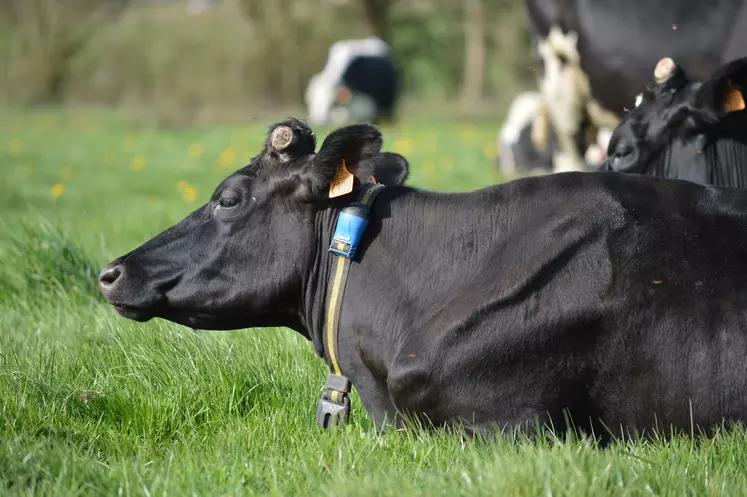 |
- Home
-
Products
- Pig Farming Equipment
- Cattle Farming Equipment
- Sheep & Goat Farming Equipment
- Poultry Farming Equipment
- Feeding & Drinking Systems
- Veterinary & Breeding Equipment
- Testing & Diagnostic Equipment
- Cleaning & Biosecurity Equipment
- Climate Control Equipment
- Livestock Weighing Equipment
- Manure & Waste Management
- Farm Transport & Handling
-
Solutions
- Pig Farm Solutions
- Dairy Farm Solutions
- Beef Cattle Farm Solutions
- Sheep & Goat Farm Solutions
- Layer Farm Solutions
- Broiler Farm Solutions
- Feeding & Drinking System Solutions
- Climate Control Solutions
- Biosecurity & Disinfection Solutions
- Manure & Waste Management
- Smart Farming Solutions
- Farm Renovation and Upgrade Solutions
- Partners
- Projects
- Resources
- News
- About Us
- Contact
Comments & Inquiries
Leave your questions or requirements below. We will reply as soon as possible.