| Product Name |
Portable Drinking Water Test Kit Laboratory |
| Product Image |
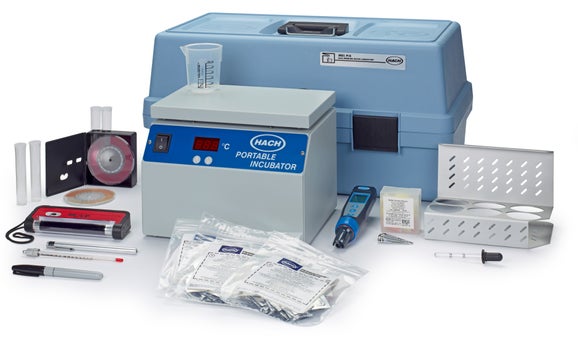 |
| Product Overview |
The Portable Drinking Water Test Kit Laboratory is a compact field laboratory designed to bring essential water-quality testing capabilities directly to the sampling location. Instead of transporting every sample to a centralized laboratory, operators can perform selected chemical and microbiological screening procedures on site.
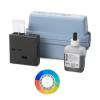
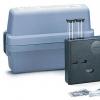
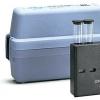
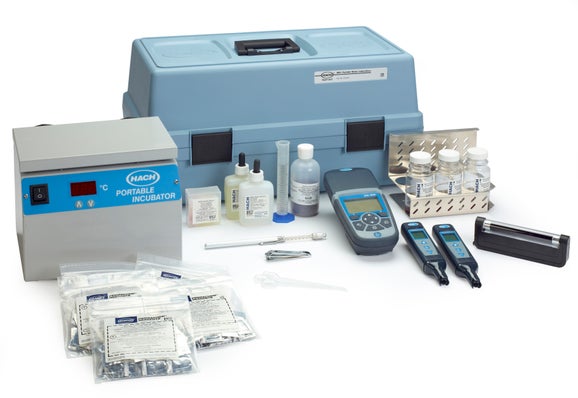
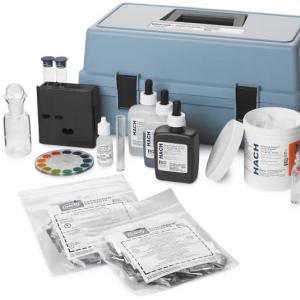
The reference configuration is based on the professional concept of a portable drinking-water laboratory and combines a portable incubator, pH and TDS testers, microbiological equipment, glassware, reagents and field-testing accessories in an organized transportable system. Hach's MEL/P-A Safe Drinking Water Lab is designed to monitor key water-quality parameters together with Total Coliforms and E. coli using a presence-absence method. :contentReference[oaicite:0]{index=0}
For SHEWUYOU projects, the laboratory configuration can be adapted according to the intended application, water source, monitoring program, local climate, farm conditions and procurement requirements. The system is suitable for commercial pig farms, livestock production sites, aquaculture projects, agricultural water systems, engineering contractors and decentralized drinking-water monitoring. |
| Key Features |
- Integrated Field Laboratory: Combines multiple water-testing functions in one portable equipment package.
- Multi-Parameter Screening: Suitable for selected chemical and microbiological water-quality tests.
- Portable Incubator: Supports field microbiological testing where incubation is required.
- Portable pH and TDS Measurement: Enables rapid screening of important physical and chemical indicators.
- Colorimetric Water Testing: Selected parameters such as chlorine and nitrate can be evaluated using visual comparator methods.
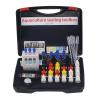
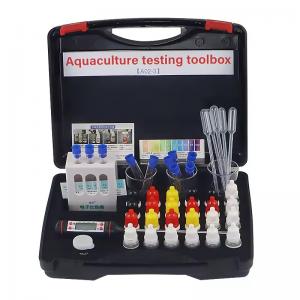
- Organized Carrying Case: Keeps instruments, reagents, glassware and field accessories protected and arranged for transportation.
- On-Site Operation: Reduces dependence on immediate access to a centralized laboratory for routine screening.
- Commercial Farm Application: Suitable for routine water-quality management in large-scale livestock operations.
- Project Adaptability: Equipment combinations and consumables can be configured according to project requirements.
- Multi-Site Deployment: Practical for engineering teams and farm groups operating across several locations.
The reference Hach laboratory includes apparatus and reagents for key chemistry and microbiological tests, a portable incubator, pH and TDS testers and supporting field equipment. :contentReference[oaicite:1]{index=1} |
| Structural Components |
A professional portable drinking-water laboratory can be configured with the following main components:
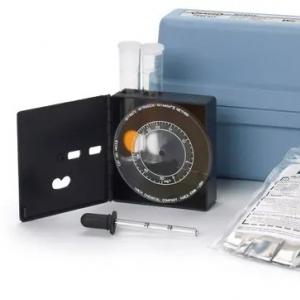
- Protective Carrying Case: Provides organized storage and transportation for instruments, reagents and accessories.
- Portable Incubator: Provides controlled-temperature incubation for applicable microbiological test procedures.
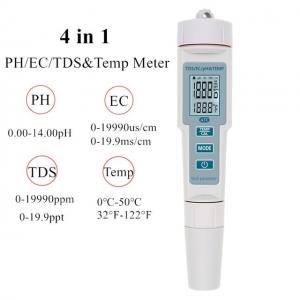
- pH Tester: Provides portable measurement of water acidity and alkalinity.
- TDS Tester: Provides rapid screening of total dissolved solids.
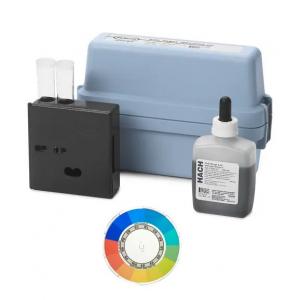
- Color Comparator: Supports visual comparison for selected colorimetric water tests.
- Viewing Tubes and Glassware: Used for sample preparation, reaction and visual comparison.
- Microbiological Sampling Equipment: May include sample bottles, bottle racks and related field accessories according to the selected configuration.
- UV Lamp: May be included where the selected microbiological procedure requires ultraviolet inspection or related field operations.
- Thermometer: Supports temperature monitoring during field testing and microbiological procedures.
- Reagents and Consumables: Supplied according to the selected parameters and test methods.
- Documentation: Testing instructions and operating procedures support standardized field operation.
The documented MEL/P-A configuration lists a portable incubator and rack, UV lamp, sampling bags, pH and TDS testers, thermometer, viewing tubes, reagents and other field apparatus. :contentReference[oaicite:2]{index=2} |
| Working Principle / Structural Principle |
The portable laboratory combines several independent water-analysis methods within one field-ready system. The exact analytical principle depends on the parameter being tested.
Chemical Testing: Selected parameters can be determined using colorimetric or reagent-based methods. For example, chlorine and nitrate in the reference laboratory are determined using visual color-disc comparator methods. The prepared sample develops a characteristic color that is compared with a calibrated reference scale. :contentReference[oaicite:3]{index=3}
Electrochemical Screening: Portable pH and TDS testers use dedicated sensors to provide direct field measurements of the corresponding water properties. The reference laboratory specifically includes portable pH and TDS testers. :contentReference[oaicite:4]{index=4}
Microbiological Testing: Where the selected method requires incubation, prepared microbiological samples are placed in the portable incubator under the specified test conditions. The reference MEL/P-A system supports Total Coliform and E. coli testing using a presence-absence approach, with microbiological media ordered separately. :contentReference[oaicite:5]{index=5}
This modular structure allows the laboratory to be used as a field screening platform rather than as a fixed laboratory installation. The final analytical methods should be selected according to the target parameters, applicable standards and project requirements. |
| Technical Specifications |
| Product Type |
Portable drinking-water field laboratory |
| Application Type |
On-site water-quality screening and field microbiological testing |
| Chemical Parameters |
Configurable; reference system includes free chlorine, total chlorine, nitrate, pH and TDS |
| Microbiological Parameters |
Total Coliforms and E. coli using an applicable presence-absence method, according to selected configuration |
| Free Chlorine Reference Range |
0–3.5 mg/L in the documented reference configuration |
| Total Chlorine Reference Range |
0–3.5 mg/L in the documented reference configuration |
| Nitrate Reference Range |
0–50 mg/L as nitrate-nitrogen in the documented regional reference configuration |
| pH Reference Range |
0–14 pH units in the documented reference configuration |
| TDS Measurement |
Portable TDS tester; range and resolution according to selected tester |
| Microbiological Incubation |
Portable incubator included according to selected configuration |
| Chemical Test Capacity |
According to reagent package; reference configuration includes 100 tests each for selected chlorine and nitrate chemistry |
| Power Supply |
According to selected incubator and portable instrument configuration |
| Installation |
Portable; no permanent installation required |
| Carrying Case |
Included according to selected configuration |
| Consumables |
Available according to selected test methods and project requirements |
| OEM / Project Configuration |
Customizable according to project requirements |
Reference values are taken from Hach's documented MEL/P-A product information. Regional product pages show slightly different stated chlorine and nitrate ranges, so final SHEWUYOU specifications should be confirmed according to the selected test chemistry and configuration. :contentReference[oaicite:6]{index=6}
|
| Applications |
- Commercial Pig Farms: Routine screening of drinking-water sources, treatment outlets, storage tanks and farm distribution systems.
- Livestock Production Facilities: Supporting farm water-quality management across multiple livestock buildings.
- Pig Farm Construction Projects: Useful during commissioning and verification of newly installed water-treatment and distribution systems.
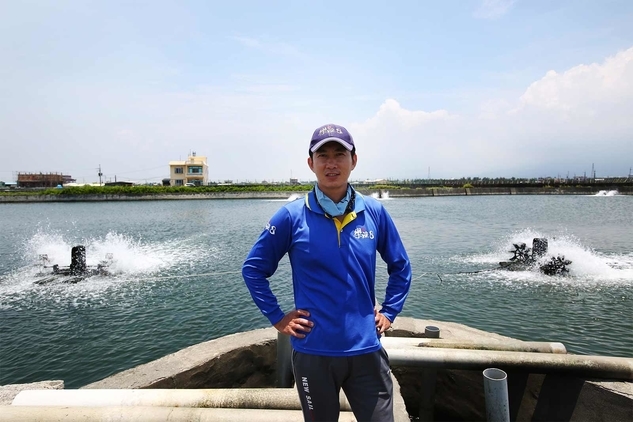
- Aquaculture Facilities: Supporting field screening of source water, tanks, ponds and selected treatment systems.
- Hatcheries: Portable testing support for routine source-water and process-water checks.
- Agricultural Water Projects: Field screening of selected irrigation and agricultural water sources.
- Water Treatment Engineering: Useful for commissioning, maintenance and troubleshooting at decentralized treatment installations.
- Drinking Water Projects: Supporting field screening in remote, rural or decentralized water-supply systems.
- Engineering Contractors: Provides technicians with a mobile platform for multiple water-quality measurements at project sites.
- Farm Groups: Suitable for standardized monitoring programs across multiple commercial production sites.
- Distributors and Agents: Configurable laboratory packages can be developed for different regional water-testing requirements.
Professional portable drinking-water laboratories are designed for field analysis of key water-quality and microbiological parameters, including chlorine, nitrate, pH, TDS, Total Coliforms and E. coli according to the selected configuration. :contentReference[oaicite:7]{index=7} |
| Customization Options |
- Parameter Selection: Test parameters can be selected according to the intended water-quality monitoring program.
- Testing Methods: Colorimetric, electrochemical and microbiological methods can be combined according to project requirements.
- Reagent Quantity: Consumable quantities can be matched to sampling frequency and project duration.
- Microbiological Configuration: Incubator, sample containers, racks and applicable media can be arranged according to the selected test method.
- Portable Instrument Configuration: pH, TDS and other portable meters can be selected according to required measurement functions.
- Carrying Case Layout: Internal organization can be adapted to the selected equipment and accessory combination.
- Packaging: Available according to distributor, agent and project procurement requirements.
- OEM / Private Label: Custom branding and documentation can be discussed according to order quantity and project requirements.
- Regional Adaptation: Designed according to local climate, water characteristics, farm conditions and applicable operating practices.
- Project-Specific Laboratory: A dedicated combination can be developed for livestock water management, aquaculture, agricultural projects or water-treatment engineering.
|
| Installation & Maintenance |
The portable laboratory requires no permanent installation. The equipment case can be transported to the required sampling location, opened on a stable work surface and configured according to the selected test procedure.
Before operation, inspect the carrying case, portable incubator, meters, comparator, glassware, sample containers and reagents. Verify reagent condition and expiry information, and ensure that measurement instruments are ready for use according to their respective operating instructions.
Collect representative water samples using clean sampling equipment. Chemical tests should follow the specified reagent dosage, mixing time, reaction time and result-reading procedure. For color-disc methods, the reacted sample is compared against the applicable calibrated reference scale.
For microbiological testing, use appropriate sterile sampling procedures and follow the selected method for sample preparation, incubation and interpretation. The reference MEL/P-A system uses a portable incubator for field determination of total and fecal coliforms, while microbiological media are supplied separately. :contentReference[oaicite:8]{index=8}
Keep pH and TDS testers clean and maintain their sensors according to the applicable instrument instructions. Reusable glassware and viewing tubes should be rinsed appropriately after testing and protected from contamination.
Store reagents under their specified conditions. Where hazardous reagents are used, review the applicable Safety Data Sheet and follow local requirements for handling, transportation and disposal. The referenced Hach product specifically carries a hazardous-material notice and identifies mercury-related disposal requirements. :contentReference[oaicite:9]{index=9}
For commercial pig farms and multi-site projects, establish standardized sampling points, testing intervals and record-keeping procedures to improve consistency between buildings and farms. |
| Project Cases |
Commercial Pig Farm Water Management: A portable laboratory can be assigned to the farm technical team for routine screening of source water, treatment systems, storage tanks and drinking-water distribution lines.
New Pig Farm Construction: The system can support commissioning of water-treatment, filtration, dosing, storage and distribution equipment after installation in new livestock buildings.
Multi-Farm Production Group: Standardized portable laboratories can be deployed across several farms to support consistent field sampling and water-quality records.
Aquaculture Project: A customized configuration can combine portable meters, chemical test methods and microbiological equipment for routine source-water and culture-system screening.
Engineering Contractor: Field technicians can use the laboratory during water-system commissioning, maintenance and troubleshooting where laboratory access is limited.
Decentralized Drinking Water Project: The portable format provides a practical testing platform for remote or distributed water-supply locations where on-site screening is required.
|
| Product FAQ |
Q: What is a Portable Drinking Water Test Kit Laboratory?
A: It is a field-ready water-testing system that combines portable instruments, chemical test equipment, microbiological equipment, reagents and accessories in an organized transportable package.
Q: What parameters can it test?
A: The configuration is customizable. The referenced professional system includes chlorine, nitrate, pH and TDS testing together with Total Coliform and E. coli screening using an applicable presence-absence method. :contentReference[oaicite:10]{index=10}
Q: Is it suitable for commercial pig farms?
A: Yes. It can be used as a mobile water-quality testing platform for drinking-water sources, treatment systems, storage tanks and distribution points throughout a commercial livestock facility.
Q: Can it be used during pig farm construction?
A: Yes. It can support commissioning and field verification of water-treatment and distribution systems after installation of tanks, filtration units, dosing equipment and pipelines.
Q: Does the laboratory require permanent installation?
A: No. It is designed for portable field operation and can be moved between sampling locations without a fixed laboratory room.
Q: Does it include an incubator?
A: A portable incubator can be included when the selected configuration requires microbiological testing. The reference MEL/P-A laboratory includes a portable incubator. :contentReference[oaicite:11]{index=11}
Q: Can pH and TDS be measured?
A: Yes. The reference configuration includes dedicated portable pH and TDS testers. :contentReference[oaicite:12]{index=12}
Q: What are the reference chemical ranges?
A: The documented configuration includes approximately 0–3.5 mg/L for free and total chlorine, 0–50 mg/L for nitrate and 0–14 pH units. Final ranges depend on the selected chemistry and regional configuration. :contentReference[oaicite:13]{index=13}
Q: Can the laboratory configuration be customized?
A: Yes. Parameters, instruments, microbiological equipment, reagent quantities, carrying-case layout and packaging can be arranged according to project requirements.
Q: Are microbiological media included?
A: Not necessarily. In the referenced MEL/P-A configuration, microbiological media are ordered separately, while the laboratory supplies the applicable apparatus and portable incubator. :contentReference[oaicite:14]{index=14}
Q: Can distributors order private-label configurations?
A: OEM and private-label packaging can be discussed according to order quantity, target market and project requirements.
Q: Can this portable laboratory replace a certified laboratory?
A: It is intended for field screening and operational monitoring. Where regulatory certification, official compliance testing or advanced analytical accuracy is required, appropriate laboratory or instrumental methods should be used.
|
| Product Gallery |
|

Comments & Inquiries
Leave your questions or requirements below. We will reply as soon as possible.