Global Livestock Equipment Manufacturer & Supplier
SHEWUYOU · Livestock Equipment
Integrated Equipment Solutions for Pig, Cattle & Poultry Farms

Livestock Elastrator Pliers for Castration & Tail Docking

Product Showcase content
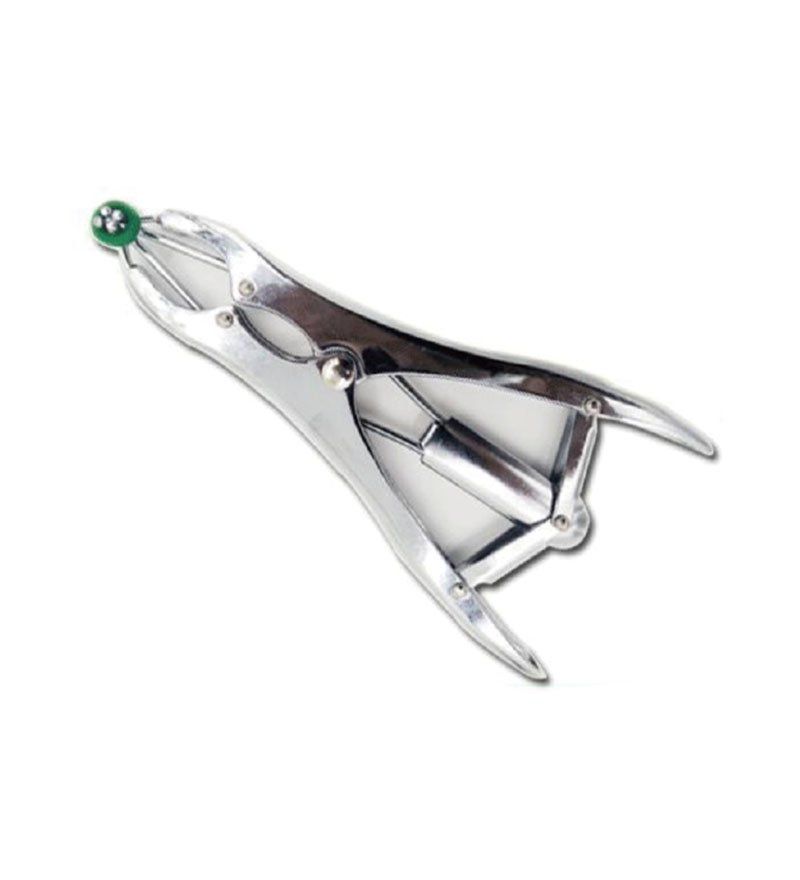
Product Name Livestock Elastrator Pliers with Elastic Rings
Product Image Livestock Elastrator Pliers with Elastic Rings for Castration and Tail Ligation
Product Overview The Livestock Elastrator Pliers are a manually operated veterinary livestock tool designed to stretch and apply high-elasticity rubber rings for bloodless ligation procedures.

The pliers use four expanding prongs to open a compatible rubber ring when the handles are compressed. After the expanded ring is positioned at the required location, the handles are released and the ring contracts around the tissue.

The stainless-steel construction provides good mechanical strength, corrosion resistance, and durability for repeated farm use. A compact hand-operated design requires no electricity, compressed air, or additional powered equipment.

Elastrator systems are widely used in livestock management for selected castration and tail-ligation procedures. Species, animal age, ring size, procedure position, pain management, and legal requirements must always follow local animal welfare regulations and veterinary recommendations.
Product Gallery Product gallery views can include the complete stainless-steel elastrator pliers, four-prong expanding head, handle mechanism, elastic rubber rings, opened ring position, closed ring position, hand-held operation, and livestock farm tool applications.
Key Features
  • Manual elastic-ring applicator for livestock husbandry procedures.
  • Four-prong expanding design opens compatible rubber rings quickly and evenly.
  • Stainless-steel pliers provide strength, durability, and corrosion resistance.
  • High-elasticity rubber rings provide strong contraction after application.
  • Approximately 220 mm overall plier length provides practical hand leverage.
  • Compatible elastic rings are approximately 14 mm before expansion.
  • No electricity, battery, or compressed-air supply is required.
  • Compact hand-held design is convenient for farm and veterinary use.
  • Simple mechanical structure allows fast loading and release of elastic rings.
  • Reusable stainless-steel applicator with replaceable disposable rubber rings.
  • Suitable for bloodless ligation procedures where approved for the species and age.
  • Easy to clean and disinfect between animals according to farm biosecurity procedures.
  • Suitable for livestock farms, breeding units, veterinary services, and animal husbandry operations.
Working Principle A compatible elastic rubber ring is first placed over the four closed prongs at the front of the elastrator pliers.

When the operator compresses the handles, the four prongs move outward and stretch the ring to create an opening large enough for placement.

After the ring has been positioned at the correct anatomical location according to the approved livestock-management procedure, the handles are released. The prongs retract and the elastic ring contracts firmly around the selected tissue.

Continuous compression from the ring restricts local blood circulation. Where this method is legally and professionally approved, the compressed distal tissue gradually undergoes ischemic change and separates over time.

Correct animal selection, anatomical placement, ring size, pain control, hygiene, monitoring, and aftercare are essential. The procedure should be carried out only by trained personnel according to veterinary guidance and applicable animal-welfare requirements.
Technical Specifications
  • Product Type: Livestock Elastrator Pliers
  • Primary Function: Elastic Ring Application
  • Pliers Material: Stainless Steel
  • Elastic Ring Material: High-Elasticity Rubber
  • Approximate Pliers Length: 220 mm
  • Approximate Ring Size: 14 mm
  • Expanding Mechanism: Four-Prong Mechanical Expansion
  • Operating Method: Manual Hand Operation
  • Power Requirement: None
  • Compatible Consumable: Livestock Elastic Ligation Rings
  • Pliers Use Type: Reusable
  • Ring Use Type: Single Use
  • Typical Environment: Livestock Farm / Breeding Unit / Veterinary Service

The listed dimensions are approximate. Ring dimensions, elasticity, package quantity, and suitability for individual animal species or ages should be confirmed before ordering. Use of elastic-ring castration or tail ligation may be restricted or regulated in some countries and must follow applicable veterinary and animal-welfare requirements.

Applications
  • Application of livestock elastic ligation rings.
  • Bloodless castration procedures where permitted and appropriate.
  • Tail ligation or docking procedures where permitted and appropriate.
  • Young livestock husbandry procedures under veterinary protocols.
  • Commercial livestock farms.
  • Breeding farms and livestock production units.
  • Veterinary field services.
  • Animal husbandry teaching and training facilities.
  • Farm tool kits and routine livestock management equipment.
Installation & Maintenance Preparation:
  • Inspect the pliers, four expanding prongs, pivot points, handles, and elastic rings before use.
  • Confirm that the selected ring is compatible with the applicator and appropriate for the intended procedure.
  • Clean and disinfect the applicator according to the farm or veterinary hygiene protocol.
  • Ensure that personnel are trained in the approved procedure and animal restraint method.
  • Confirm applicable animal-welfare, pain-management, and legal requirements before beginning.
Ring Loading:
  • Place one compatible elastic ring over the closed applicator prongs.
  • Squeeze the handles gradually to expand the ring.
  • Check that the ring remains evenly positioned on all four prongs.
  • Do not use cracked, aged, deformed, or weakened rubber rings.
  • Follow the approved veterinary procedure for anatomical placement and ring release.
Cleaning and Maintenance:
  • Clean visible organic material from the pliers after use.
  • Disinfect the tool between animals when required by farm biosecurity procedures.
  • Dry stainless-steel components thoroughly after washing.
  • Inspect moving joints and prongs regularly for wear, deformation, or looseness.
  • Apply a small amount of suitable lubricant to mechanical pivot points when necessary, avoiding contamination of animal-contact areas.
  • Do not use damaged pliers that fail to expand or release rings evenly.
  • Store unused elastic rings away from direct sunlight, excessive heat, ozone, oils, and chemicals that may degrade rubber.
  • Store the applicator in a clean and dry tool area.
Product FAQ

Q: What is an elastrator plier?
A: It is a manual livestock tool used to expand small high-elasticity rubber rings so that they can be positioned for approved ligation procedures.

Q: What material are the pliers made from?
A: The listed applicator is manufactured from stainless steel for strength, durability, and corrosion resistance.

Q: What material are the rings made from?
A: The compatible rings are made from high-elasticity rubber designed to contract strongly after application.

Q: What is the approximate size of the pliers?
A: The listed overall length is approximately 220 mm.

Q: What is the approximate size of the elastic ring?
A: The listed unexpanded ring size is approximately 14 mm.

Q: Does the tool require electricity?
A: No. It is a fully manual mechanical applicator.

Q: Can the pliers be reused?
A: Yes. The stainless-steel applicator is reusable when properly cleaned, disinfected, inspected, and maintained. The elastic rings are single-use consumables.

Q: Can this tool be used for piglets?
A: Use in piglets depends on the specific procedure, animal age, local regulations, veterinary protocol, and animal-welfare requirements. Elastic-ring methods are more commonly documented in other young livestock species, so pig applications should be confirmed with a qualified veterinarian.

Q: Is rubber-ring castration completely painless?
A: No. Bloodless does not mean painless. Elastic-ring ligation can cause acute and ongoing discomfort, so appropriate pain-management and welfare procedures should be followed.

Q: Why is correct ring placement important?
A: Incorrect placement can result in incomplete ligation, tissue injury, animal-welfare problems, or failure of the intended procedure. Only trained personnel should perform the application.

Q: Where is this product typically used?
A: It is suitable for livestock farms, breeding operations, veterinary services, animal husbandry training facilities, and other approved livestock-management applications.


Comments & Inquiries

Leave your questions or requirements below. We will reply as soon as possible.