Global Livestock Equipment Manufacturer & Supplier
SHEWUYOU · Livestock Equipment
Integrated Equipment Solutions for Pig, Cattle & Poultry Farms

Stacked Chick Brooding Cage

Product Showcase Content
Product Name Stacked Chick Brooding Cage System
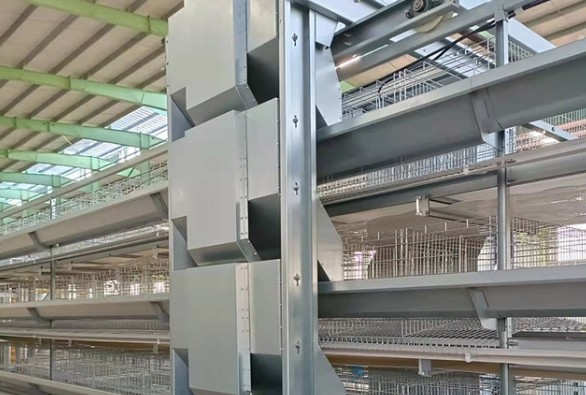
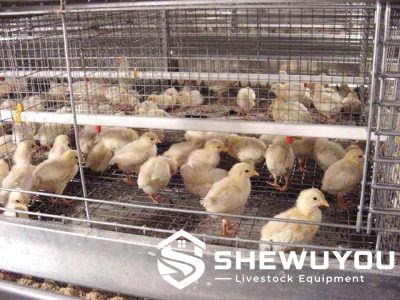
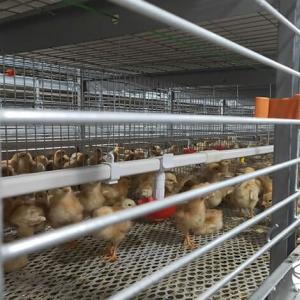
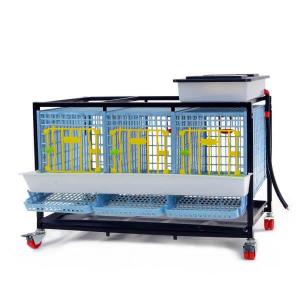
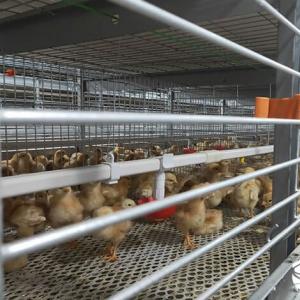
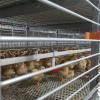
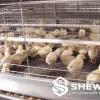
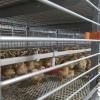
Product Image Stacked Chick Brooding Cage System for Commercial Poultry Farms
Product Overview The Stacked Chick Brooding Cage System is a multi-tier poultry housing solution designed for intensive brooding and rearing of chicks and young pullets. Its vertically stacked structure makes efficient use of poultry-house floor space while allowing centralized management of feeding, drinking, manure removal and flock inspection.

Each standard cage section is approximately 1200 mm long. The supporting cage rack is manufactured from hot-dip galvanized steel sheet with an approximate zinc coating of 275 g/m², while the cage mesh is also hot-dip galvanized for improved corrosion resistance. The system can be integrated with automatic feeding, pressure-regulated nipple drinking and automatic manure removal equipment to support efficient commercial poultry production.
Product Gallery
  • Multi-tier stacked brooding cage rows
  • Hot-dip galvanized cage rack and wire mesh
  • Age-adapted feeding troughs
  • Adjustable feeder access plates
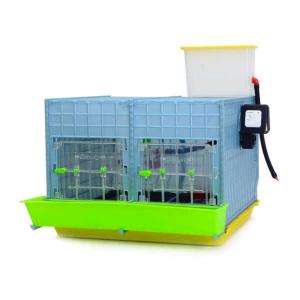
  • Pressure-regulated nipple drinking lines
  • Automatic feed distribution equipment
  • Automatic manure belt removal system
  • Integrated commercial poultry-house layout
Key Features
  • Stacked Multi-Tier Design: Vertical cage arrangement increases bird capacity per unit of poultry-house floor area and supports intensive commercial production.
  • Hot-Dip Galvanized Frame: The supporting structure uses corrosion-resistant galvanized steel sheet for durability in demanding poultry environments.
  • Durable Cage Mesh: Hot-dip galvanized wire mesh provides good corrosion resistance and supports long-term operation.
  • Age-Adapted Feeding: Different feeding trough configurations can be used according to chick age and growth stage.
  • Adjustable Feed Access: Adjustable plates allow feeding access to be modified as chicks develop and body size changes.
  • Uniform Water Distribution: Pressure-regulated nipple drinkers help provide a stable water supply throughout each cage row.
  • Automatic Feeding: Feed distribution equipment reduces manual labor and provides more consistent feeding along long cage rows.
  • Automatic Manure Removal: Manure belts beneath each tier help remove waste efficiently and support improved poultry-house hygiene.
  • Easy Flock Management: Cage access allows convenient observation, vaccination, bird transfer and routine inspection.
  • Flexible Project Design: Tier quantity, row length, cage dimensions and supporting systems can be configured according to poultry-house size and target capacity.
Working Principle Chicks are housed in vertically stacked cage compartments where feed, water and manure management are organized by tier. Feed is supplied to the front troughs manually or through an automatic travelling feeding system. Different trough arrangements and adjustable access plates can be used as the birds grow.

Water is delivered through pressure-regulated pipelines to nipple drinkers installed inside the cage compartments. The pressure control system helps maintain consistent water availability along the cage row.

Manure falls through the cage floor onto manure belts located below each tier. The belts can operate at scheduled intervals to transfer manure to the end of the poultry house for further collection or treatment. This separation of birds from manure helps simplify cleaning and routine farm management.
Technical Specifications
Product Type Stacked Chick Brooding / Pullet Rearing Cage
Application Chicks and young pullets during brooding and rearing stages
Cage Arrangement Vertical stacked multi-tier configuration
Typical Section Length Approx. 1200 mm per section
Rack Material Hot-dip galvanized steel sheet
Typical Zinc Coating Approx. 275 g/m²
Cage Mesh Hot-dip galvanized steel wire mesh
Tier Quantity Multi-tier design; customized according to poultry-house height and project capacity
Feeding System Age-adapted feed troughs with adjustable access plates; automatic feeding available
Drinking System Pressure regulator, water pipe and nipple drinkers
Manure Removal Automatic manure belt system
Automation Options Automatic feeding, drinking and manure removal
Optional Integration Lighting, ventilation, heating and environmental control systems
Customization Cage dimensions, tier quantity, row length, bird capacity and automation configuration

Specifications are configurable. Final cage dimensions, stocking density, tier quantity and equipment configuration should be determined according to chick breed, rearing program, poultry-house dimensions, climate conditions and local farming requirements.

Applications
  • Commercial layer chick brooding farms
  • Pullet rearing facilities
  • Layer replacement flock production
  • Breeder pullet rearing projects
  • Large intensive poultry farms
  • Environmentally controlled poultry houses
  • High-capacity multi-tier poultry houses
  • New poultry farm construction
  • Existing brooding house renovation and automation upgrades
Installation & Maintenance The stacked cage system should be installed on a level and structurally suitable poultry-house floor according to the approved layout drawing. Cage rows, supporting columns, feeding rails, drinking pipelines and manure belts should be accurately aligned before commissioning.

  • Check cage racks, mesh panels, bolts and connecting components regularly.
  • Adjust feeder access plates according to chick age and body size.
  • Keep feed troughs clean and remove accumulated or spoiled feed.
  • Inspect pressure regulators, nipple drinkers and water pipes for correct operation and leakage.
  • Flush drinking lines according to the poultry-house sanitation program.
  • Check manure belts for correct tension, tracking and cleanliness.
  • Inspect drive motors, reducers, chains and transmission components periodically.
  • Keep ventilation openings around stacked cage rows unobstructed.
  • Clean and disinfect the cage system thoroughly between flocks.
  • Replace worn drinkers, damaged wire mesh or other components when necessary.
Product FAQ

What is a stacked chick brooding cage?
It is a vertically arranged multi-tier cage system designed for intensive brooding and rearing of chicks and young pullets while reducing the poultry-house floor area required per bird.

What is the typical length of each cage section?
A standard section is approximately 1200 mm long. Row length and overall system dimensions can be adapted to the poultry-house layout.

Why are different feeding troughs used?
Chick body size and feeding behavior change rapidly during growth. Age-adapted troughs and adjustable access plates help provide convenient feed access at different rearing stages.

Does the system provide automatic drinking?
Yes. Pressure-regulated nipple drinking lines can provide a controlled and uniform water supply to birds throughout the cage rows.

Can feeding be fully automated?
Yes. Automatic travelling feeders or compatible feed distribution systems can be configured according to cage-row length and farm automation requirements.

How is manure removed from a stacked cage system?
Manure falls onto belts positioned below each cage tier. The belts transfer manure toward the end of the poultry house for collection and further handling.

Can the number of cage tiers be customized?
Yes. Tier quantity can be selected according to poultry-house clear height, target bird capacity, ventilation design and project requirements.

Can climate control equipment be integrated?
Yes. The cage system can be coordinated with ventilation, heating, lighting and environmental control equipment for complete poultry-house projects.

What information is required for a quotation?
Please provide the target number of chicks, chick breed, required rearing period, poultry-house length, width and clear height, local voltage and frequency, climate conditions and required automation level.

Comments & Inquiries

Leave your questions or requirements below. We will reply as soon as possible.